Visit / PA Historical Marker Trail

McKean County

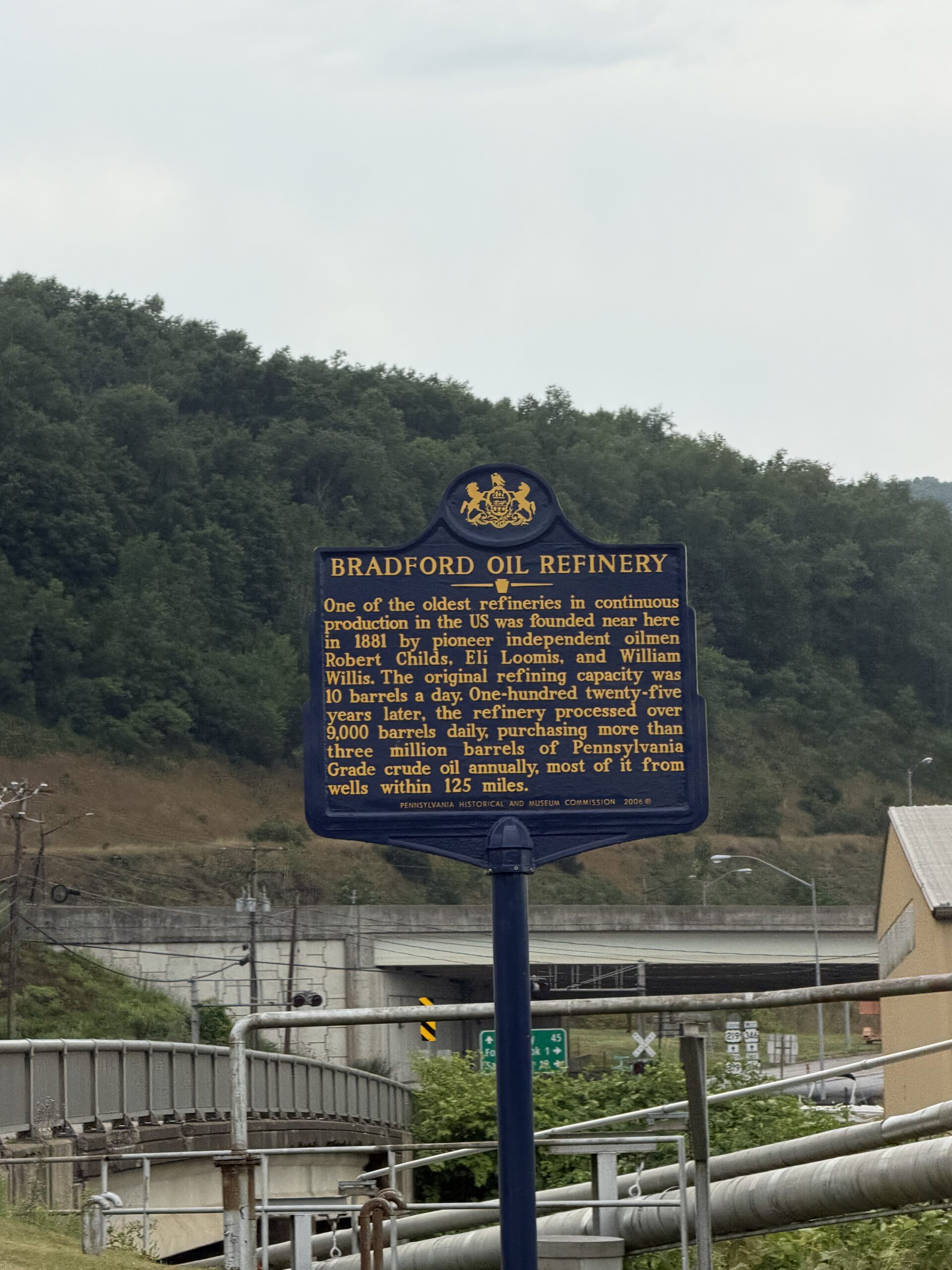
Stop #1 – Bradford Oil Refinery

One of the oldest refineries in continuous production in the US was founded near here in 1881 by pioneer independent oilmen Robert Childs, Eli Loomis, and William Willis. The original refining capacity was 10 barrels a day. One-hundred twenty-five years later, the refinery processed over 9000 barrels daily, purchasing more than three million barrels of Pennsylvania Grade crude oil annually, most of it from wells within 125 miles.

Discovering Lumber Hertitage Through History and Education

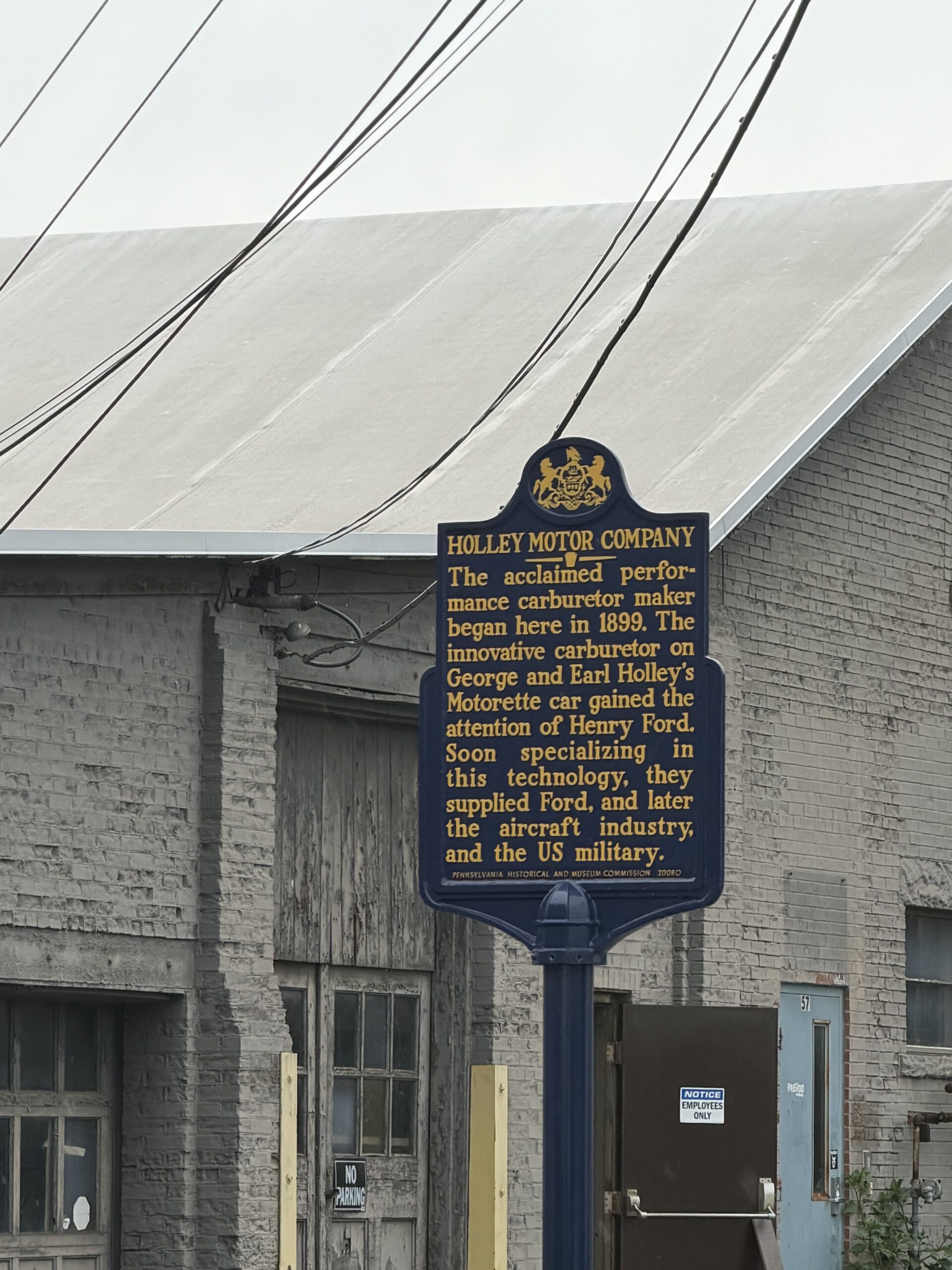
Stop #2 – Holley Motor Company

The acclaimed performance carburetor maker began here in 1899. The innovative carburetor on George and Earl Holley’s Motorette car gained the attention of Henry Ford. Soon specializing in this technology, they supplied Ford, and later the aircraft industry, and the US military.

Discovering Lumber Hertitage Through History and Education

Stop #3 – Pennsylvania

Founded 1681 by William Penn as a Quaker Commonwealth. Birthplace of THE DECLARATION OF INDEPENDENCE and THE CONSTITUTION OF THE UNITED STATES.

Discovering Lumber Hertitage Through History and Education

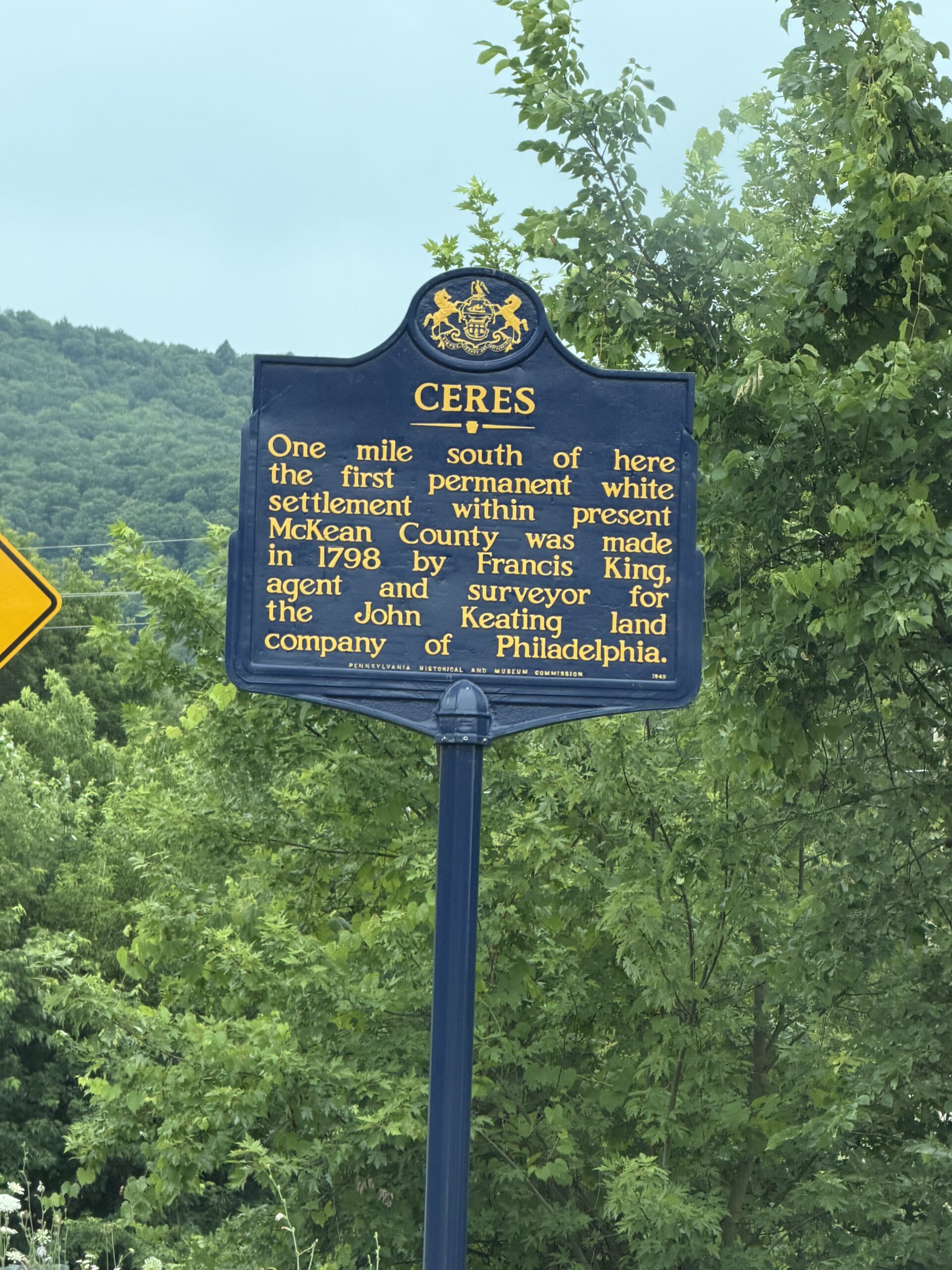
Stop #4 – Ceres

One mile south of here the first permanent white settlement within present McKean County was made in 1798 by Francis King, agent and surveyor for the John Keating land company of Philadelphia.

Discovering Lumber Hertitage Through History and Education

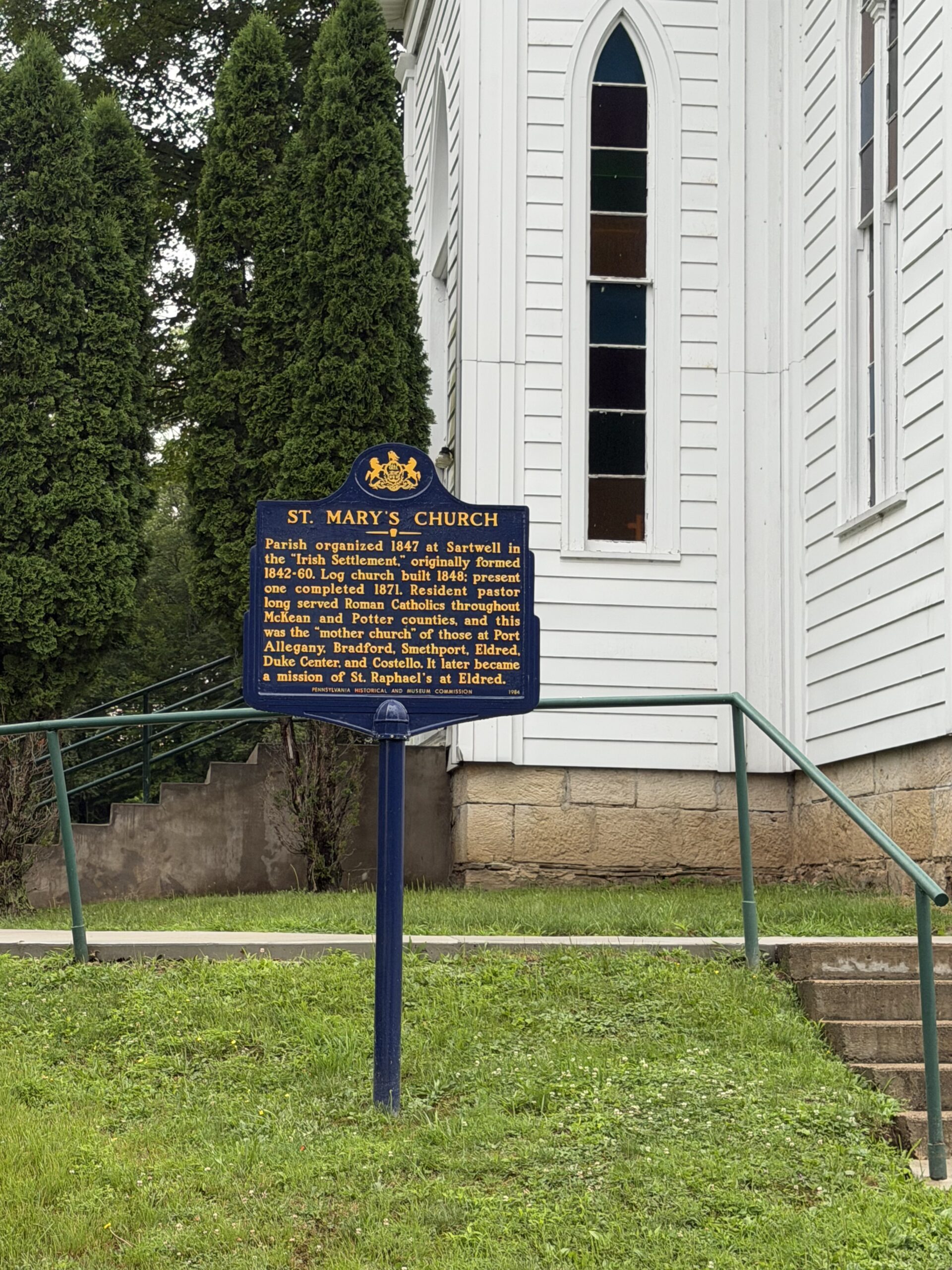
Stop #5 – St. Marys Church

Parish organized 1847 at Sartwell in the “Irish Settlement,” originally formed 1842-60. Log church built 1848; present one completed 1871. Resident pastor long served Roman Catholics throughout McKean and Potter counties, and this was the “mother church” of those at Port Alleghany, Bradford, Smethport, Eldred, Duke Center, and Costello. It later became a mission of St. Raphael’s at Eldred.


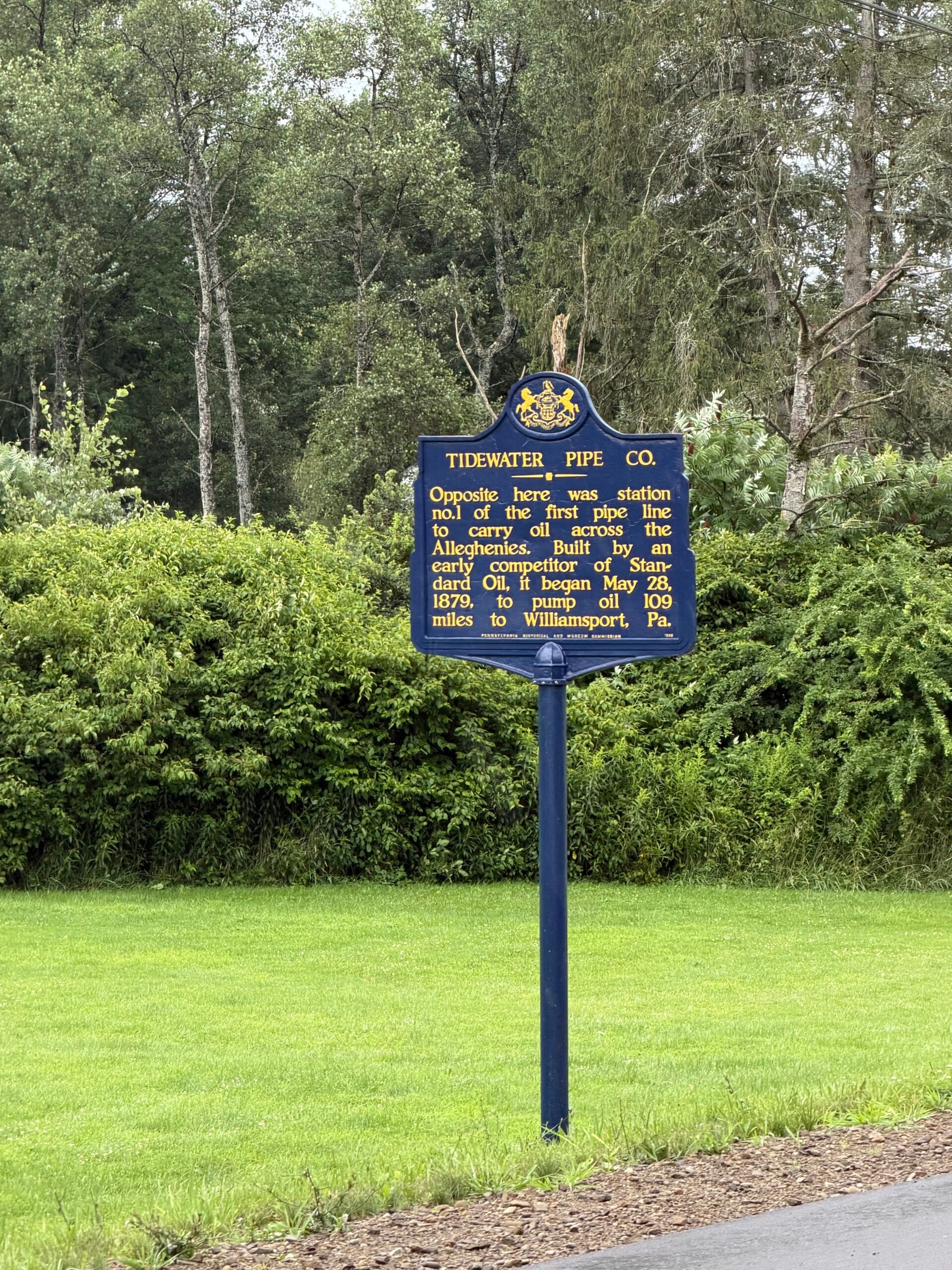
Stop #6 – Tidewater Pipe Co.

Opposite here was station no. 1 of the first pipe line to carry oil across the Alleghenies. Built by an early competitor of Standard Oil, it began May 28, 1879, to pump oil 109 miles to Williamsport, Pa.


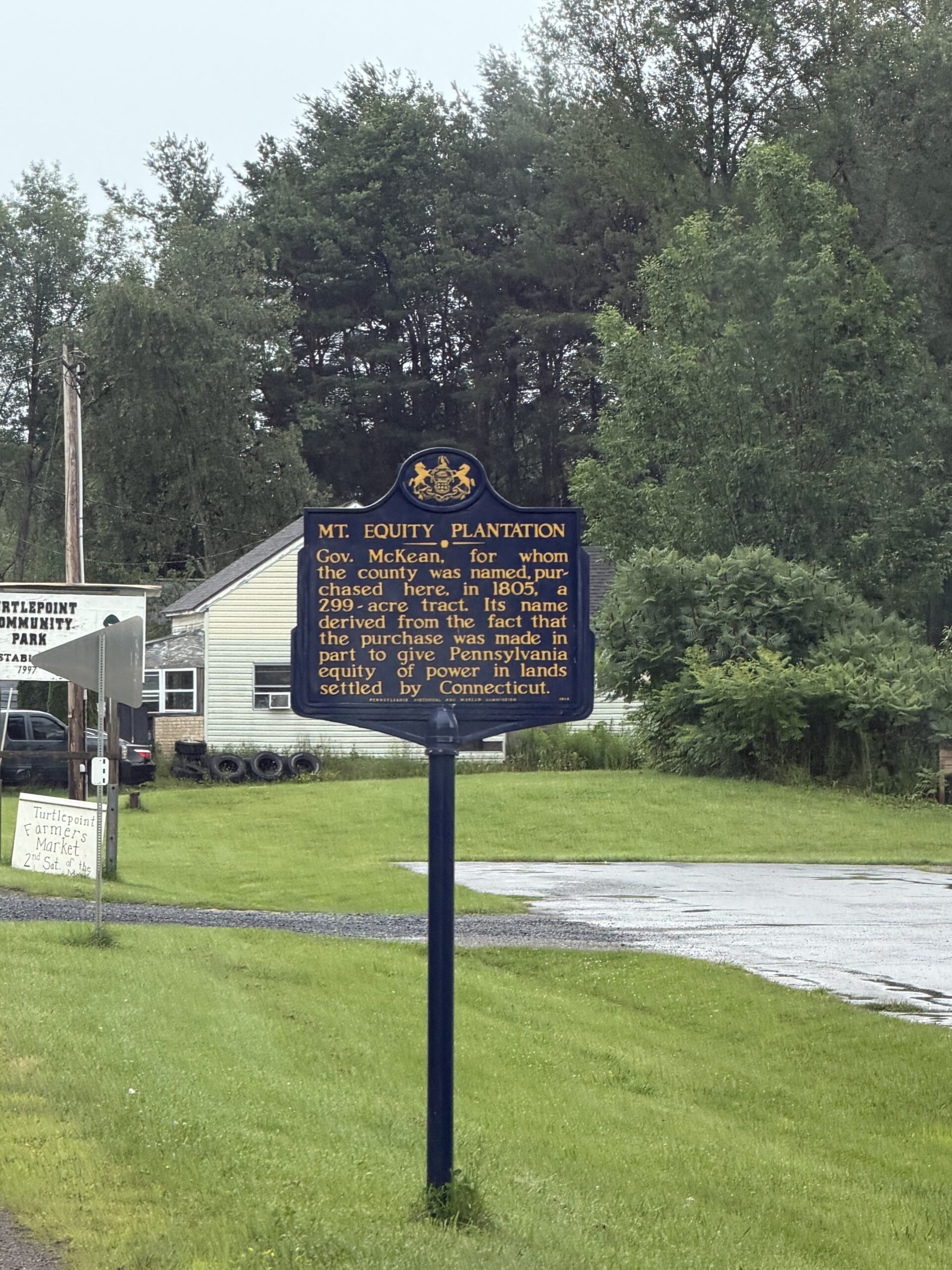
Stop #7 – Mt. Equity Plantation

Gov. Thos. McKean, for whom the county was named, purchased here, in 1805, a 299-acre tract. Its name derived from the fact that the purchase was made in part to give Pennsylvania equity of power in lands settled by Connecticut.


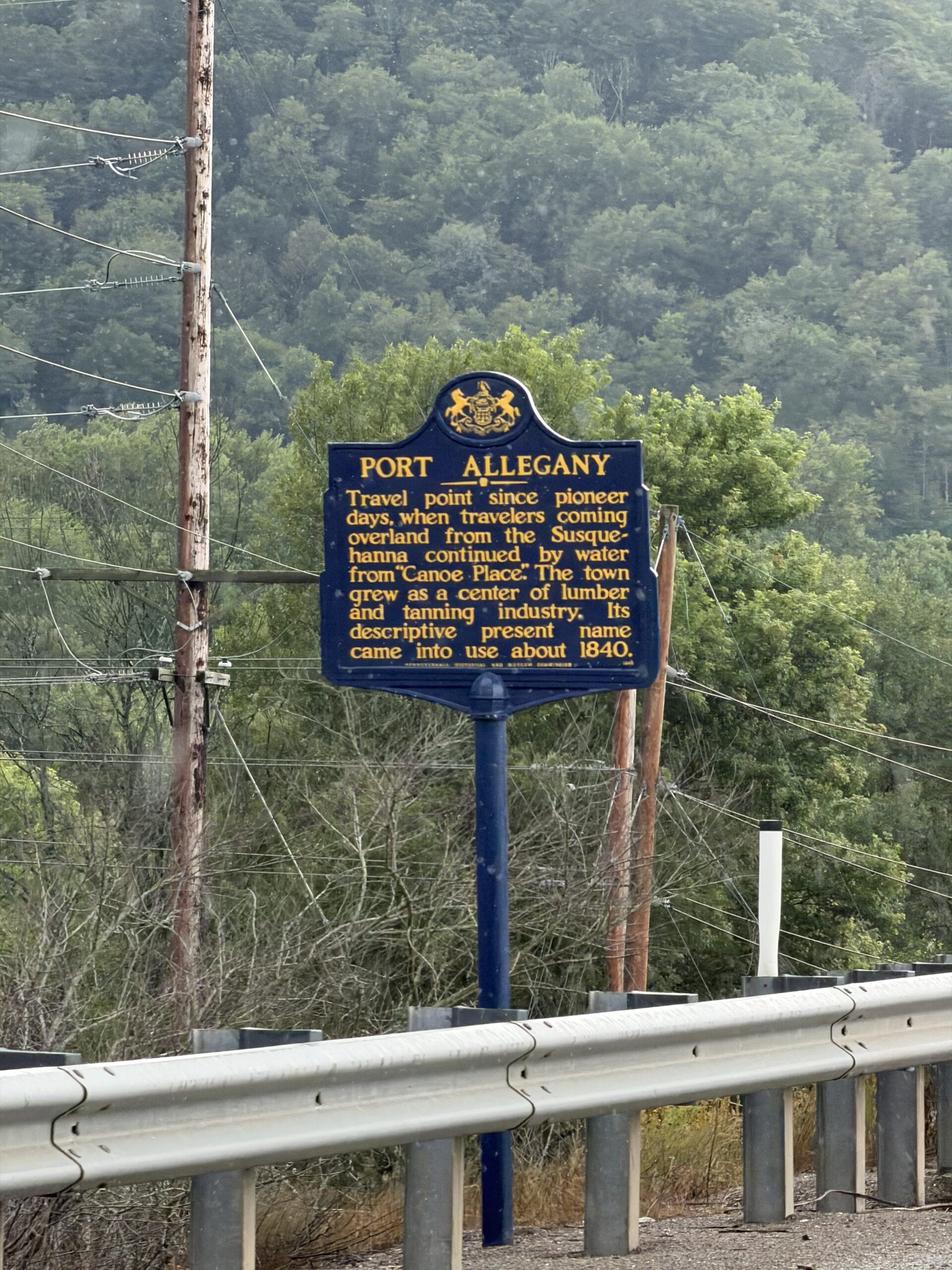
Stop #8 – Port Allegheny

Travel point since pioneer days, when travelers coming overland from the Susquehanna continued by water from “Canoe Place.” The town grew as a center of lumber and tanning industry. Its descriptive present name came into use about 1840.

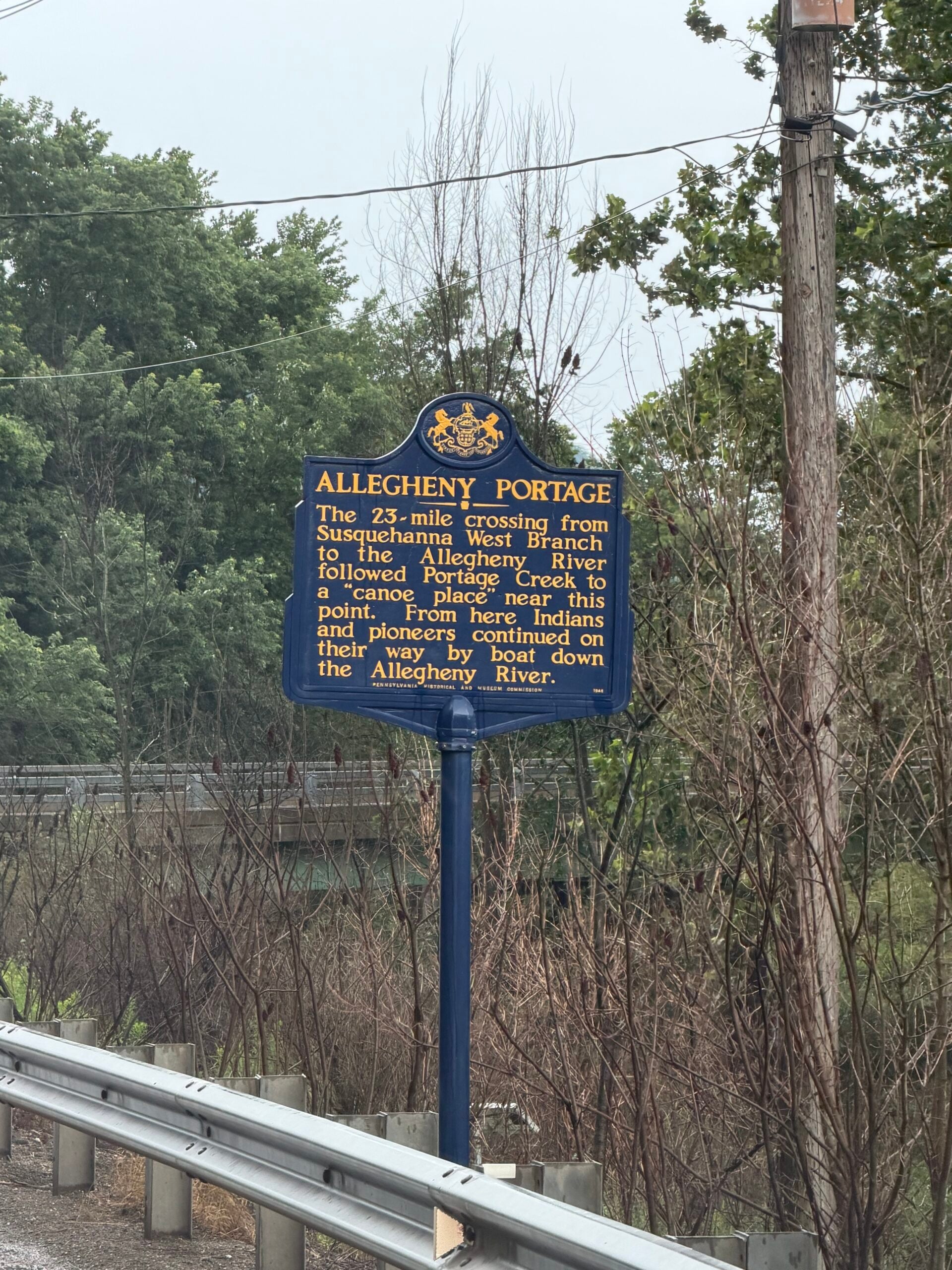
Stop #9 – Allegheny Portage

The 23-mile crossing from Susquehanna West Branch to the Allegheny River followed Portage Creek to a “canoe place” near this point. From here Indians and pioneers continued on their way by boat down the Allegheny River.

Discovering Lumber Hertitage Through History and Education

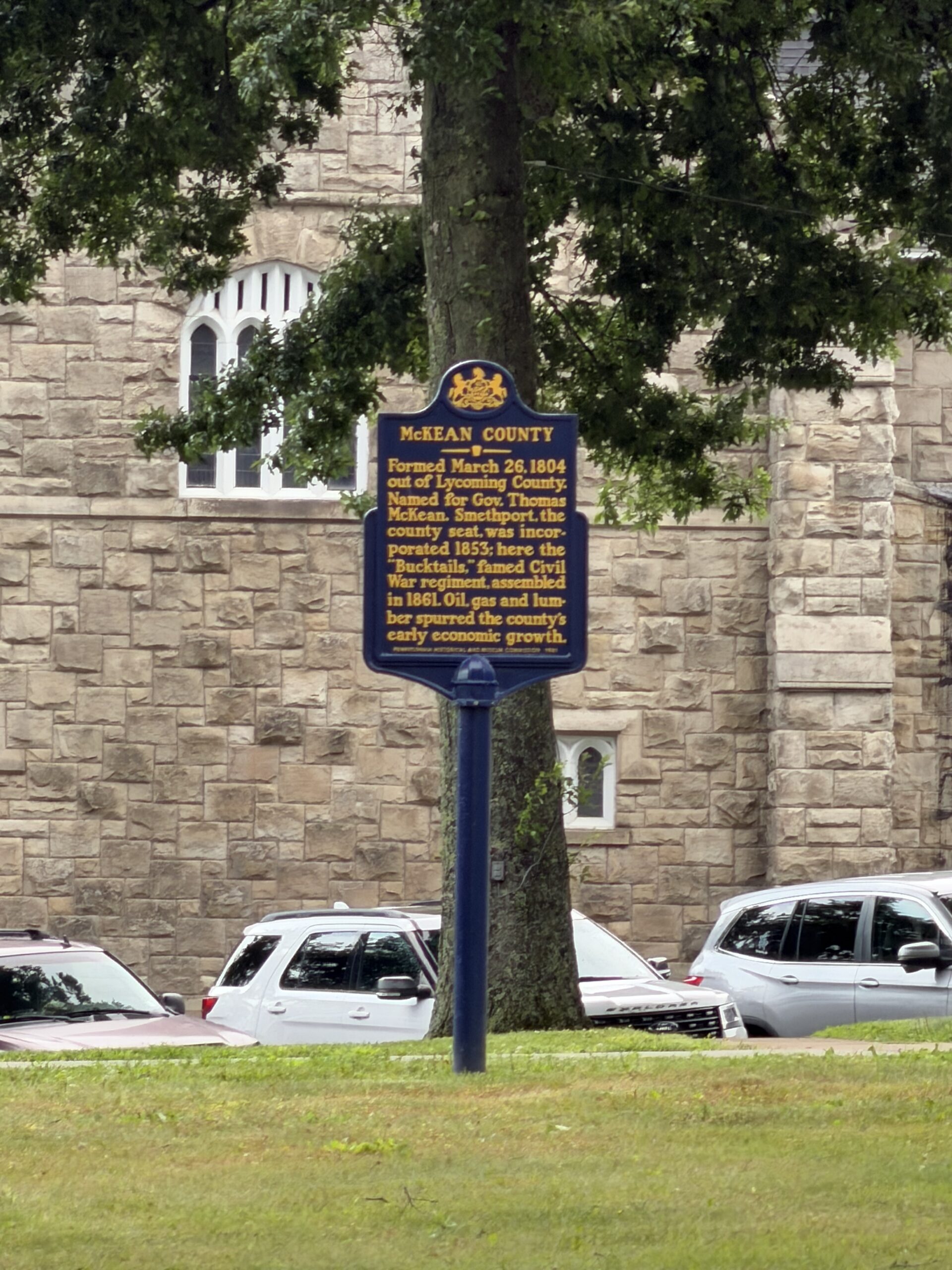
Stop #10 – McKean County

Formed March 26, 1804 out of Lycoming County. Named for Gov. Thomas McKean. Smethport, the county seat, was incorporated 1853; here the “Bucktails,” famed Civil War regiment, assembled in 1861. Oil, gas, and lumber spurred the county’s early economic growth.

Discovering Lumber Hertitage Through History and Education

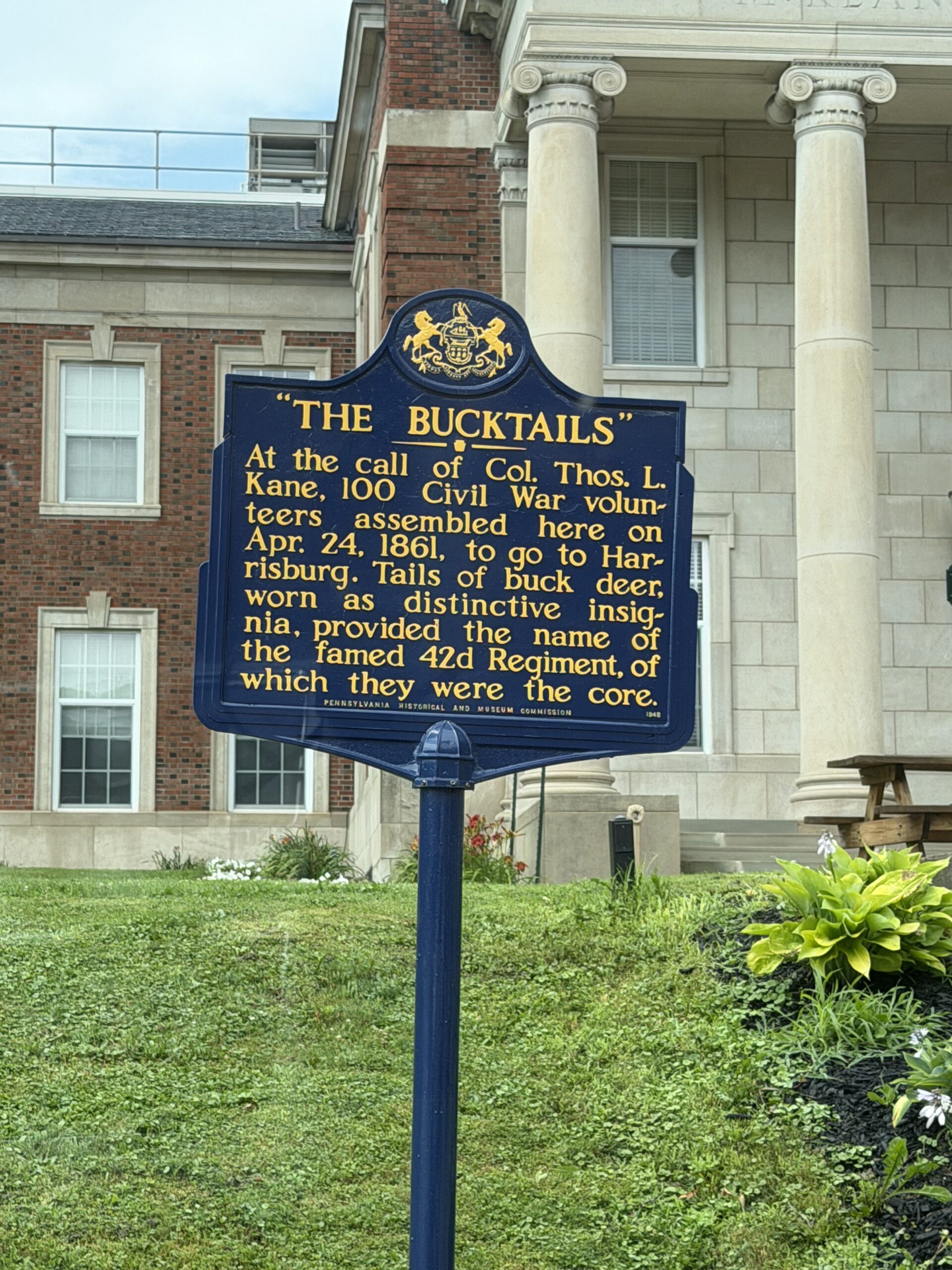
Stop #11 – The Bucktails

At the call of Col. Thos. L. Kane, 100 Civil War volunteers assembled here on Apr. 24, 1861, to go to Harrisburg. Tails of buck deer, worn as distinctive insignia, provided the name of the famed 42d Regiment, of which they were the core.

Discovering Lumber Hertitage Through History and Education

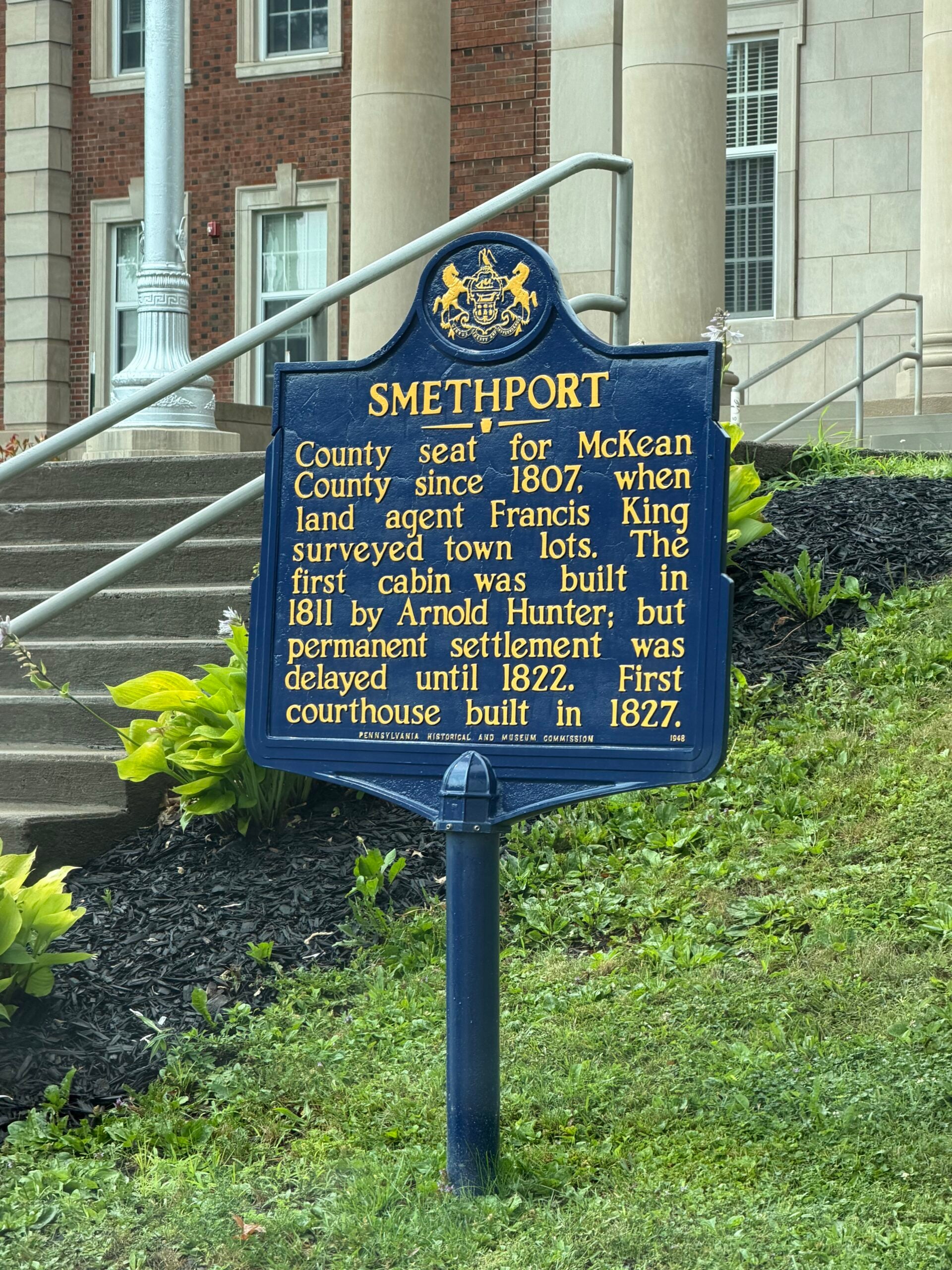
Stop #12 – Smethport

County seat for McKean County since 1807, when land agent Francis King surveyed town lots. The first cabin was built in 1811 by Arnold Hunter; but permanent settlement was delayed until 1822. First courthouse built in 1827.

Discovering Lumber Hertitage Through History and Education

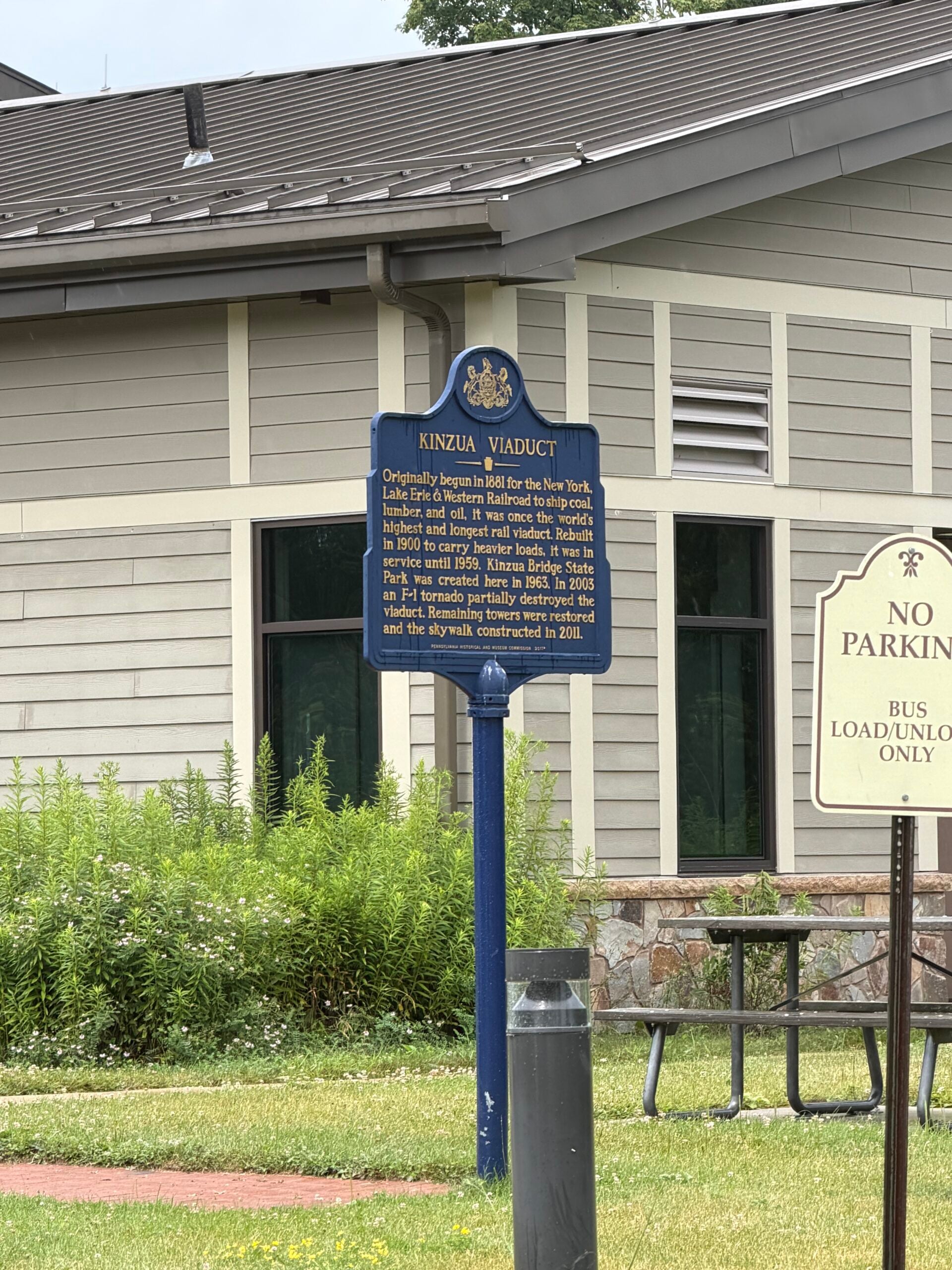
Stop #13 – Kinzua Viaduct

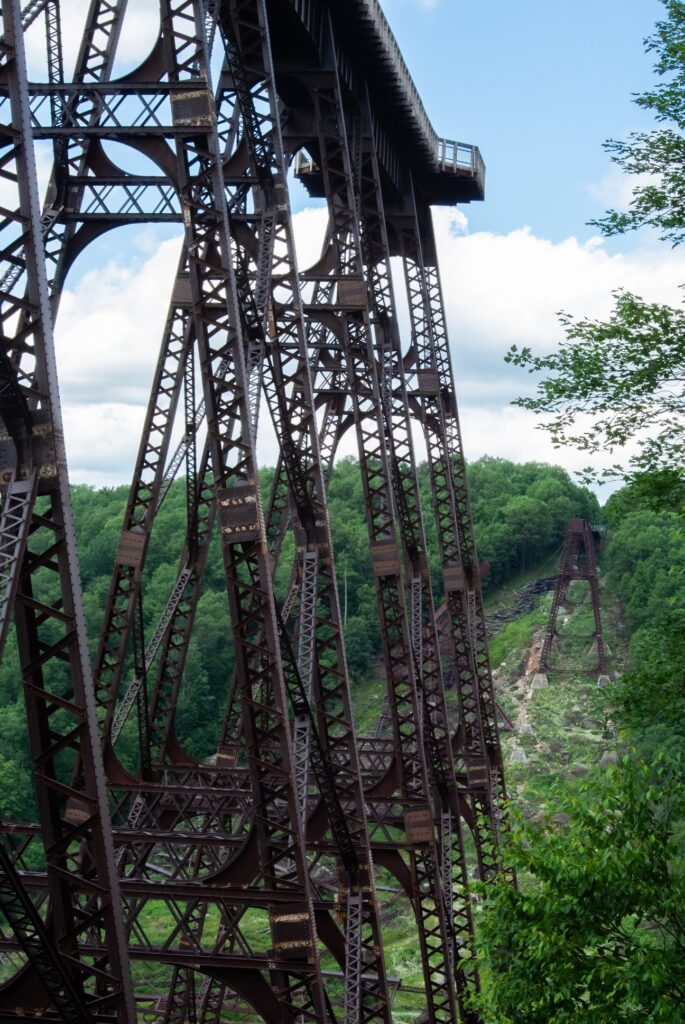
Originally begun in 1881 for the New York, Lake Erie & Western Railroad to ship coal, lumber, and oil, it was once the world’s highest and longest rail viaduct. Rebuilt in 1900 to carry heavier loads, it was in service until 1959. Kinzua Bridge State Park was created here in 1963. In 2003 an F-1 tornado partially destroyed the viaduct. Remaining towers were restored and the skywalk constructed in 2011.

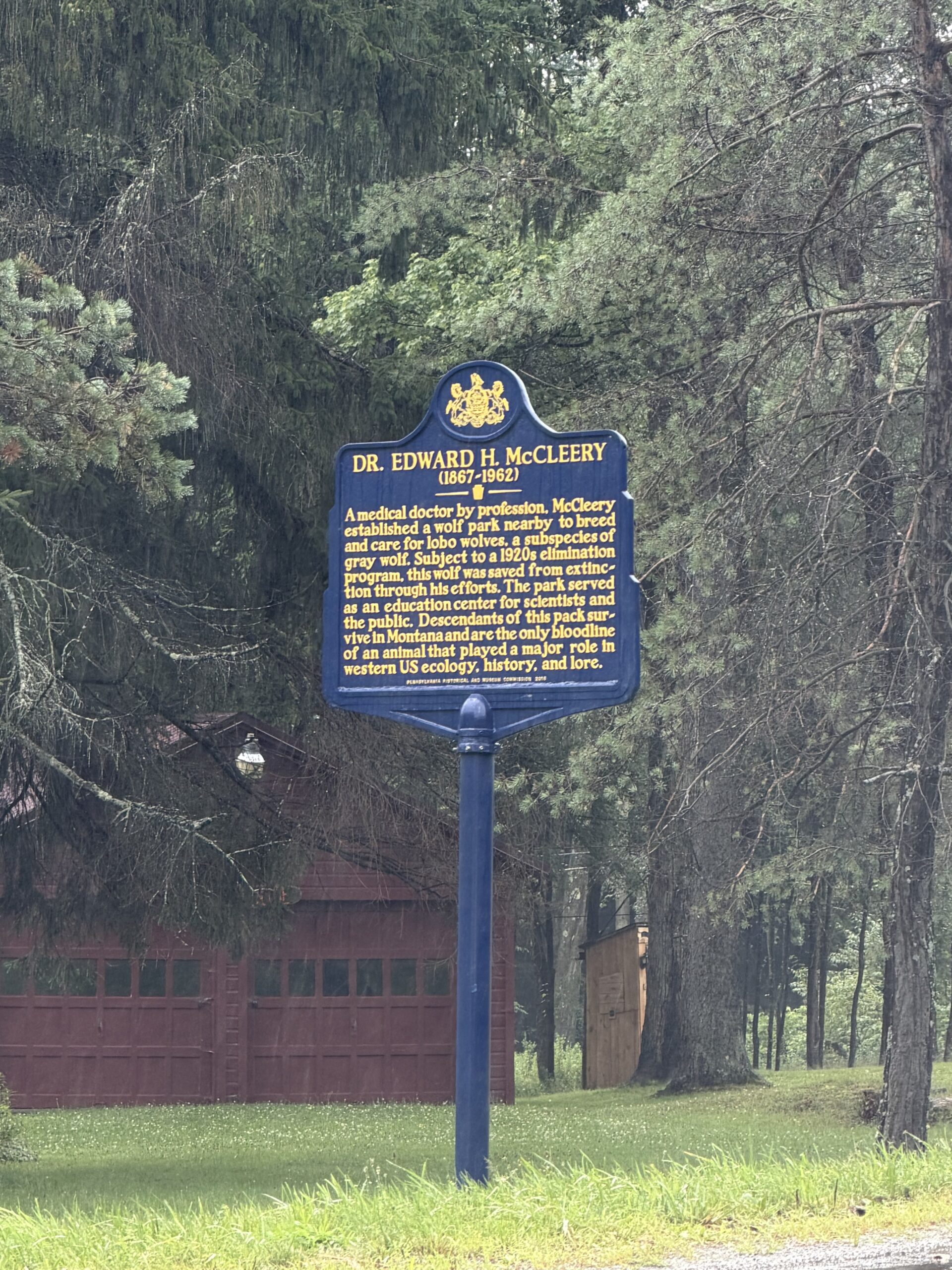
Stop #14 – Dr. Edward H. McCleery (1867-1962)

A medical doctor by profession, McCleery established a wolf park nearby to breed and care for lobo wolves, a subspecies of gray wolf. Subject to a 1920s elimination program, this wolf was saved from extinction through his efforts. The park served as an education center for scientists and the public. Descendants of this pack survive in Montana and are the only bloodline of an animal that played a major role in western US ecology, history, and lore.

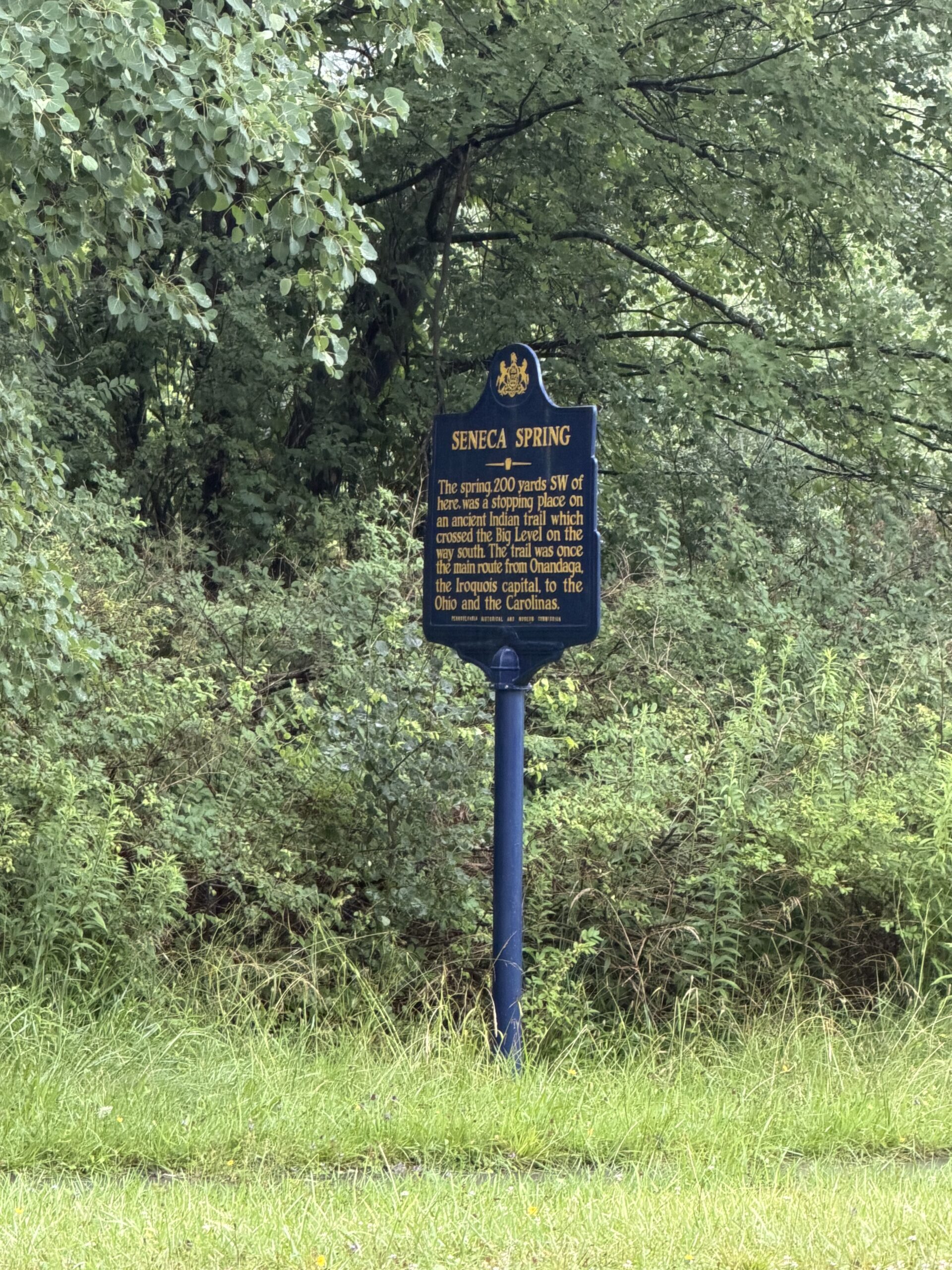
Stop #15 – Seneca Spring

This spring, 200 yards SW of here, was a stopping place on the ancient Indian trail which crossed the Big Level on the way south. The trail was once the main route connecting Onondaga, the Iroquois capital, with the Ohio and the Carolinas.

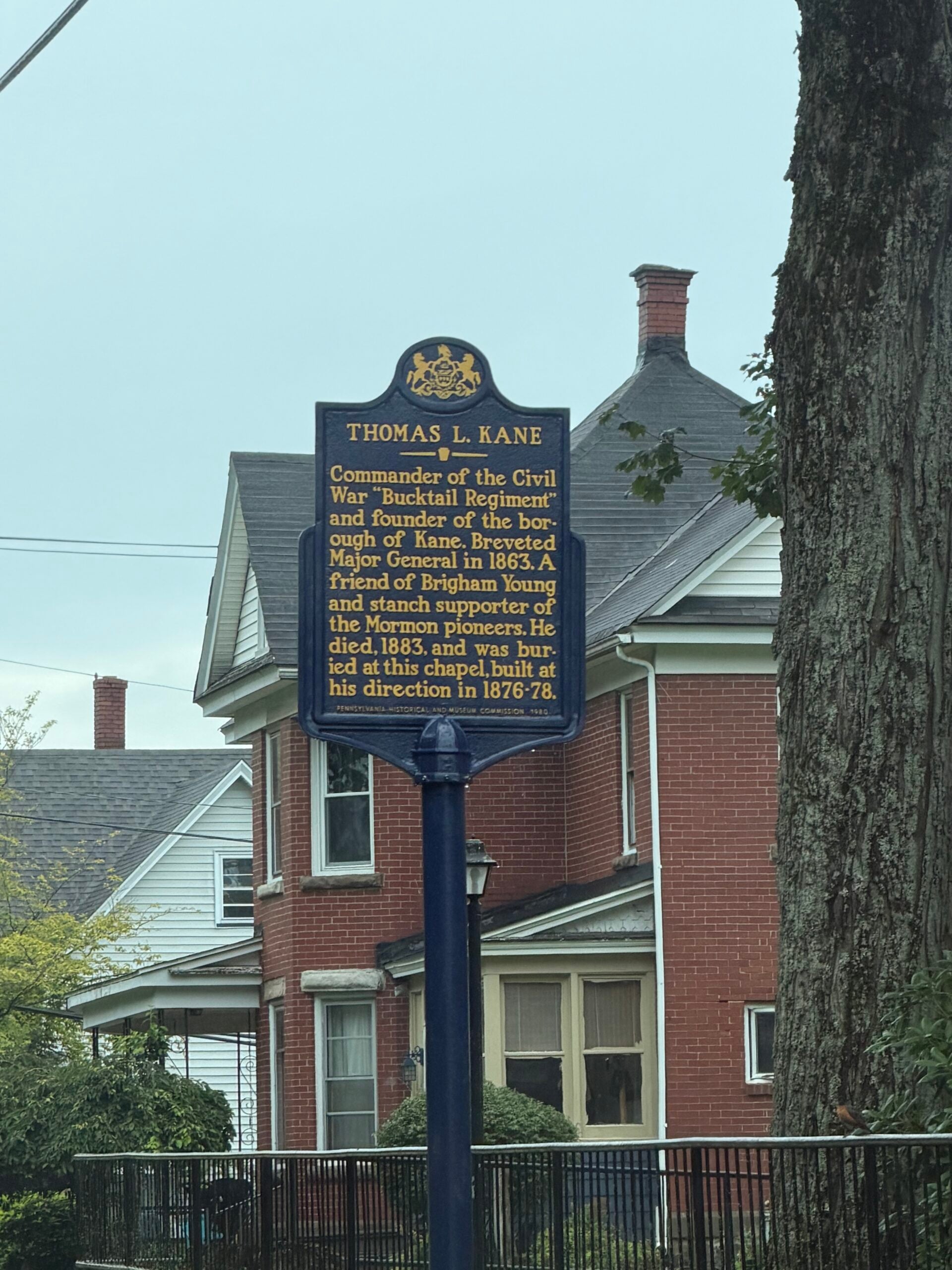
Stop #16 – Thomas L. Kane

Commander of the Civil war “Bucktail Regiment” and founder of the borough of Kane. Breveted Major General in 1863. A friend of Brigham Young and staunch supporter of the Mormon pioneers. He died, 1883, and was buried at this chapel, built at his direction in 1876-78.

Follow Us on Instagram