Visit / PA Historical Marker Trail

Clinton County

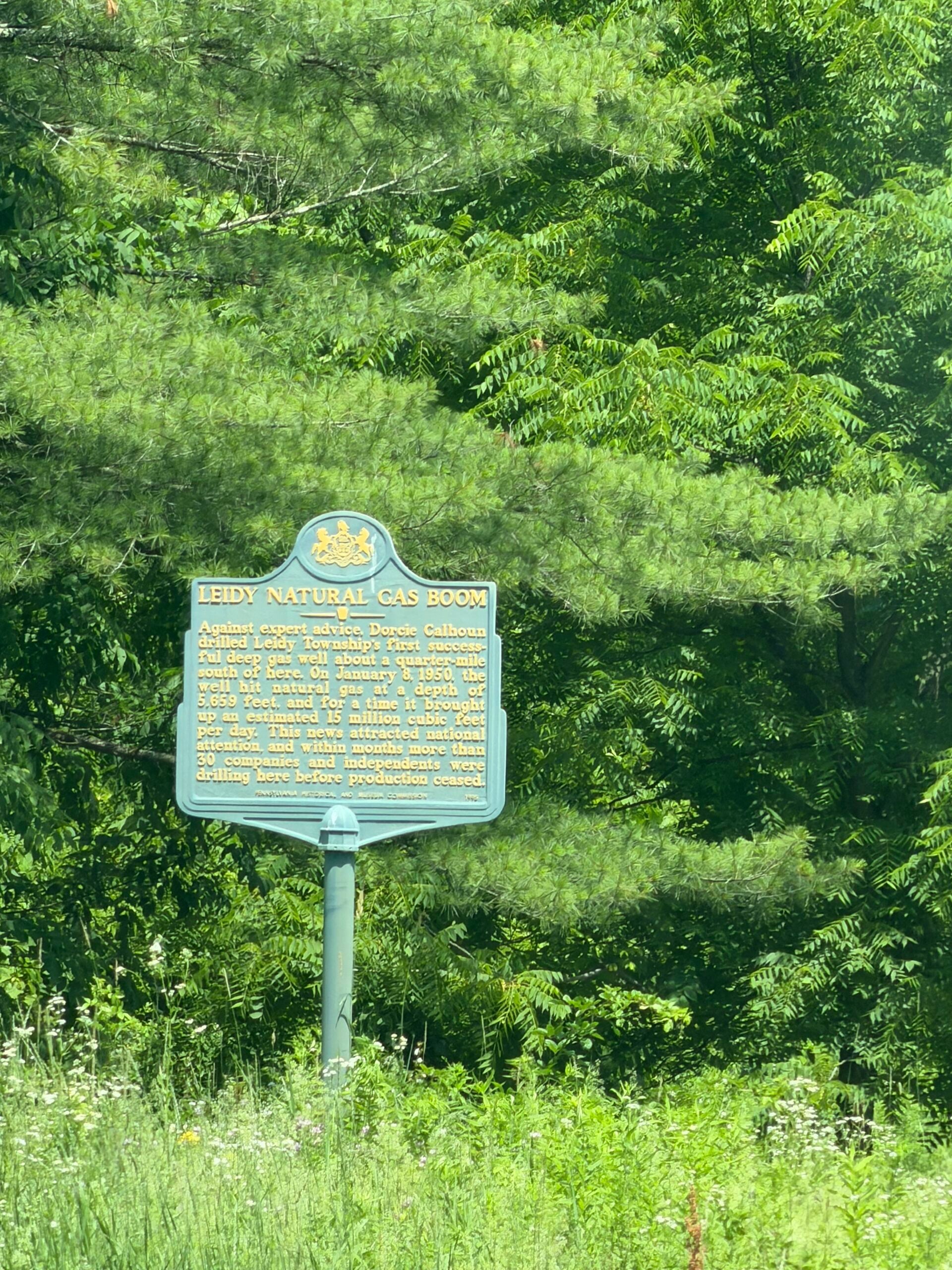
Stop #1 – Leidy Natural Gas Boom

Against expert advice, Dorcie Calhoun drilled Leidy Township’s first successful deep gas well about a quarter-mile south of here. On January 8, 1950, the well hit natural gas at a depth of 5,659 feet, and for a time it brought up an estimated 15 million cubic feet per day. This news attracted national attention, and within months more than 30 companies and independents were drilling here before production ceased.

Discovering Lumber Hertitage Through History and Education

Stop #2 – Sinnemahoning Path

An ancient Indian trail connected the West Branch of the Susquehanna with the Upper Allegheny. From the Great Island at Lock Haven it followed the West Branch, the Sinnemahoning, and Portage Creek, to the Seneca Country.

Discovering Lumber Hertitage Through History and Education

Stop #3 – Great Shamokin Path

By the Indian path along Bald Eagle Creek, in 1772, Bishop Ettwein, Moravian, brought some 200 Christian Mohicans and Delawares from Friedenshuetten, near Wyalusing, to Friedensstadt on the Beaver.

Discovering Lumber Hertitage Through History and Education

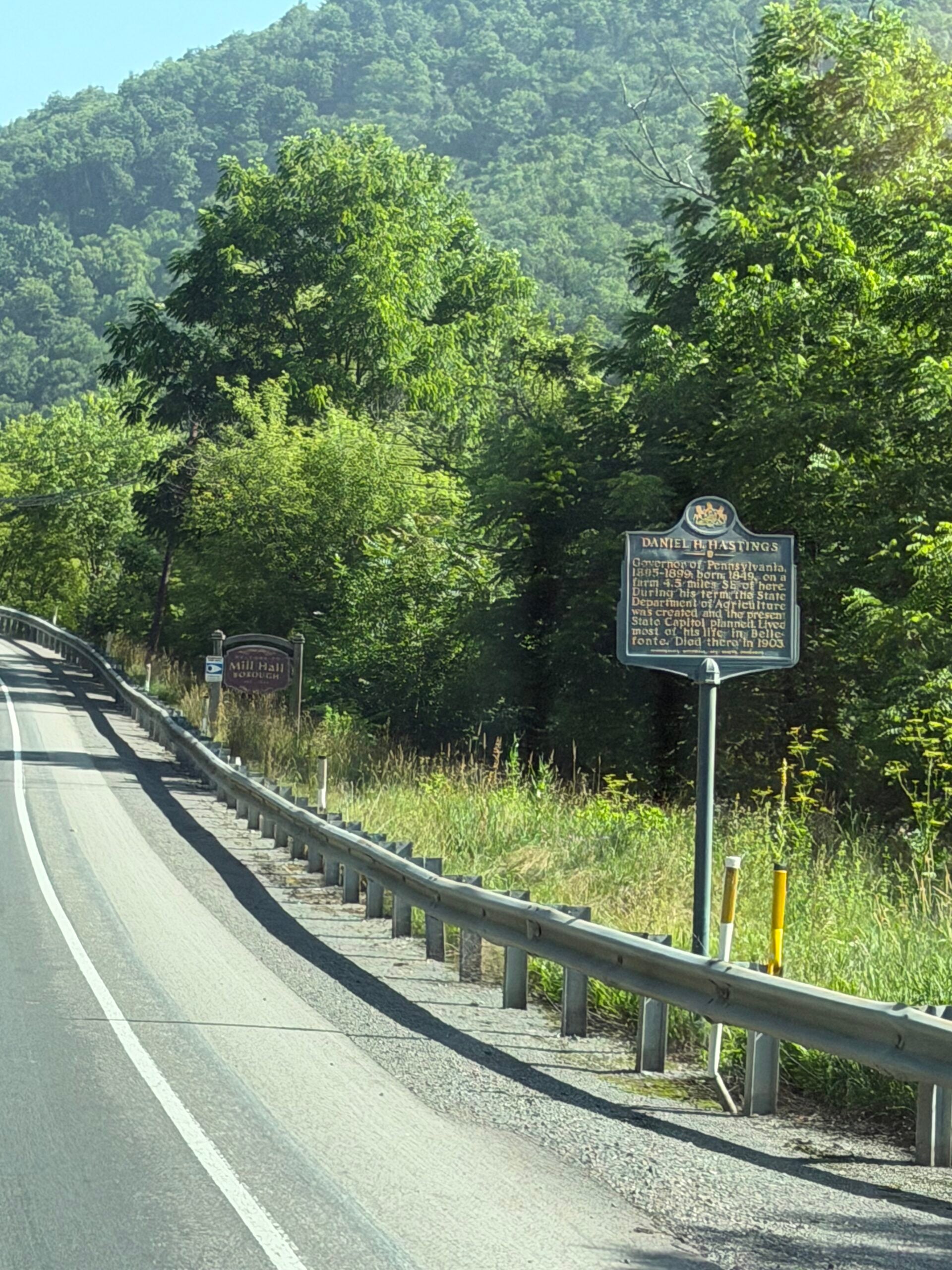
Stop #4 – Daniel H. Hastings

Governor of Pennsylvania, 1895-1899; born, 1849, on a farm 4.5 miles SE of here. During his term, the State Department of Agriculture was created and the present State Capitol planned. Lived most of his life in Bellefonte. Died there in 1903.

Discovering Lumber Hertitage Through History and Education

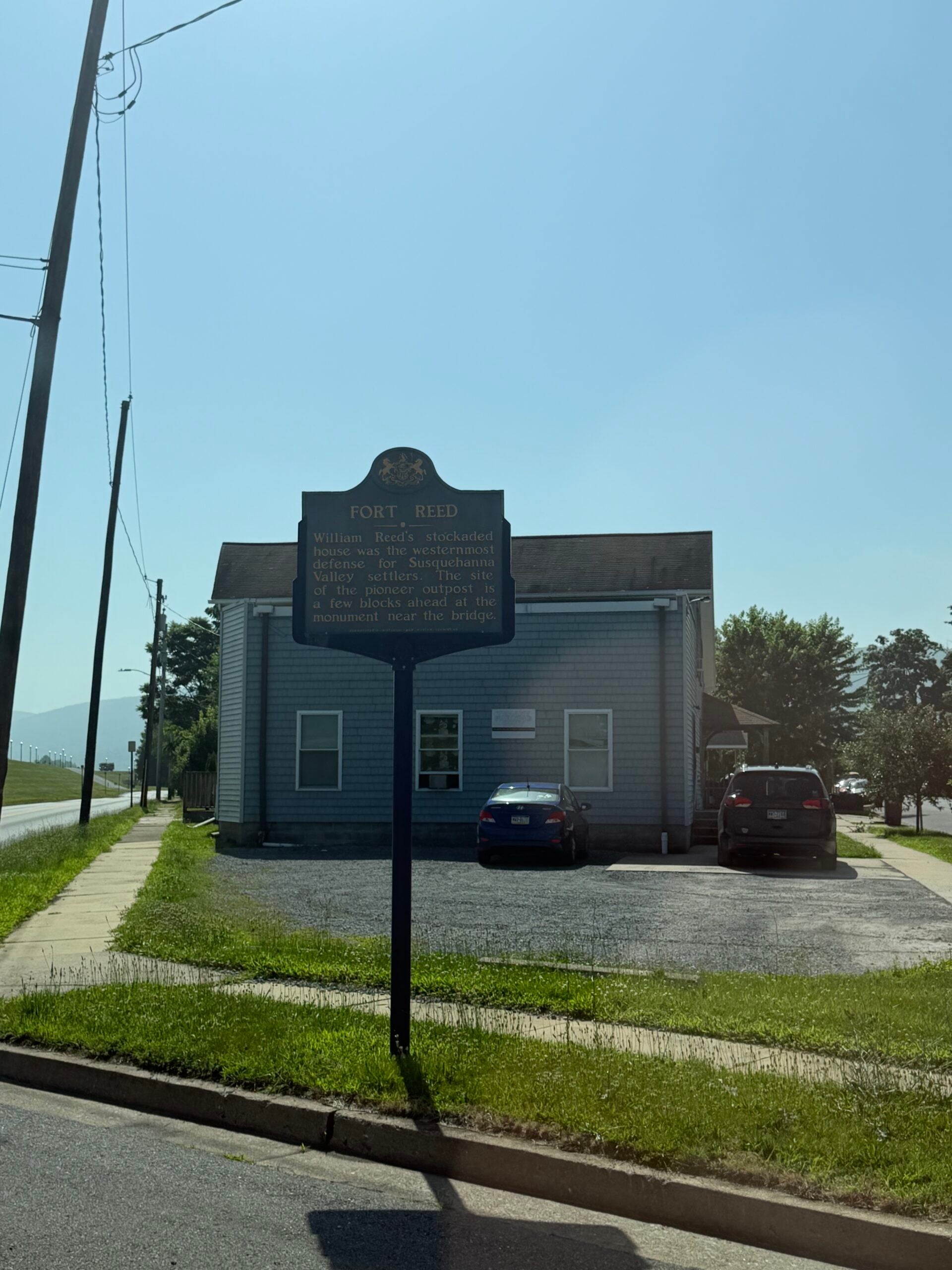
Stop #5 – Fort Reed

William Reed’s stockaded house was the westernmost defense for Susquehanna Valley settlers. The site of the pioneer outpost is a few blocks ahead at the monument near the bridge.


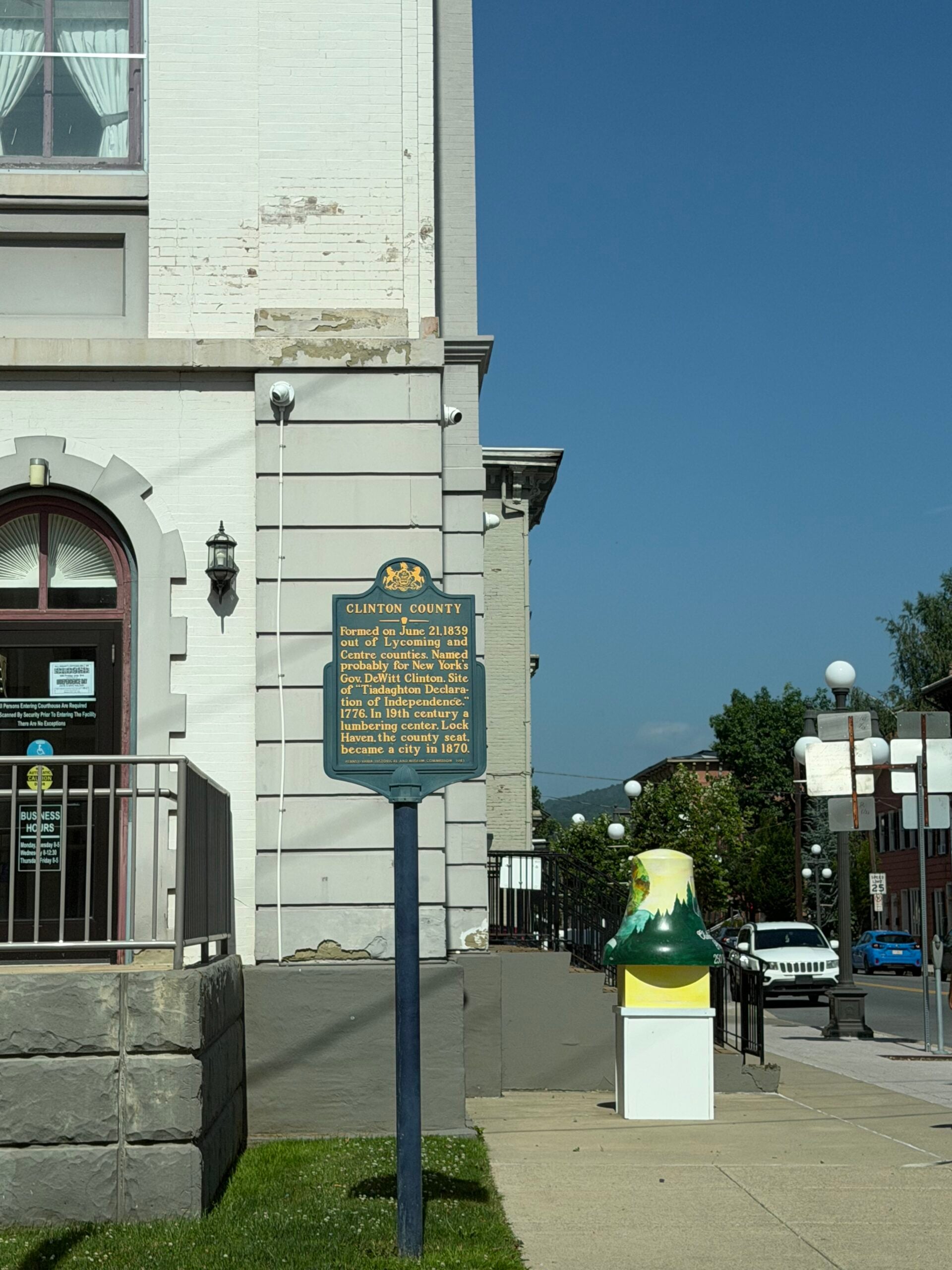
Stop #6 – Clinton County

Formed on June 21, 1839 out of Lycoming and Centre counties. Named probably for New York’s Gov. DeWitt Clinton. Site of “Tiadaghton Declaration of Independence,” 1776. In 19th century a lumbering center. Lock Haven, the county seat, became a city in 1870.


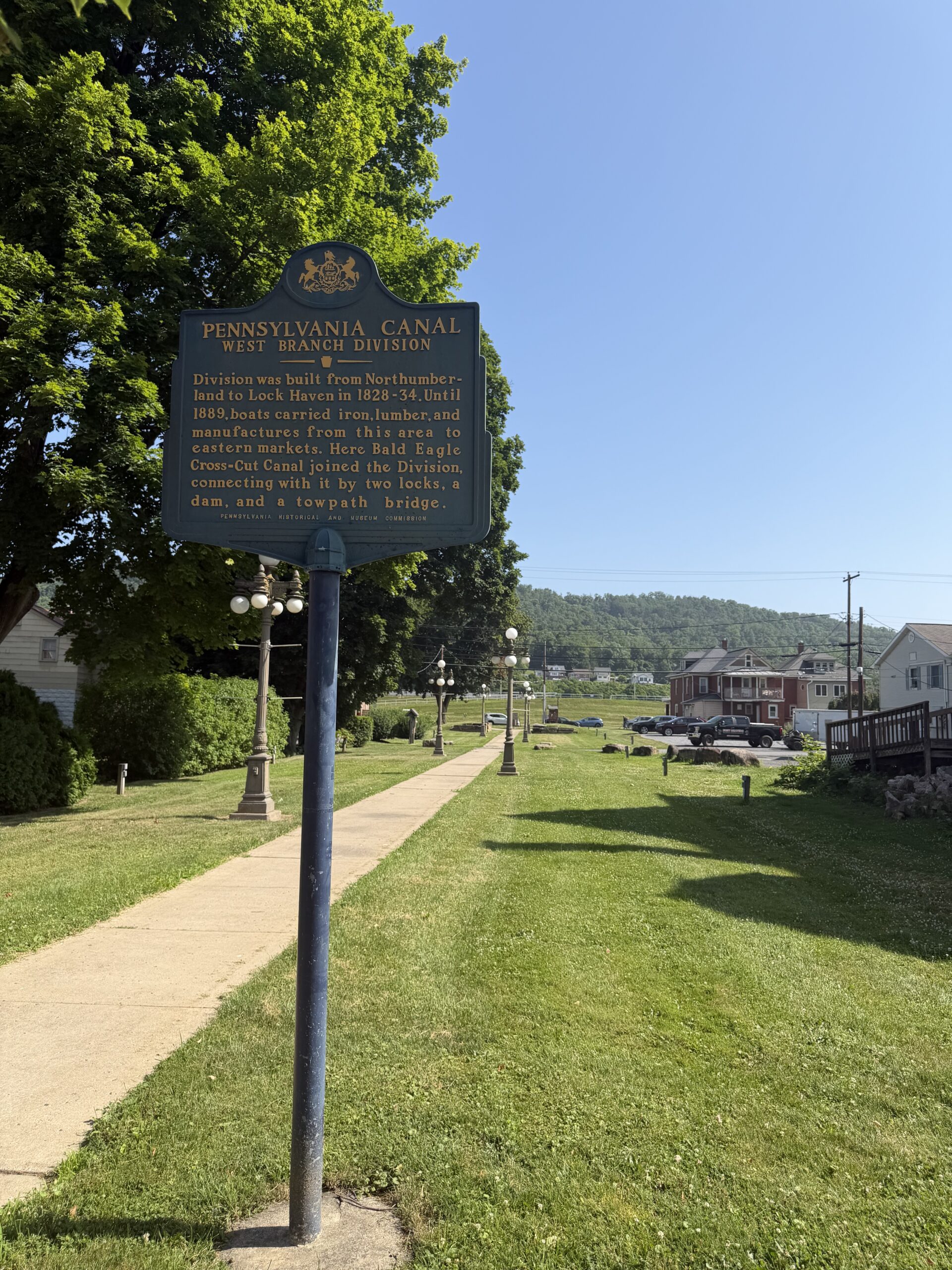
Stop #7 – Pennsylvania Canal (West Branch Division)

Division was built from Northumberland to Lock Haven in 1828-34. Until 1889 boats carried iron, lumber and manufacturers from this area to eastern markets. Here the Bald Eagle Cross Cut Canal joined the division connecting with it by two locks, a dam and a tow-path bridge.


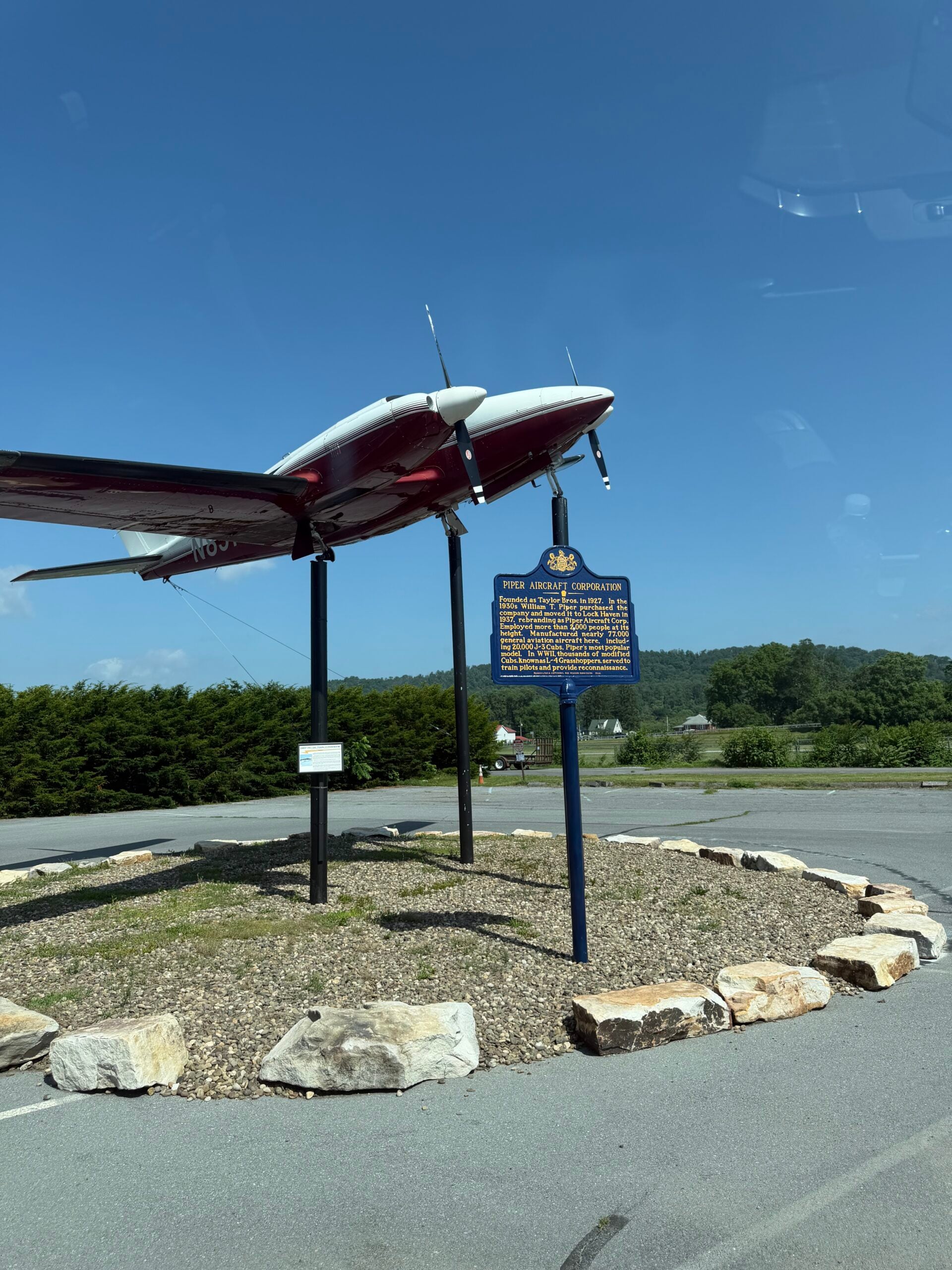
Stop #8 – Piper Aircraft Corporation

Founded as Taylor Bros. in 1927. In the 1930s William T. Piper purchased the company and moved it to Lock Haven in 1937, rebranding as Piper Aircraft Corp. Employed more than 2,000 people at its height. Manufactured nearly 77,000 general aviation aircraft here, include-ing 20,000 J-3 Cubs, Piper’s most popular model. In WWII, thousands of modified Cubs, known as L-4 Grasshoppers, served to train pilots and provide reconnaissance.


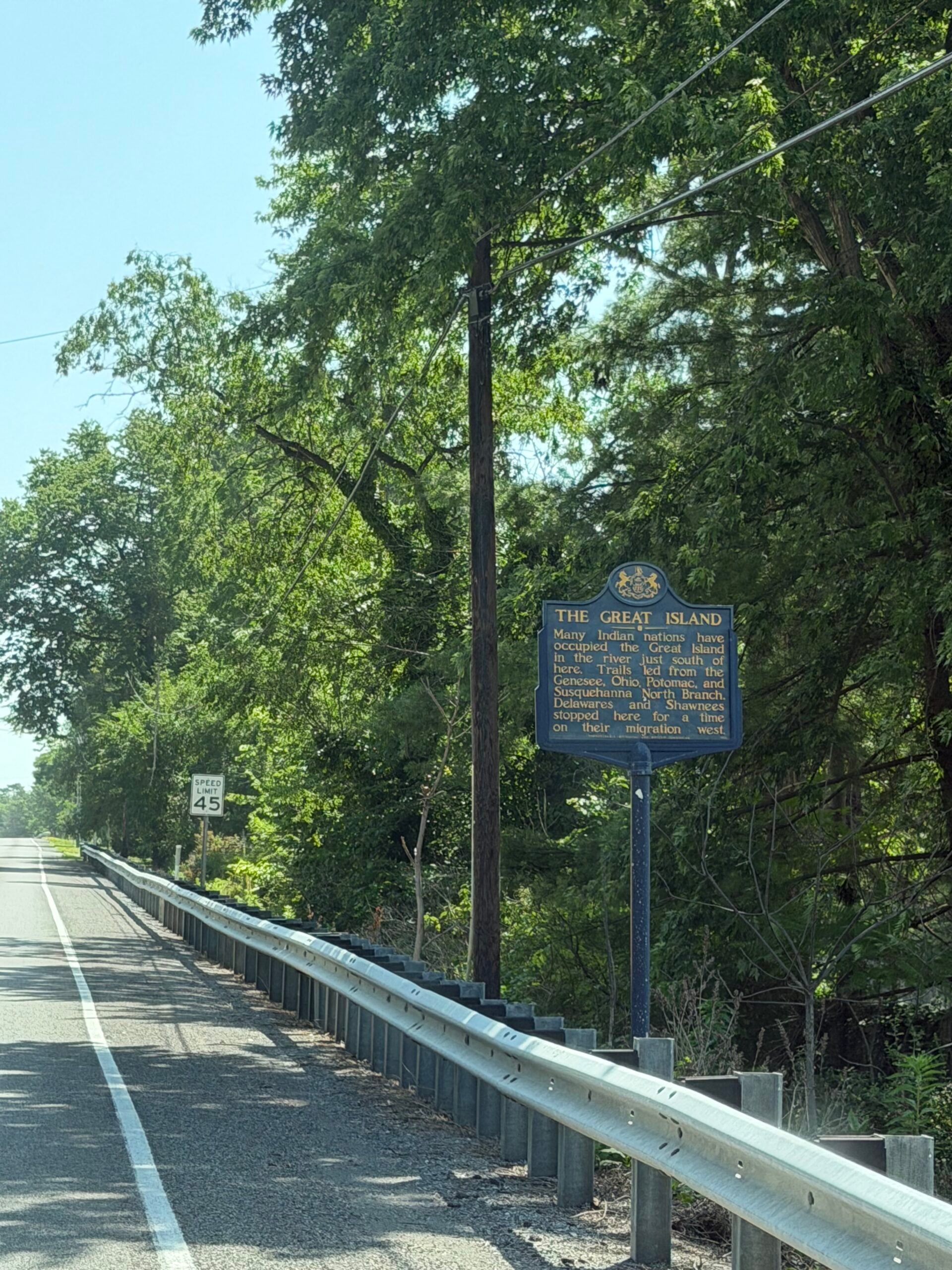
Stop #9 – The Great Island

Many Indian nations have occupied the Great Island in the river just south of here. Trails led from the Genesee, Ohio, Potomac, and Susquehanna North Branch. Delawares and Shawnees stopped here for a time on their migration west.

Stop #10 – Fort Horn

A defensive log house outpost, stockaded in 1777. Located on high ground on the south bank, opposite this spot, it commanded the Susquehanna. Abandoned in the Great Runaway of 1778.

Discovering Lumber Hertitage Through History and Education

Stop #11 – Shamokin Path

Much-traveled Indian path; followed north shore of Susquehanna from Shamokin, now Sunbury, to the Big Island at Lock Haven. Used by Delawares and Shawnees on migration to the Ohio country before French and Indian War.

Discovering Lumber Hertitage Through History and Education

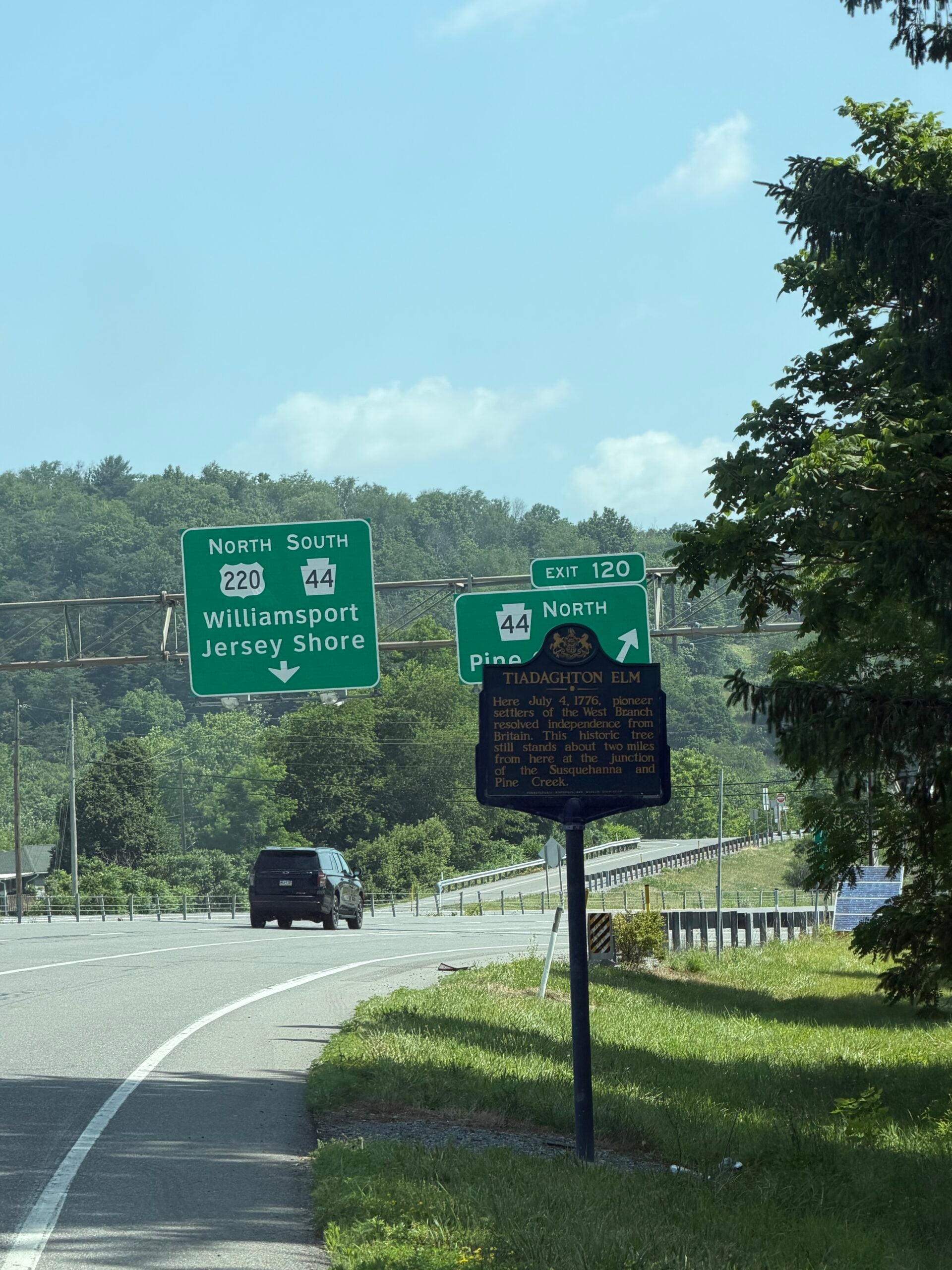
Stop #12 – Tiadaghton Elm

Here July 4, 1776, pioneer settlers of the West Branch resolved independence from Britain. This historic tree still stands about two miles from here at the junction of the Susquehanna and Pine Creek.

Discovering Lumber Hertitage Through History and Education

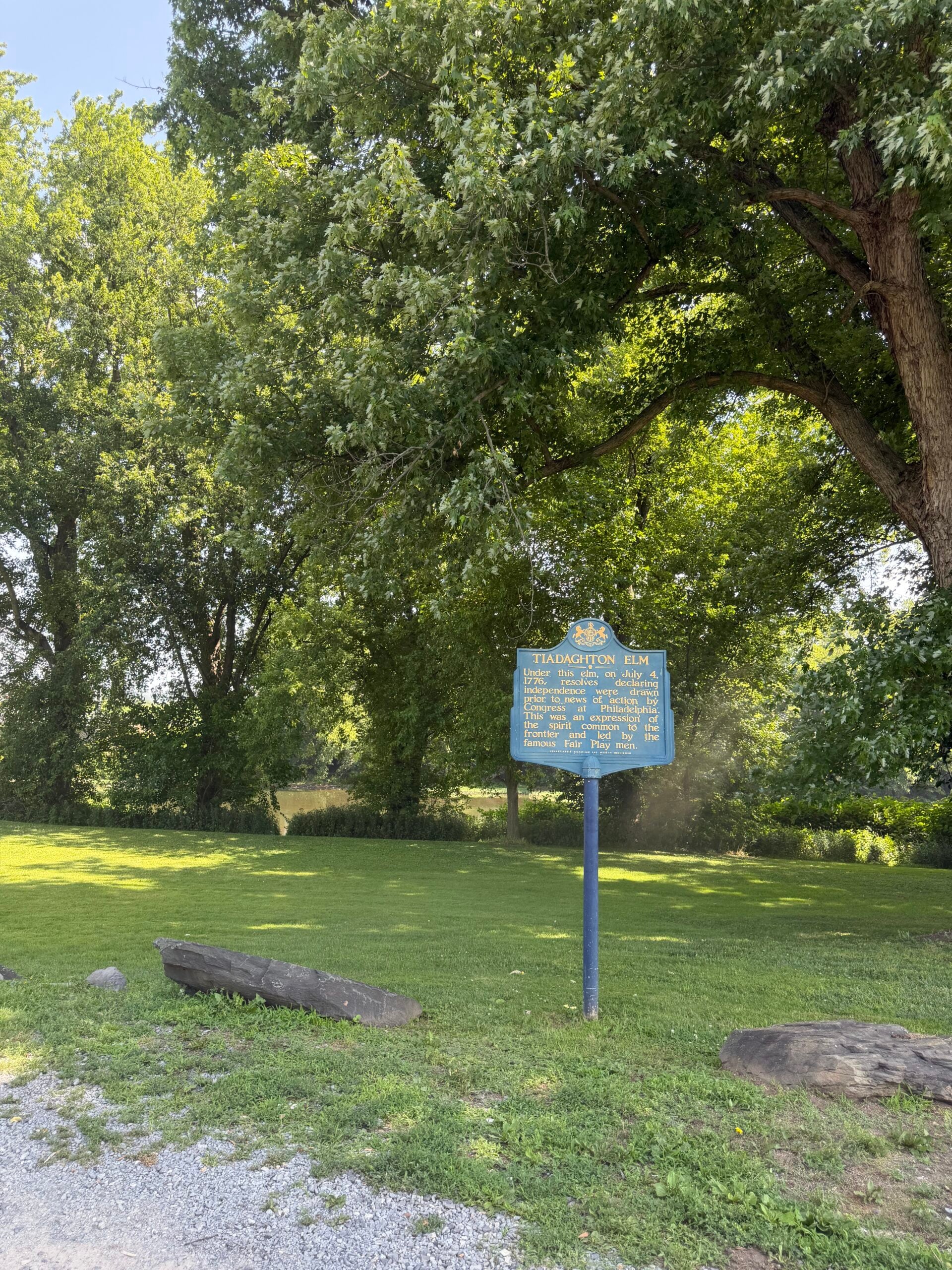
Stop #13 – Tiadaghton Elm

Under this elm, on July 4, 1776, resolves declaring independence were drawn prior to news of action by Congress at Philadelphia. This was an expression of the spirit common to the frontier and led by the famous Fair Play men.

Discovering Lumber Hertitage Through History and Education

Follow Us on Instagram