Visit / PA Historical Marker Trail

Clearfield County

Stop #1 – Karthaus Furnace

Near here stood the iron furnace erected 1817 by Peter Karthaus. Rebuilt 1836 by Peter Ritner and John Say, it became in 1839 one of the earliest to use coke in place of charcoal. Abandoned at the end of the same year.


Discovering Lumber Hertitage Through History and Education

Stop #2 – Zenas Leonard (1809-1857)

Clearfield native and fur trader, Leonard was second in command of the Joseph Reddeford Walker Expedition from 1831-1834 to find a route to the Pacific Ocean through the Sierra Nevada Mountains. Leonard served as the expedition”s clerk and chronicler, recording the first non-native American encounter of giant sequoia trees. In 1839 Leonard published his account of the expedition, recognized for its detailed descriptions.

Discovering Lumber Hertitage Through History and Education

Stop #3 – Clearfield County

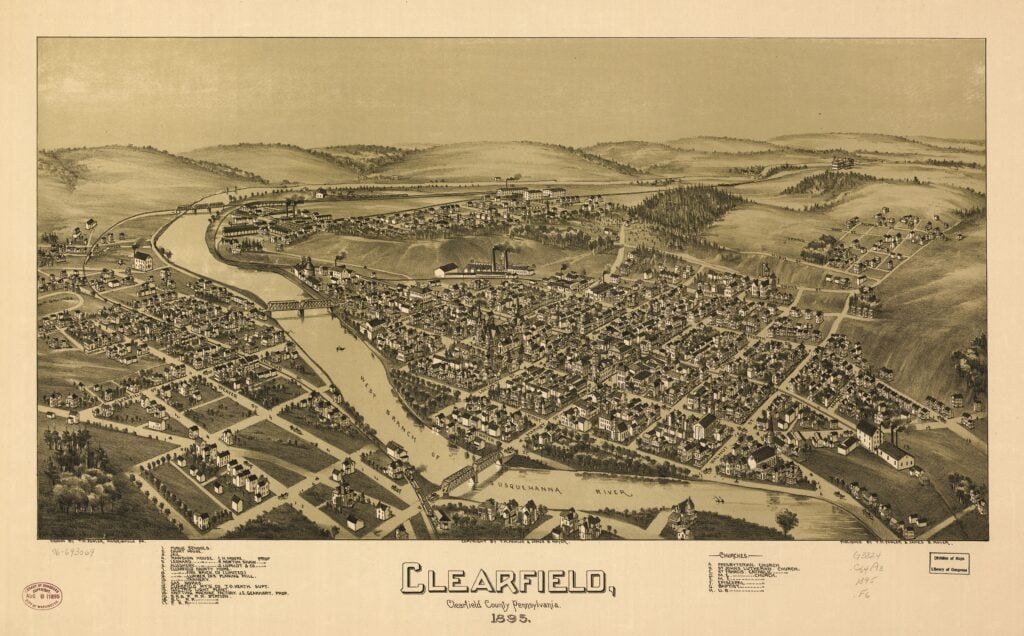
Formed March 26, 1804 out of Huntingdon and Lycoming counties. Clear fields, found by early travelers, gave rise to the name. County was important for logging and rafting on the West Branch, 1850-1901. The county seat, Clearfield, was incorporated 1840.

Discovering Lumber Hertitage Through History and Education

Stop #4 – William Bigler (1814-1880)

State Senator, 1841-1847; Governor of Pennsylvania, 1852-1855; and U.S. Senator, 1856-1861. Opposed slavery; favored a Southern compromise to avoid the Civil War. His brother, John, was elected Governor of California, 1852. Resided here.

Discovering Lumber Hertitage Through History and Education

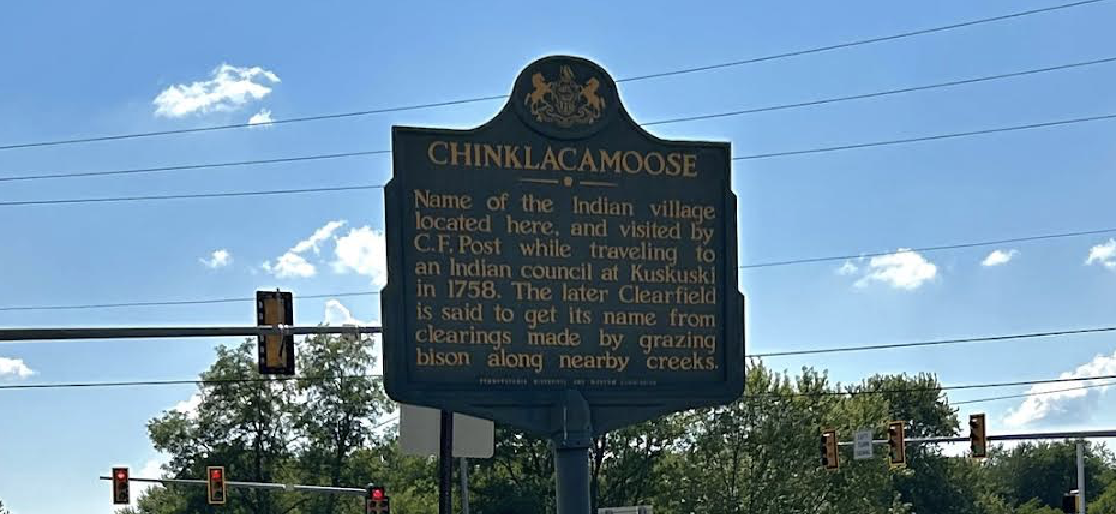
Stop #5 – Chinklacmoose

Name of the Indian village located here, and visited by C.F. Post while traveling to an Indian council at Kuskuski in 1758. The later Clearfield is said to get its name from clearings made by grazing bison along nearby creeks

Image of the Chinklacmoose historical marker

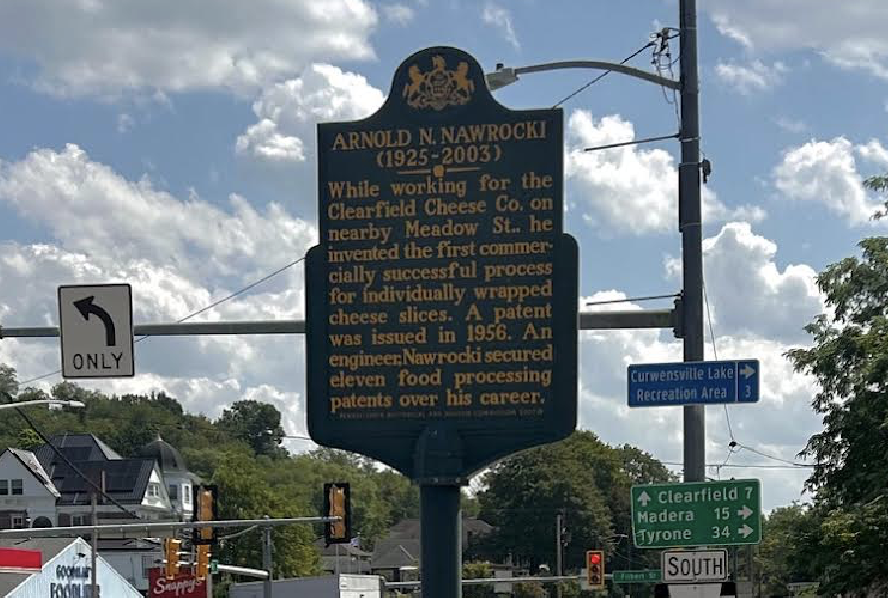
Stop #6 – Arnold N. Nawrocki (1925-2003)

While working for the Clearfield Cheese Co. on nearby Meadow St., he invented the first commercially successful process for individually wrapped cheese slices. A patent was issued in 1956. An engineer, Nawrocki secured eleven food processing patents over his career.

Image of the Arnold N. Nawrocki historical marker

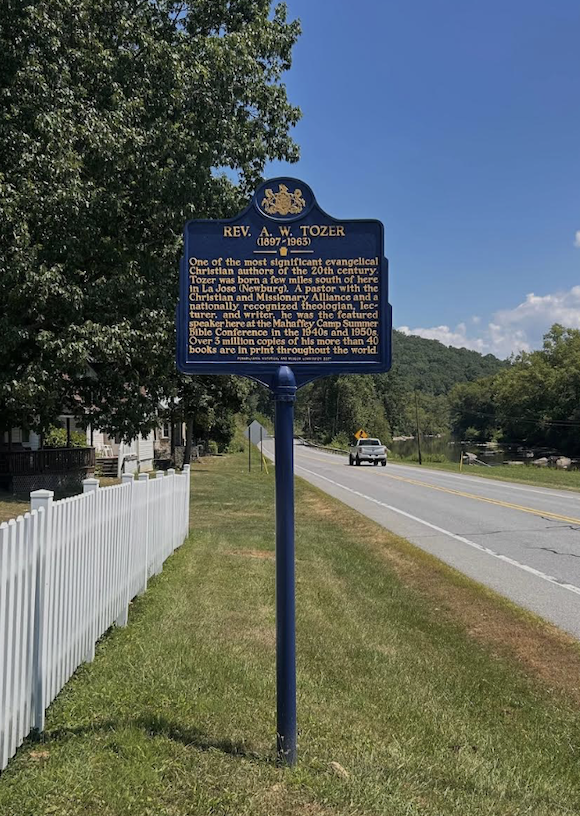
Stop #7 – Rev. A. W. Tozer (1897-1963)

One of the most significant evangelical Christian authors of the 20th century, Tozer was born a few miles south of here in LaJose (Newburg). A pastor with The Christian and Missionary Alliance and a nationally recognized theologian, lecturer and writer, he was the featured speaker here at the Mahaffey Camp Summer Bible Conference in the 1940s and 1950s. Over 3 million copies of his more than 40 books are in print throughout the world.

Image of the Rev A. W. Tozer historical marker

Stop #8 – “Canoe Place”

Indians traveling from the Allegheny to the West Branch by way of Portage-Driftwood Creeks, carried their canoes over the divide — a distance of 23 miles — to the other “Canoe Place,” near present Emporium Junction.


Stop #9 – The Big Spring

Former camping place at the junction of two Indian paths: the Great Shamokin, running from Sunbury to Kittanning; and the path to Venango, now Franklin. During War of 1812, Maj. McClelland’s force camped here. Spring is 60 yards SW.

Discovering Lumber Hertitage Through History and Education

Stop #10 – Old State Road (Milesburg to Waterford)

The first road to the northwest frontier of Pennsylvania. Opened to the Allegheny River in 1804. In this section, it followed, generally, the course of the Chinklacamoose Path. During the War of 1812, troops under Major McClellan were transported over it to Erie. Highway crosses the route of old road at this point.

Discovering Lumber Hertitage Through History and Education

Stop #11 – George Rosenkrans

Noted band composer (1881-1955) lived most of his life in Penfield and was church organist here. Rosenkrans wrote piano and organ music and hymns, as well as over 200 band numbers. Among his marches are “Triumphant Battalions” and “Our Glorious Flag.”

Discovering Lumber Hertitage Through History and Education

Stop #12 – Philip P. Bliss

The great singing evangelist and gospel song writer was born July 9, 1838, in a log house which stood a little distance from here. He lived and worked on the farm and in nearby lumber camps until the age of 16.

Discovering Lumber Hertitage Through History and Education

Follow Us on Instagram