Visit / PA Historical Marker Trail

Cambria County

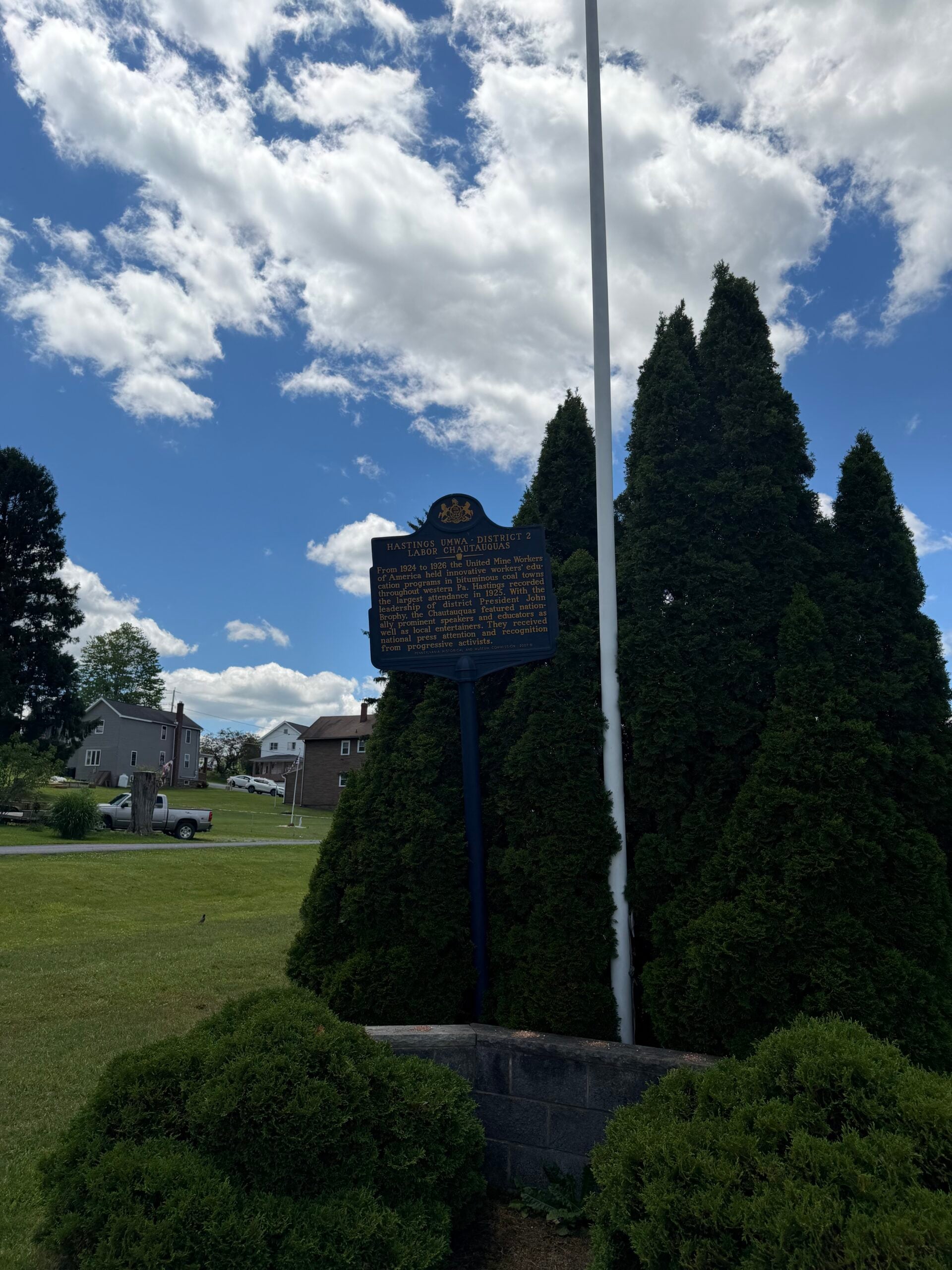
Stop #1 – Hastings UMWA – District 2 Labor Chautauquas

From 1924 to 1926 the United Mine Workers of America held innovative workers’ education programs in bituminous coal towns throughout western Pa. Hastings recorded the largest attendance in 1925. With the leadership of district President John Brophy, the Chautauquas featured nationally prominent speakers and educators as well as local entertainers. They received national press attention and recognition from progressive activists.

Discovering Lumber Hertitage Through History and Education

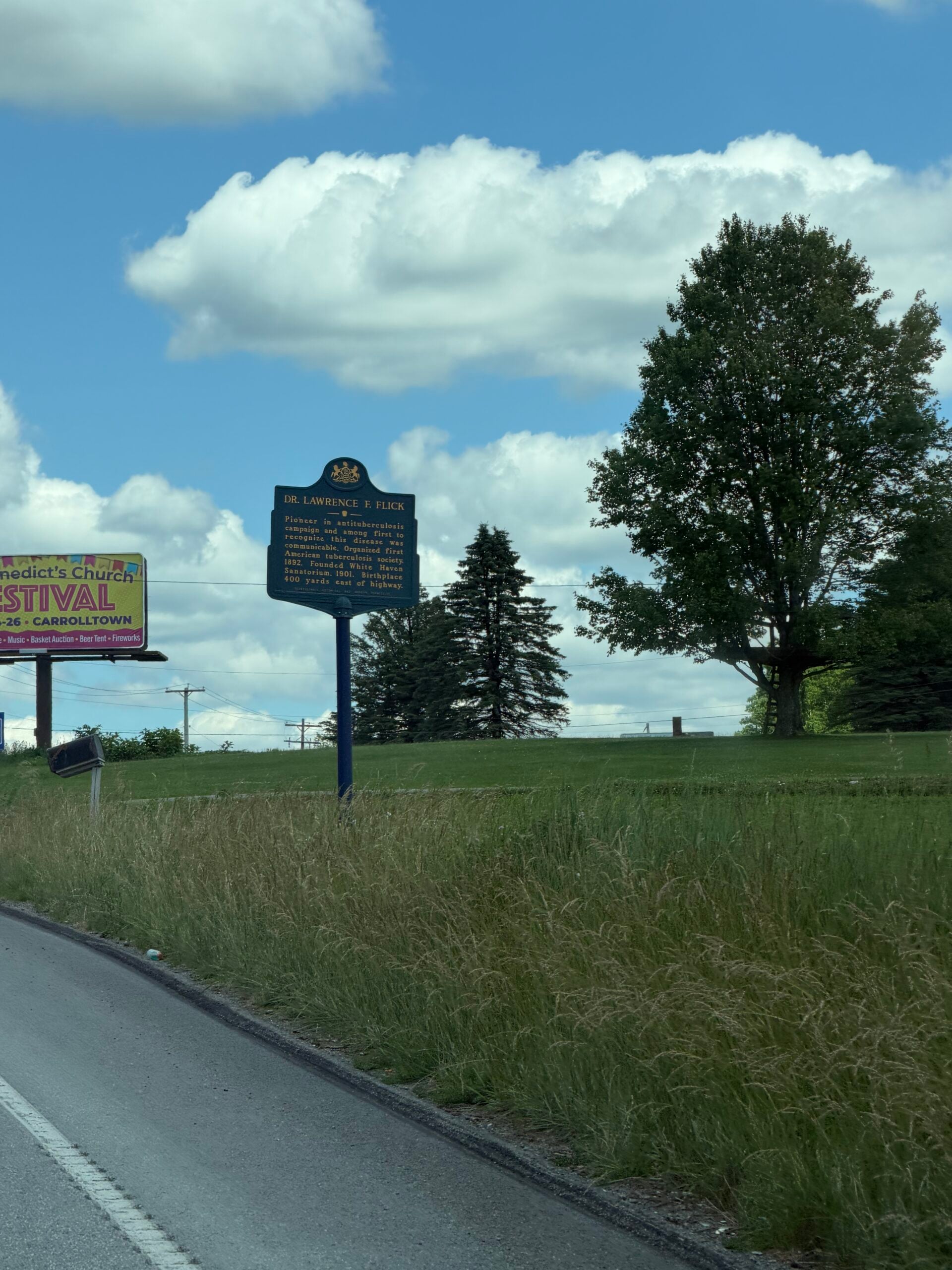
Stop #2 – Dr. Lawrence F. Flick

Pioneer in antitubercular campaign and among first to recognize this disease was communicable. Organized first American tuberculosis society, 1892. Founded White Haven Sanatorium, 1901. Birthplace 400 yards east of highway.

Discovering Lumber Hertitage Through History and Education

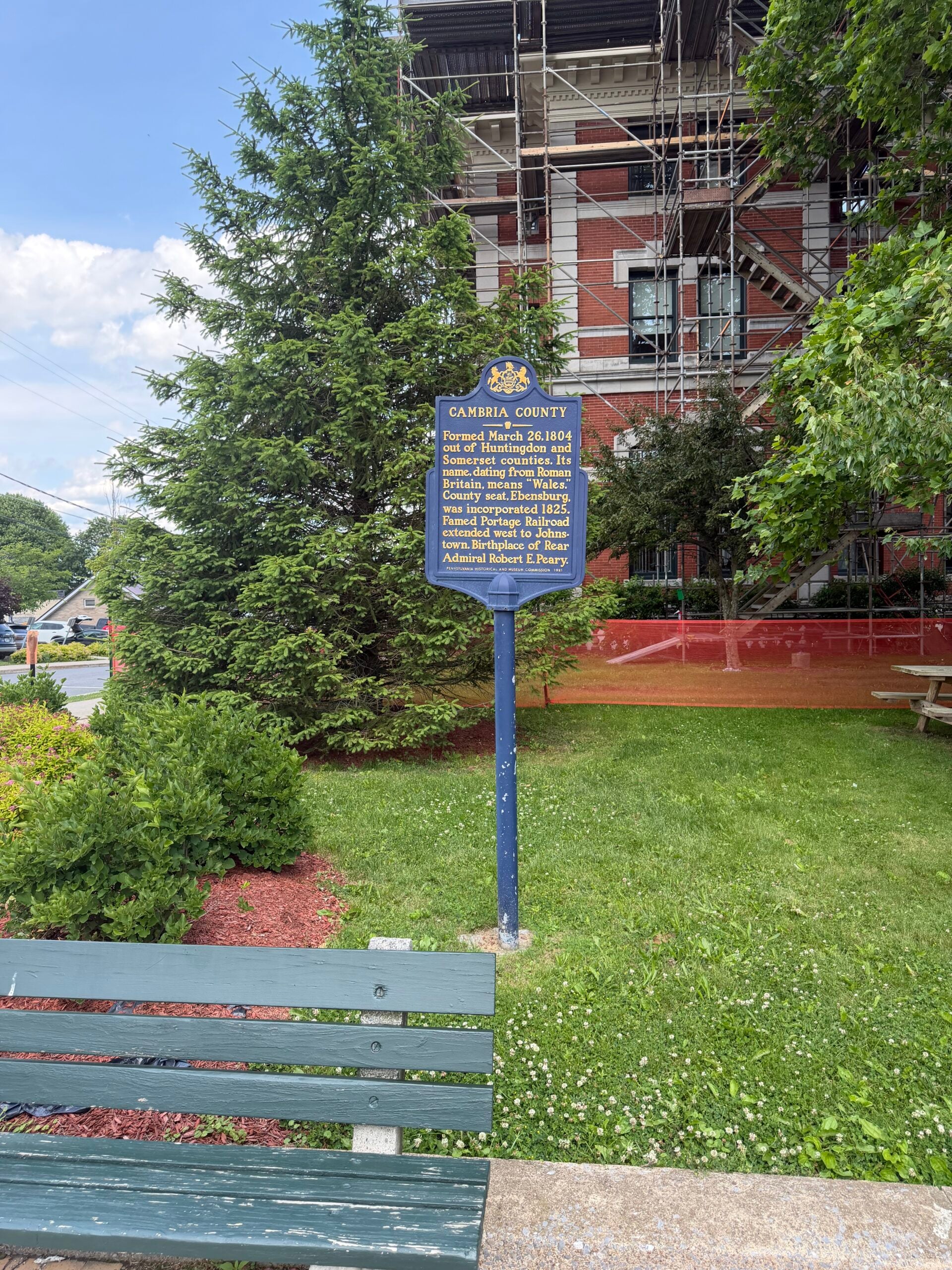
Stop #3 – Cambria County

Formed March 26, 1804 out of Huntingdon and Somerset counties. Its name, dating from Roman Britain, means “Wales.” County seat, Ebensburg, was incorporated 1825. Famed Portage Railroad extended west to Johnstown. Birthplace of Rear Admiral Robert E. Peary.


Discovering Lumber Hertitage Through History and Education

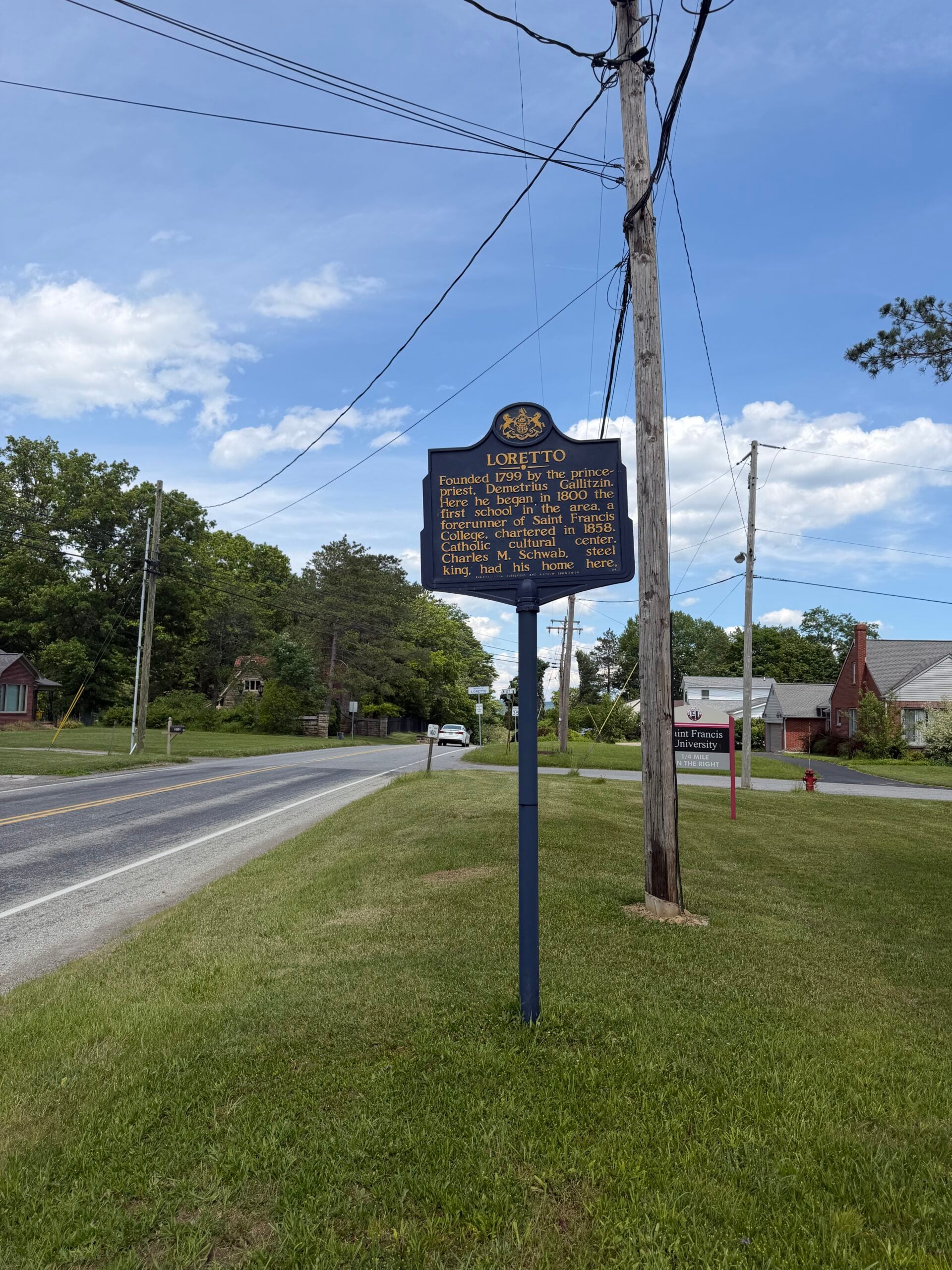
Stop #4 – Loretto

Founded 1799 by the prince-priest Demetrius Gallitzin. Here he began in 1800 the first school in the area, a forerunner of Saint Francis College, chartered in 1858. Catholic cultural center. Charles M. Schwab, steel king, had his home here.


Discovering Lumber Hertitage Through History and Education

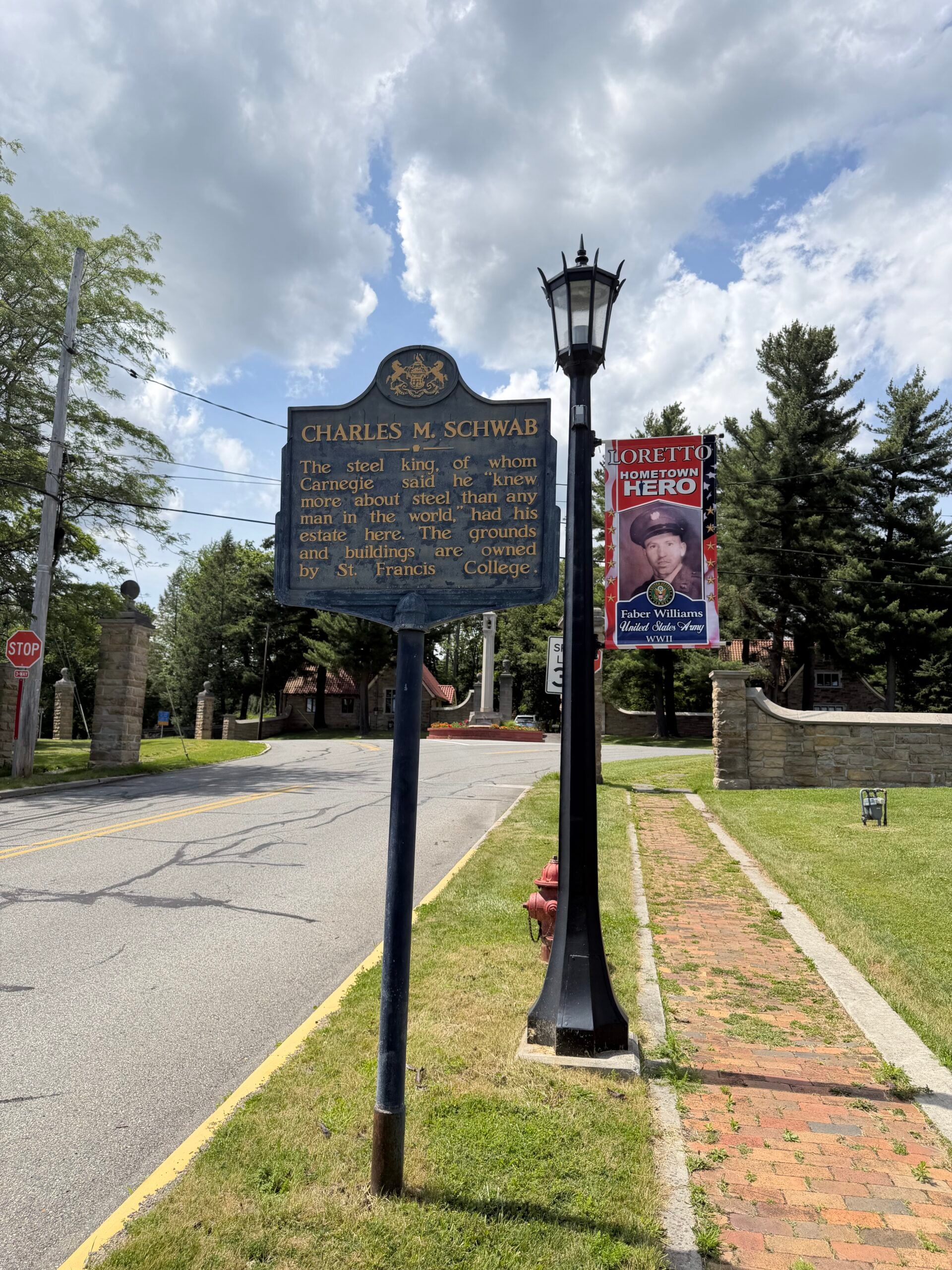
Stop #5 – Charles M. Schwab

The steel king, of whom Carnegie said he “knew more about steel than any man in the world,” had his estate here. The grounds and buildings are owned by St. Francis College.

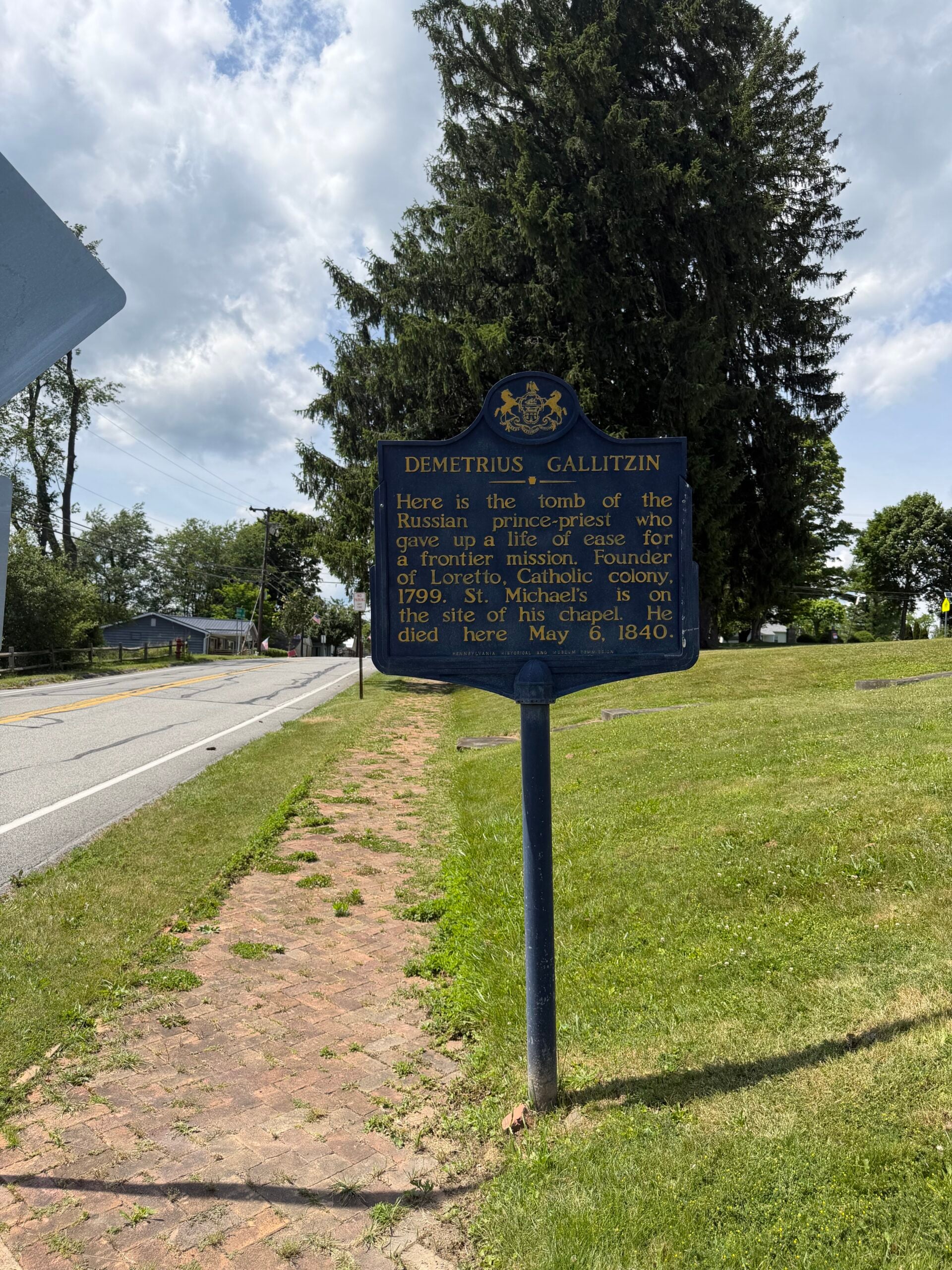
Stop #6 – Demetrius Gallitzin

Here is the tomb of the Russian prince-priest who gave up a life of ease for a frontier mission. Founder of Loretto, Catholic colony, 1799. St. Michael’s is on the site of his chapel. He died here May 6, 1840.

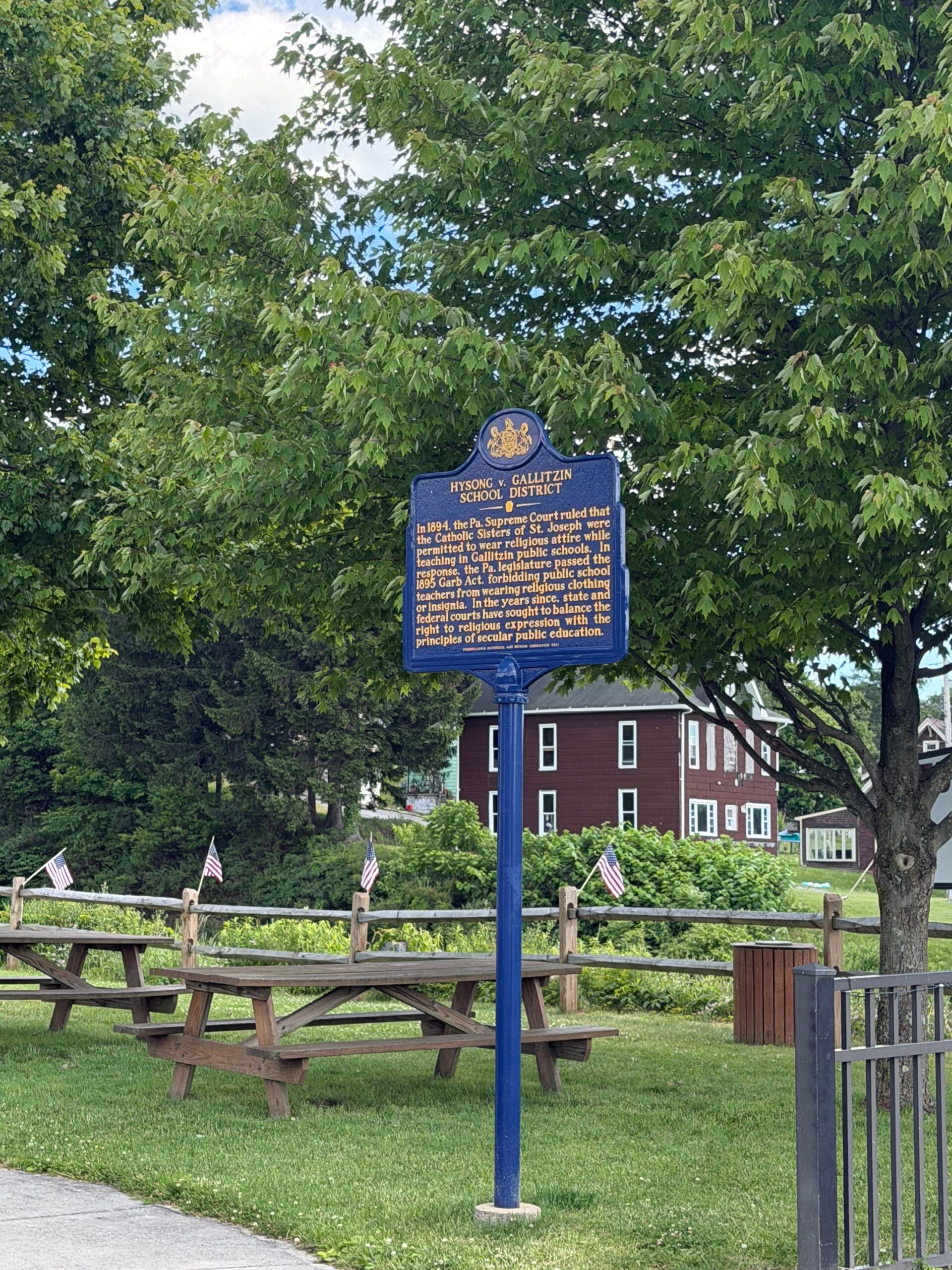
Stop #7 – Hysong v. Gallitzin School District

In 1894, the Pa. Supreme Court ruled that the Catholic Sisters of St. Joseph were permitted to wear religious attire while teaching in Gallitzin public schools. In response, the Pa. legislature passed the 1895 Garb Act, forbidding public school teachers from wearing religious clothing or insignia. In the years since, state and federal courts have sought to balance the right to religious expression with the principles of secular public education.


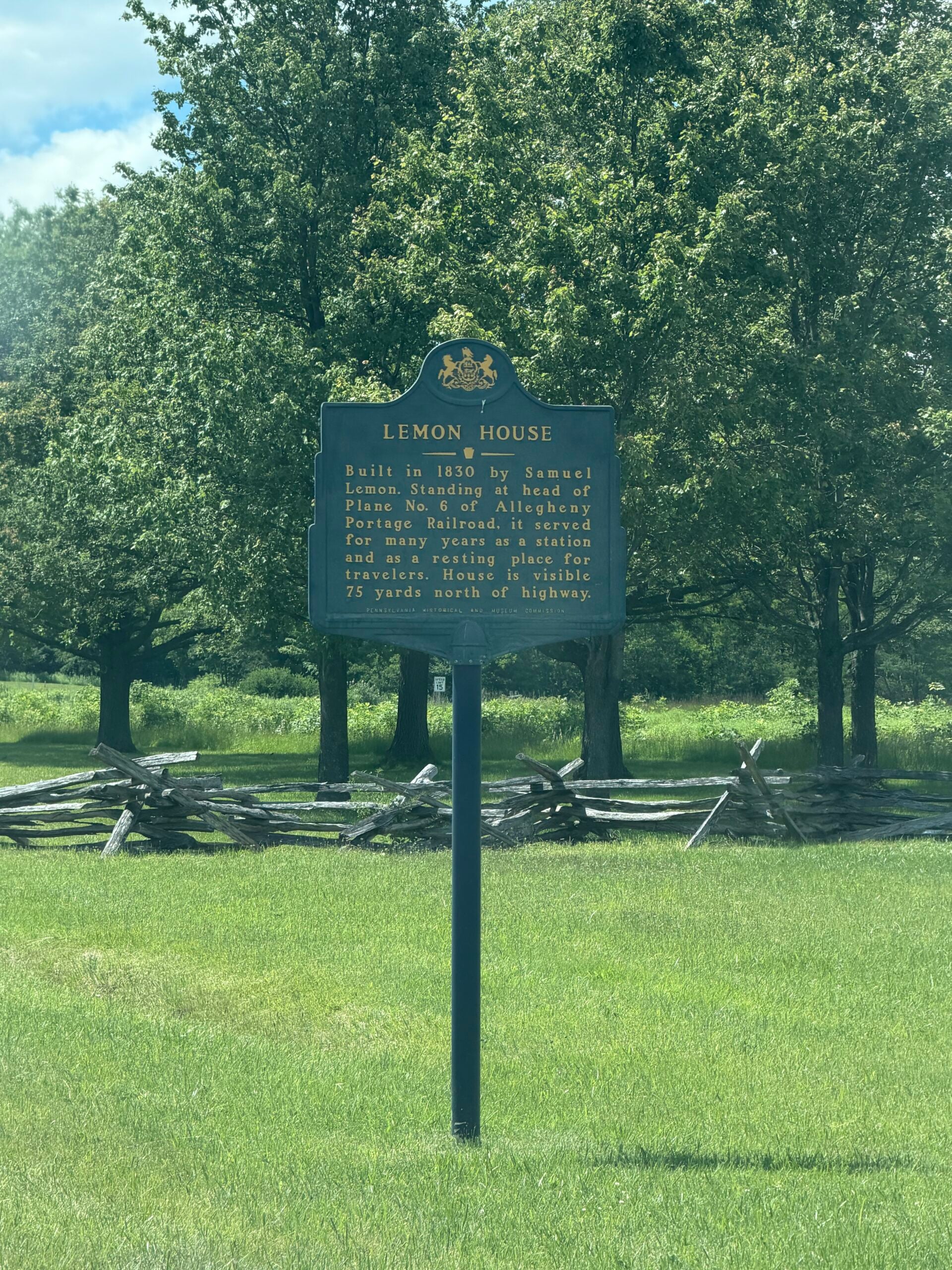
Stop #8 – Lemon House

Built in 1830 by Samuel Lemon. Standing at head of Plane No. 6 of Allegheny Portage Railroad, it served for many years as a station and as a resting place for travelers. House is visible 75 yards north of highway.

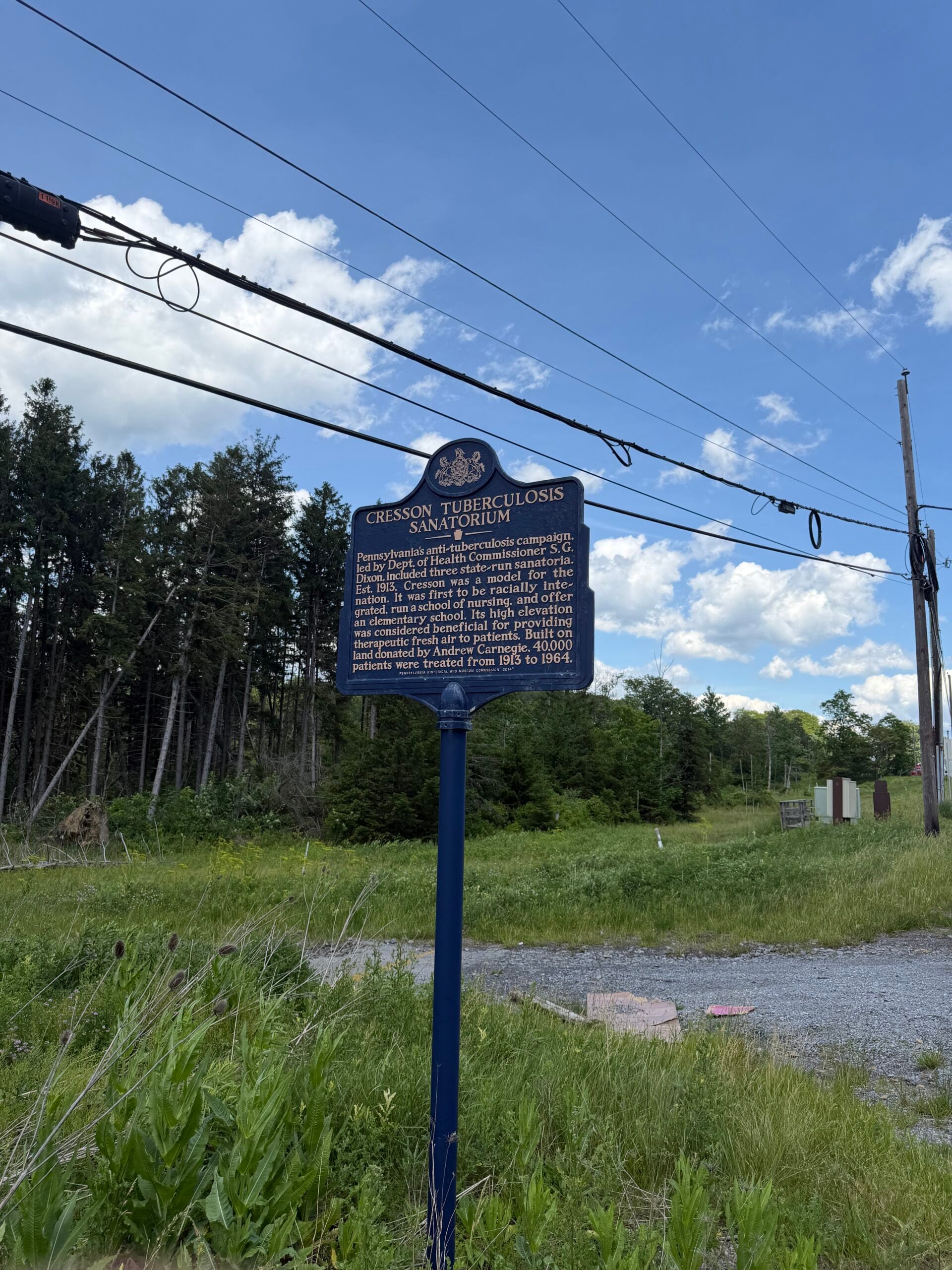
Stop #9 – Cresson Tuberculosis Sanatorium

Pennsylvania’s anti-tuberculosis campaign, led by Dept. of Health Commissioner S. G. Dixon, included three state-run sanatoria. Est. 1913, Cresson was a model for the nation. It was first to be racially integrated, run a school of nursing, and offer an elementary school. Its high elevation was considered beneficial for providing therapeutic fresh air to patients. Built on land donated by Andrew Carnegie, 40,000 patients were treated from 1913 to 1964.

Discovering Lumber Hertitage Through History and Education

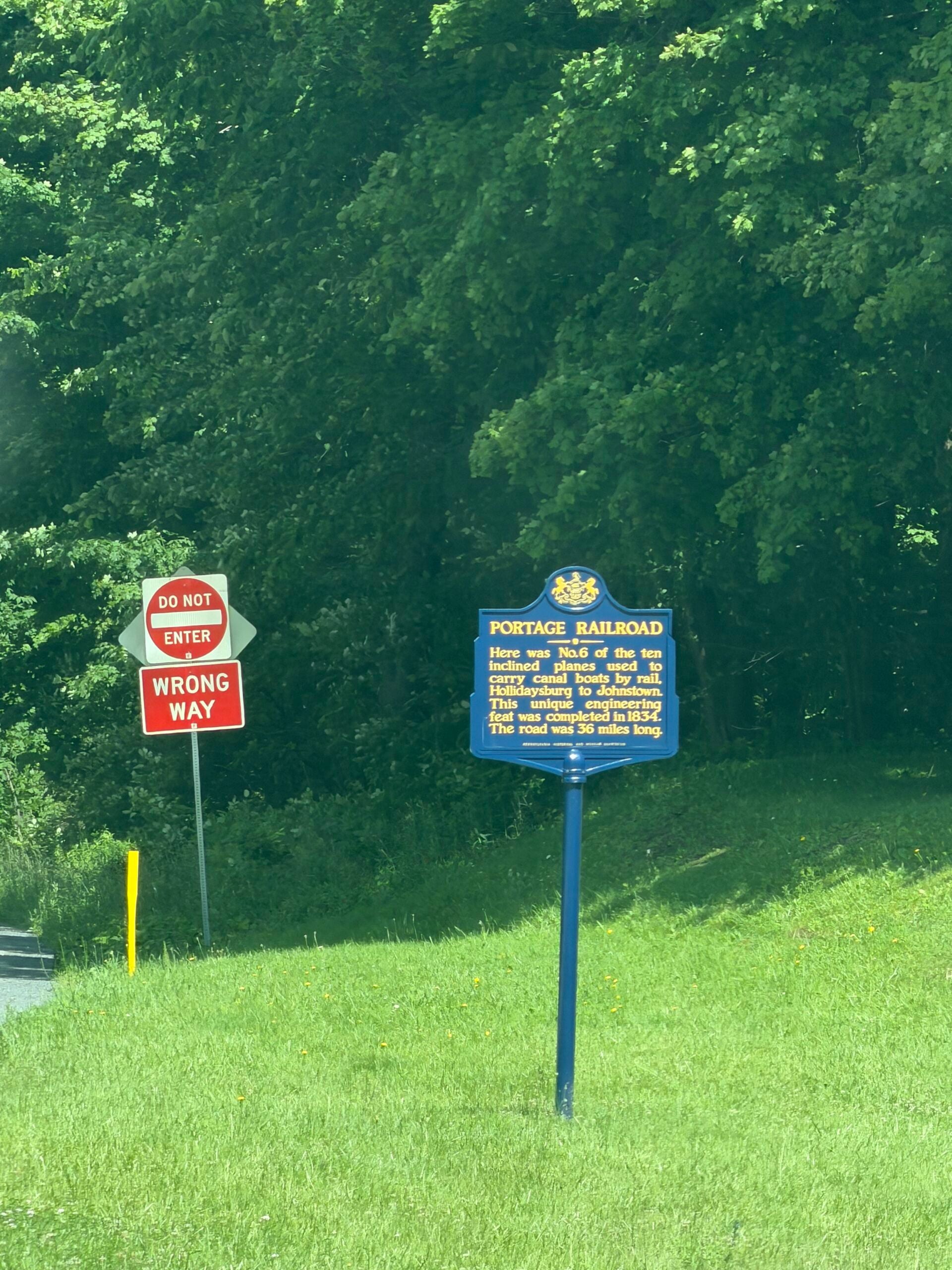
Stop #10 – Portage Railroad

Here was No. 5 of the ten inclined planes used to carry canal boats by rail, Hollidaysburg to Johnstown. The road to Lilly follows closely the route of the Portage Railroad over the mountain to Johnstown.


Discovering Lumber Hertitage Through History and Education

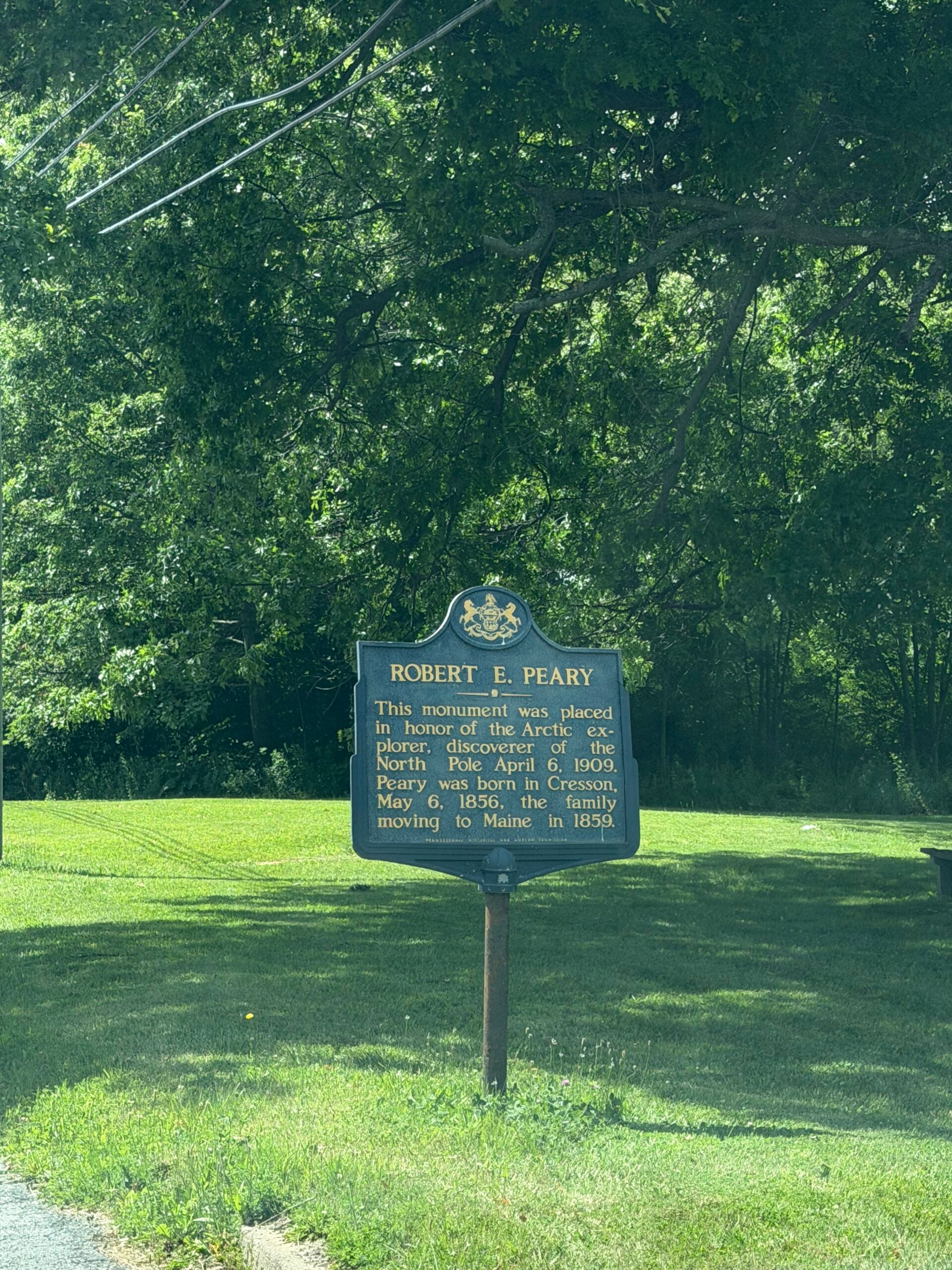
Stop #11 – Robert E. Peary

This monument was placed in honor of the Arctic explorer, discoverer of the North Pole April 6, 1909. Peary was born in Cresson, May 6, 1856, the family moving to Maine in 1859.

Discovering Lumber Hertitage Through History and Education

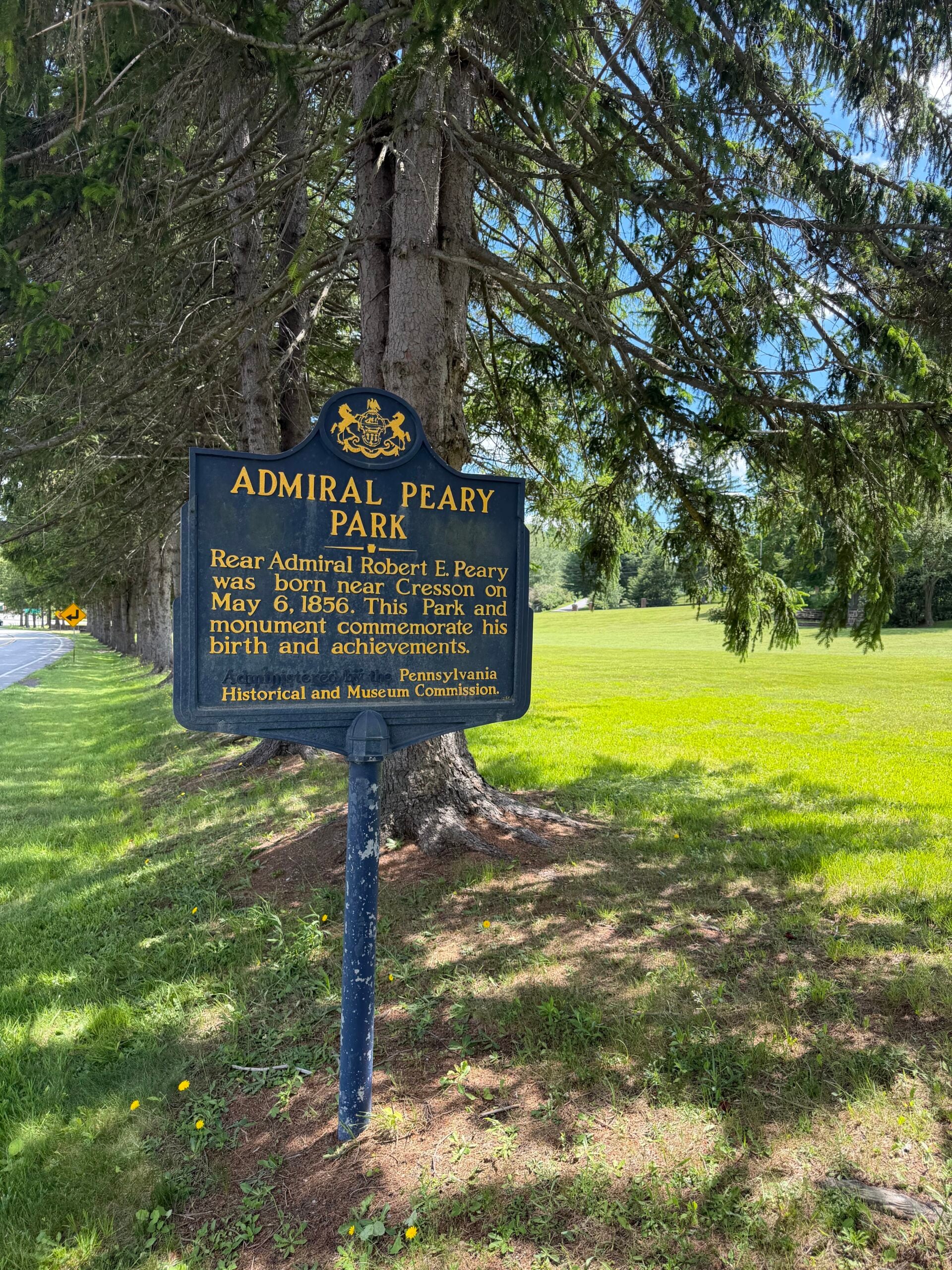
Stop #12 – Admiral Peary Park

Rear Admiral Robert E. Peary was born near Cresson on May 6, 1856. This Park and monument commemorate his birth and achievements. Administered by the Pennsylvania Historical and Museum Commission. NOTE: “Administered by” painted out in 2017 as no longer correct.

Discovering Lumber Hertitage Through History and Education

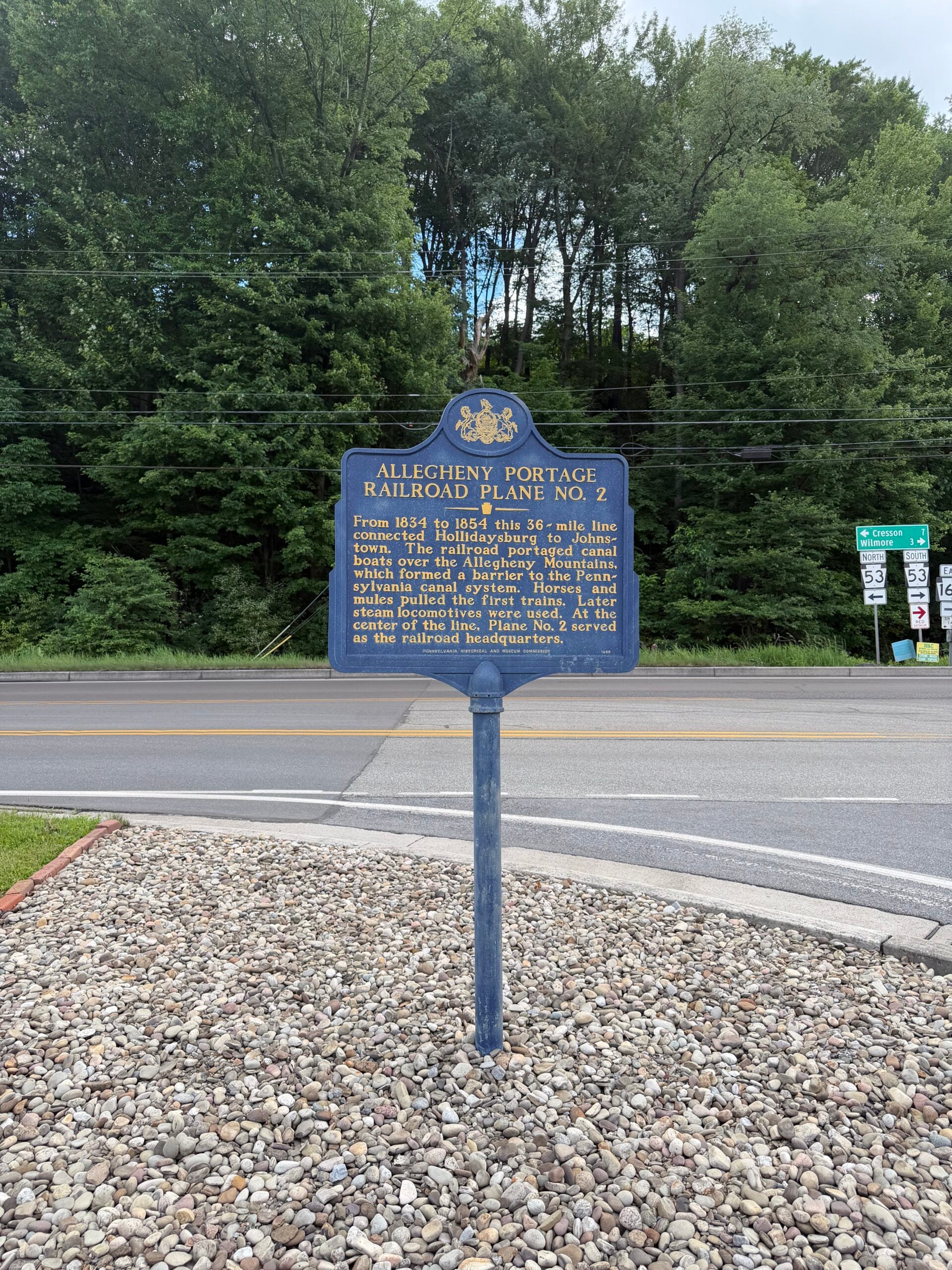
Stop #13 – Allegheny Portage Railroad Plane No. 2

From 1834 to 1854 this 36-mile line connected Hollidaysburg to Johnstown. The railroad portaged canal boats over the Allegheny Mountains, which formed a barrier to the Pennsylvania canal system. Horses and mules pulled the first trains. Later steam locomotives were used. At the center of the line, Plane No. 2 served as the railroad headquarters.

Discovering Lumber Hertitage Through History and Education

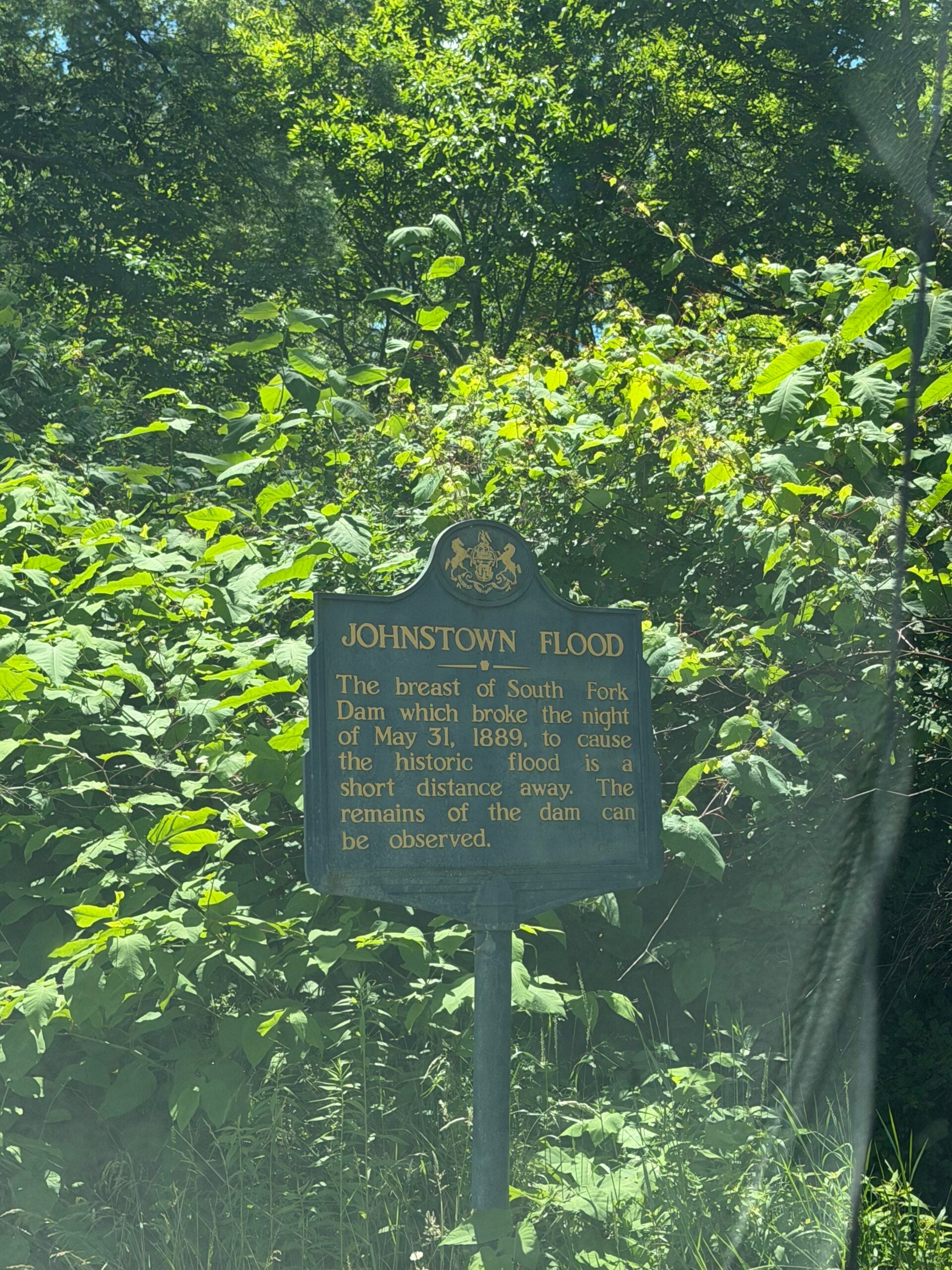
Stop #14 – Johnstown Flood

The breast of South Fork Dam which broke the night of May 31, 1889, to cause the historic flood is a short distance away. The remains of the dam can be observed.


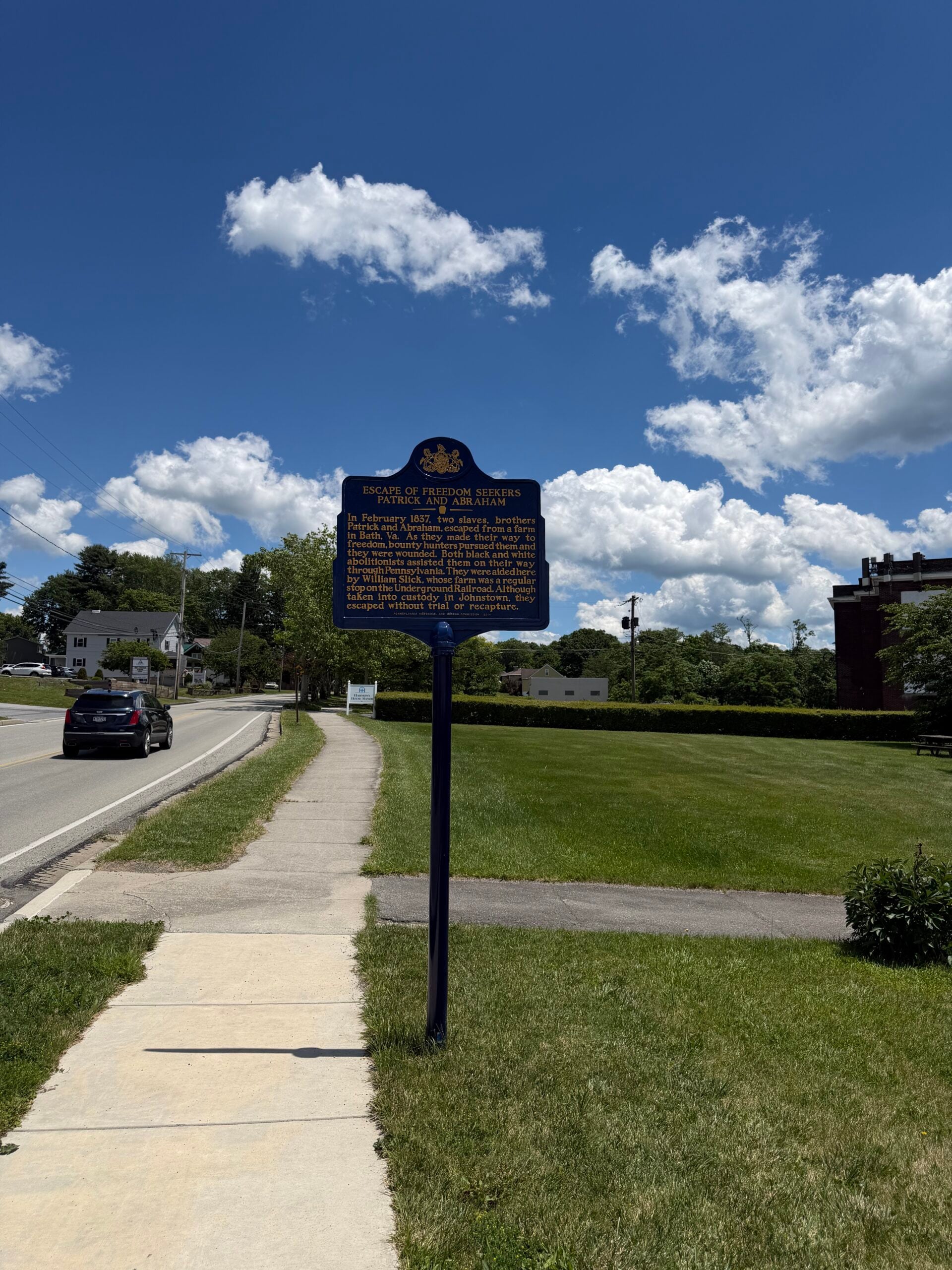
Stop #15 – Escape of Freedom Seekers Patrick and Abraham

In February 1837, two slaves, brothers Patrick and Abraham, escaped from a farm in Bath, Va. As they made their way to freedom, bounty hunters pursued them and they were wounded. Both black and white abolitionists assisted them on their way through Pennsylvania. They were aided here by William Slick, whose farm was a regular stop on the Underground Railroad. Although taken into custody in Johnstown, they escaped without trial or recapture.


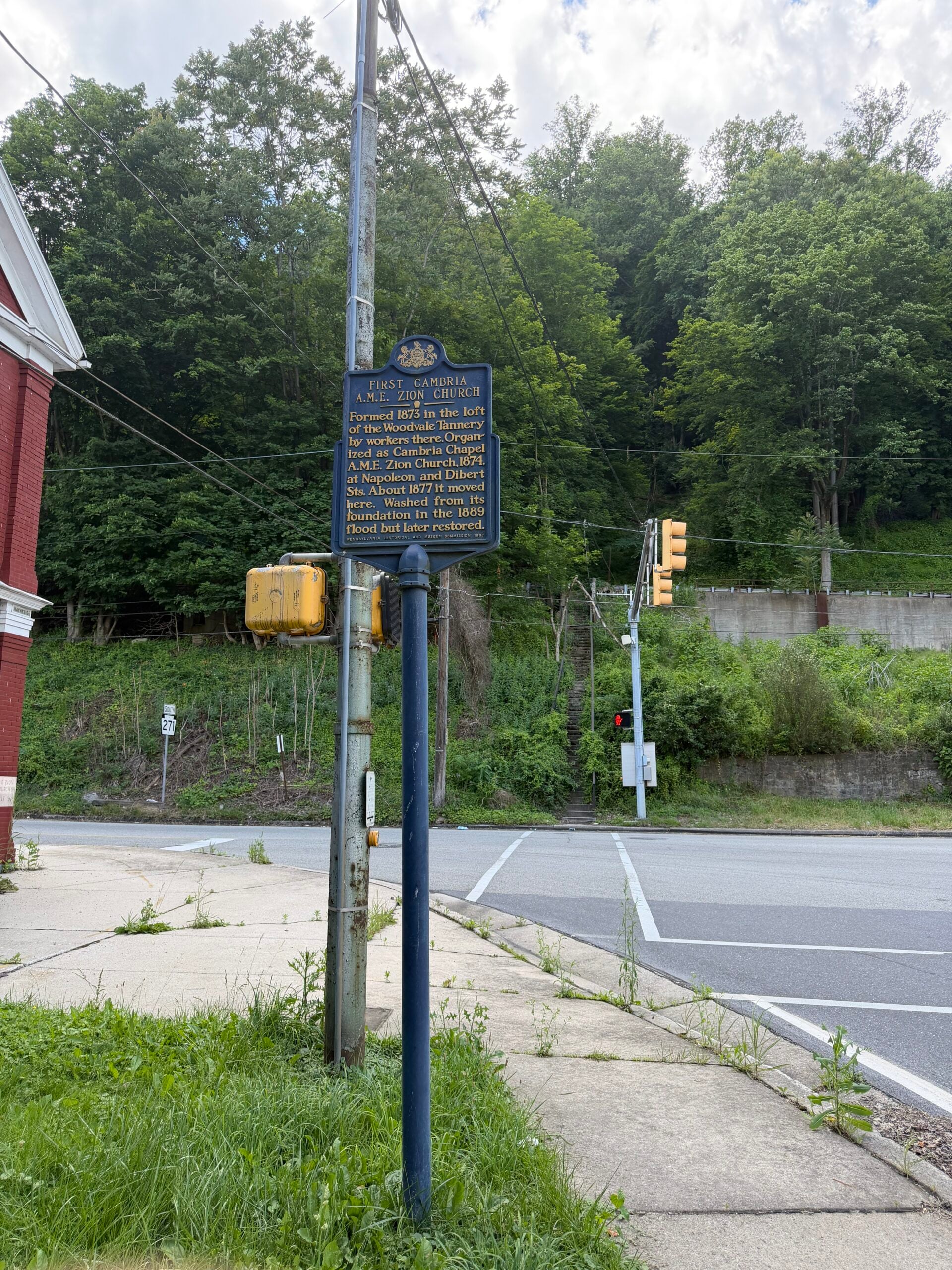
Stop #16 – First Cambria AME Zion Church

Formed 1873 in the loft of the Woodvale Tannery by workers there. Organized as Cambria Chapel A.M.E. Zion Church, 1874, at Napoleon and Dibert Sts. About 1877 it moved here. Washed from its foundation in the 1889 flood but later restored.


Stop #17 – American Red Cross

On June 5, 1889, Clara Barton and a group of American Red Cross volunteers arrived in Johnstown to help the survivors of a devastating flood resulting from the failure of the South Fork Dam. It was one of the first major disaster responses for the humanitarian organization. The agency established feeding stations, built shelters for survivors, and rendered medical care. Over five months, the Red Cross provided relief to 25,000 people.

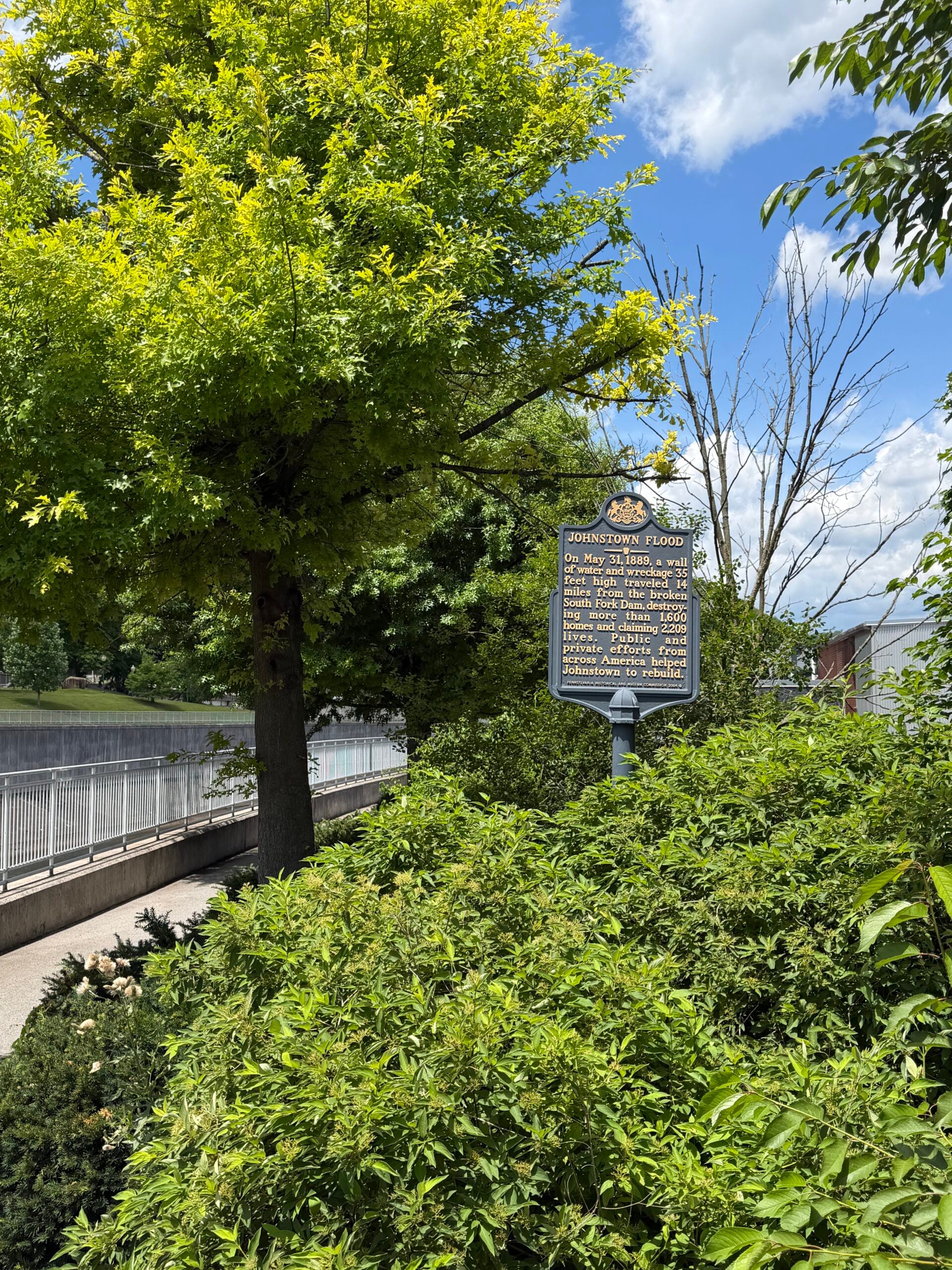
Stop #18 – Johnstown Flood

On May 31, 1889, a wall of water and wreckage 35 feet high traveled 14 miles from the broken South Fork Dam, destroying more than 1,600 homes and claiming 2,209 lives. Public and private efforts from across America helped Johnstown to rebuild.

Discovering Lumber Hertitage Through History and Education

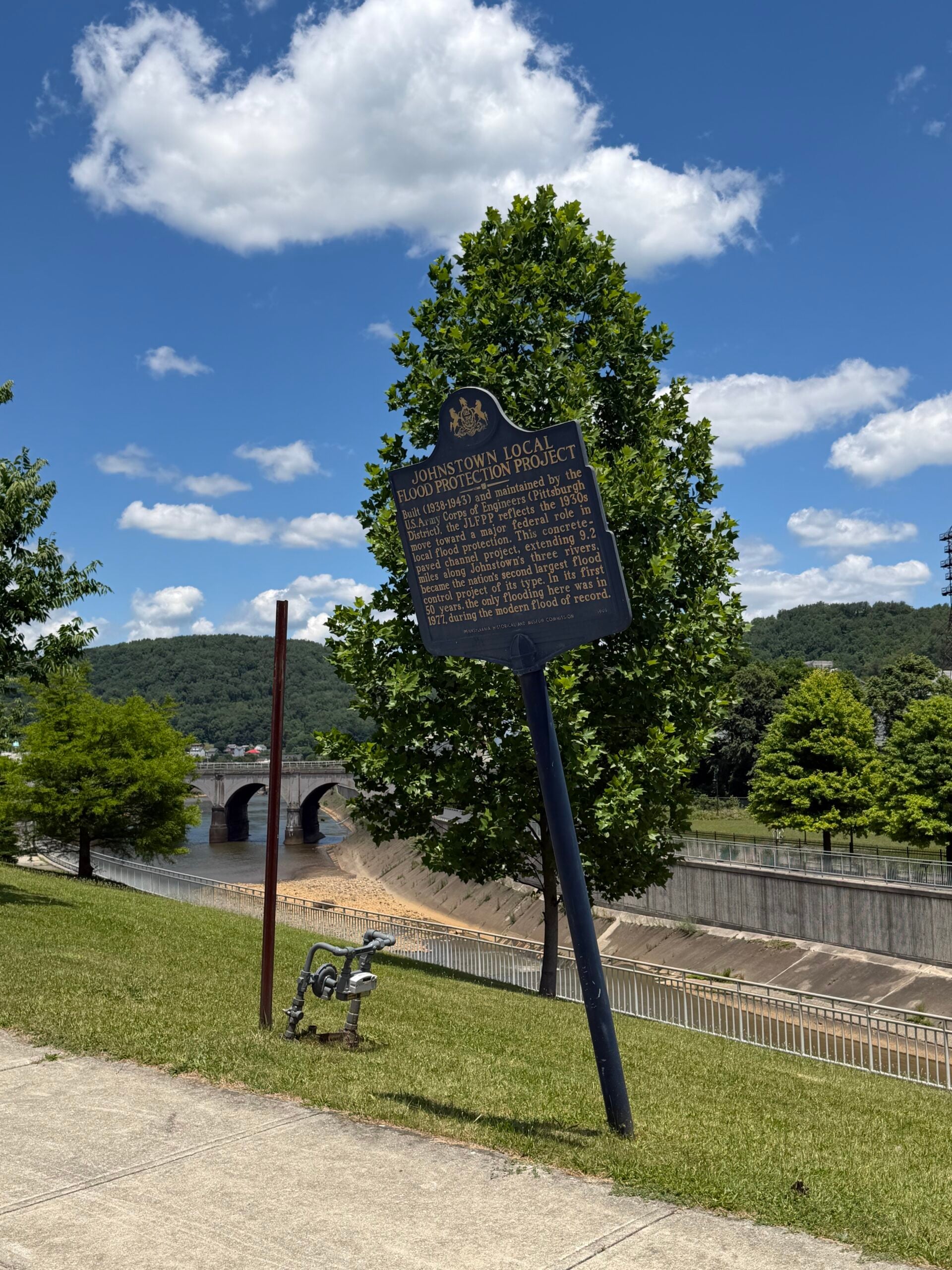
Stop #19 – Johnstown Local Flood Protection Project

Built (1938-1943) and maintained by the U.S. Army Corps of Engineers (Pittsburgh District), the JLFPP reflects the 1930s move toward a major federal role in local flood protection. This concrete-paved channel project, extending 9.2 miles along Johnstown’s three rivers, became the nation’s second largest flood control of its type. In its first 50 years, the only flooding here in 1977, during the modern flood of record.

Discovering Lumber Hertitage Through History and Education

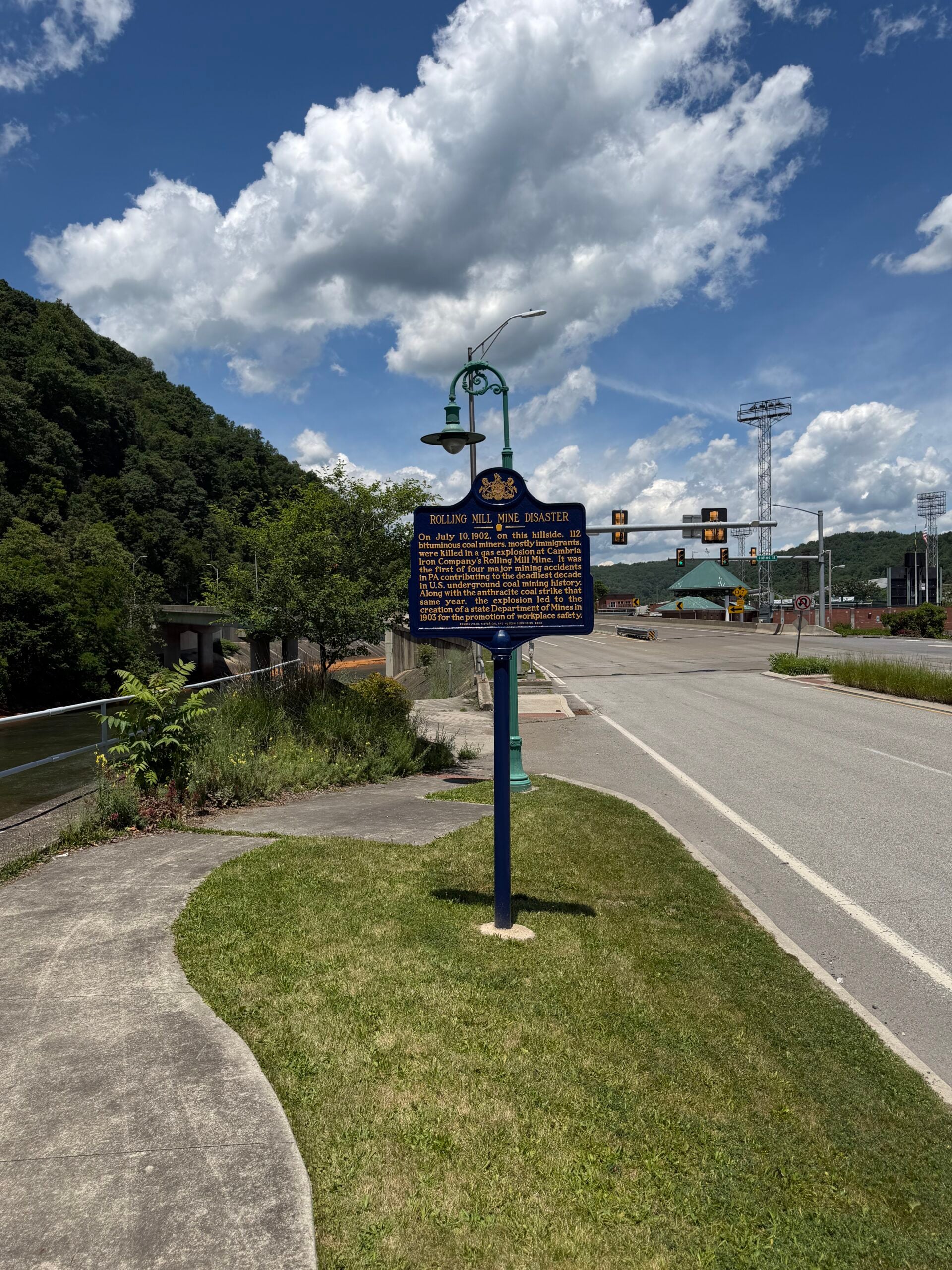
Stop #20 – Rolling Mill Mine Disaster

On July 10, 1902, on this hillside, 112 bituminous coal miners, mostly immigrants, were killed in a gas explosion at Cambria Iron Company’s Rolling Mill Mine. It was the first of four major mining accidents in PA contributing to the deadliest decade in U.S. underground coal mining history. Along with the anthracite coal strike that same year, the explosion led to the creation of a state Department of Mines in 1903 for the promotion of workplace safety.

Discovering Lumber Hertitage Through History and Education

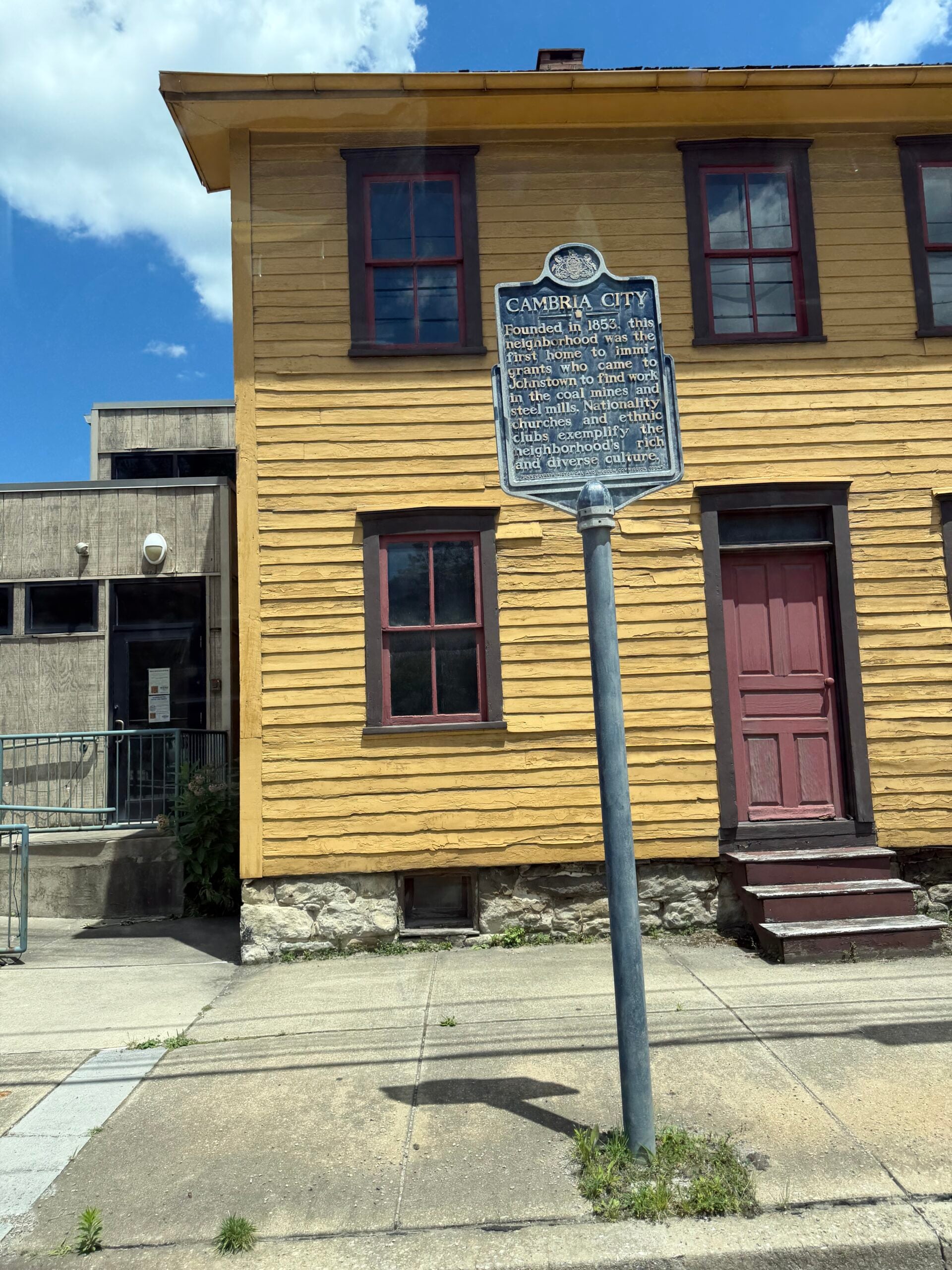
Stop #21 – Cambria City

Founded in 1853, this neighborhood was the first home to immigrants who came to Johnstown to find work in the coal mines and steel mills. Nationality churches and ethnic clubs exemplify the neighborhood’s rich and diverse culture.


Discovering Lumber Hertitage Through History and Education

Stop #22 – Johnstown

Named for Joseph Johns, the pioneer settler in 1793. Pennsylvania Canal-Portage R.R. terminal opened 1834. Birthplace of steel industry in U.S. William Kelly developed the converter type blast furnace in 1857-58. Steel rails rolled in 1867.

Discovering Lumber Hertitage Through History and Education

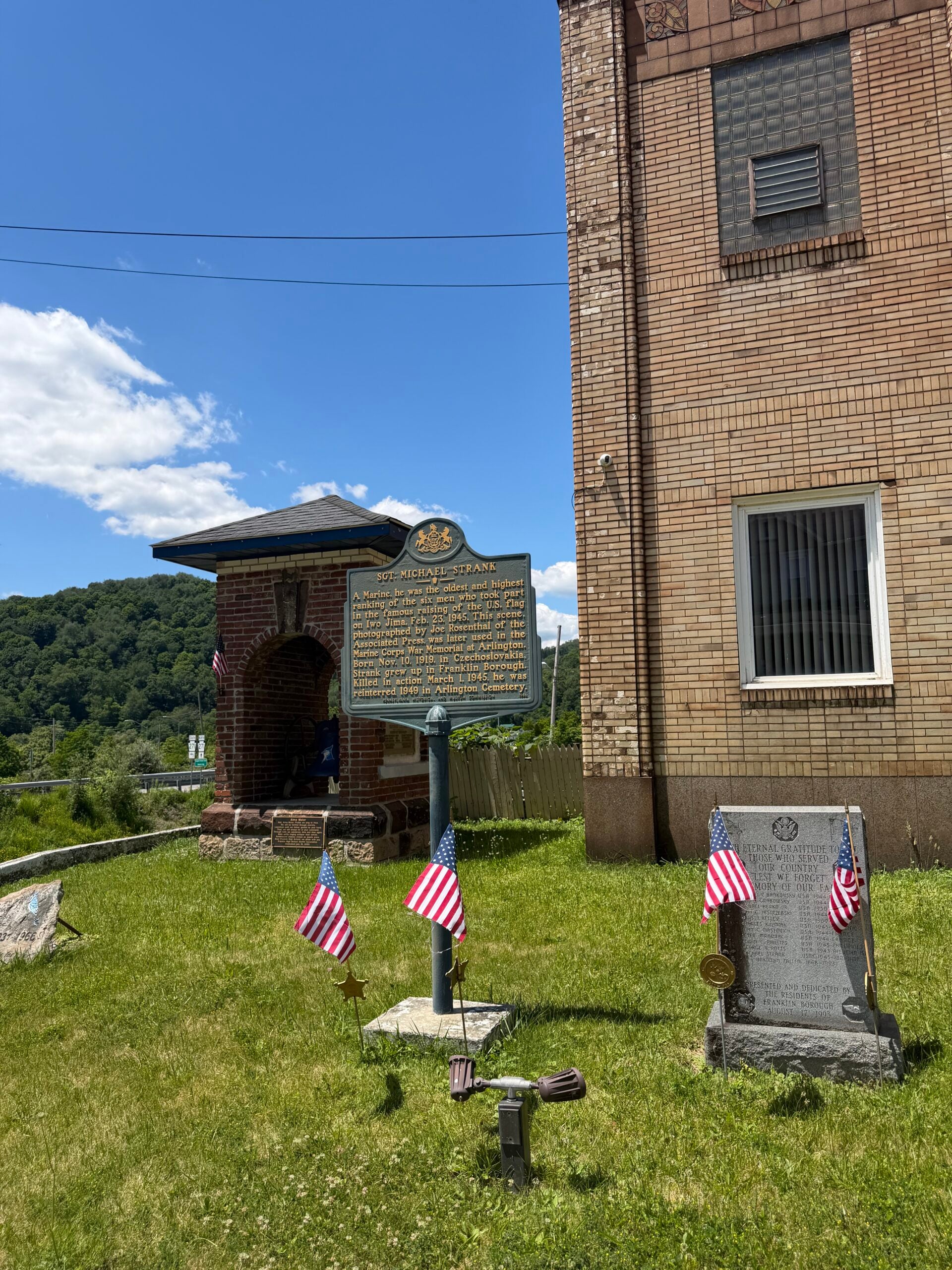
Stop #23 – Sgt. Michael Strand

A Marine, he was the oldest and highest ranking of the six men who took part in the famous raising of the U.S. flag on Iwo Jima, Feb. 23, 1945. This scene, photographed by Joe Rosenthal of the Associated Press, was later used in the Marine Corps War Memorial at Arlington. Born Nov. 10, 1919, in Czechoslovakia, Strank grew up in Franklin Borough. Killed in action March 1, 1945, he was reinterred 1949 in Arlington Cemetery.

Stop #24 – The Rosedale Banishment

On September 7, 1923, in response to rising racial tensions, Johnstown Mayor Joseph Cauffiel ordered all Blacks and Mexicans who had lived in the area for less than seven years to leave. By some reports, more than 2,000 people were forced out under threat of imprisonment. News reports, some by Black journalists and activists, prompted a state investigation and turned public opinion against Cauffiel, who lost reelection.

Stop #25 – Staple Bend Tunnel

First railroad tunnel built in the U.S. and a part of the Portage Railroad. The masonry is intact and a unique engineering feat of the times. Can be visited a few miles east of here, via Mineral Point.


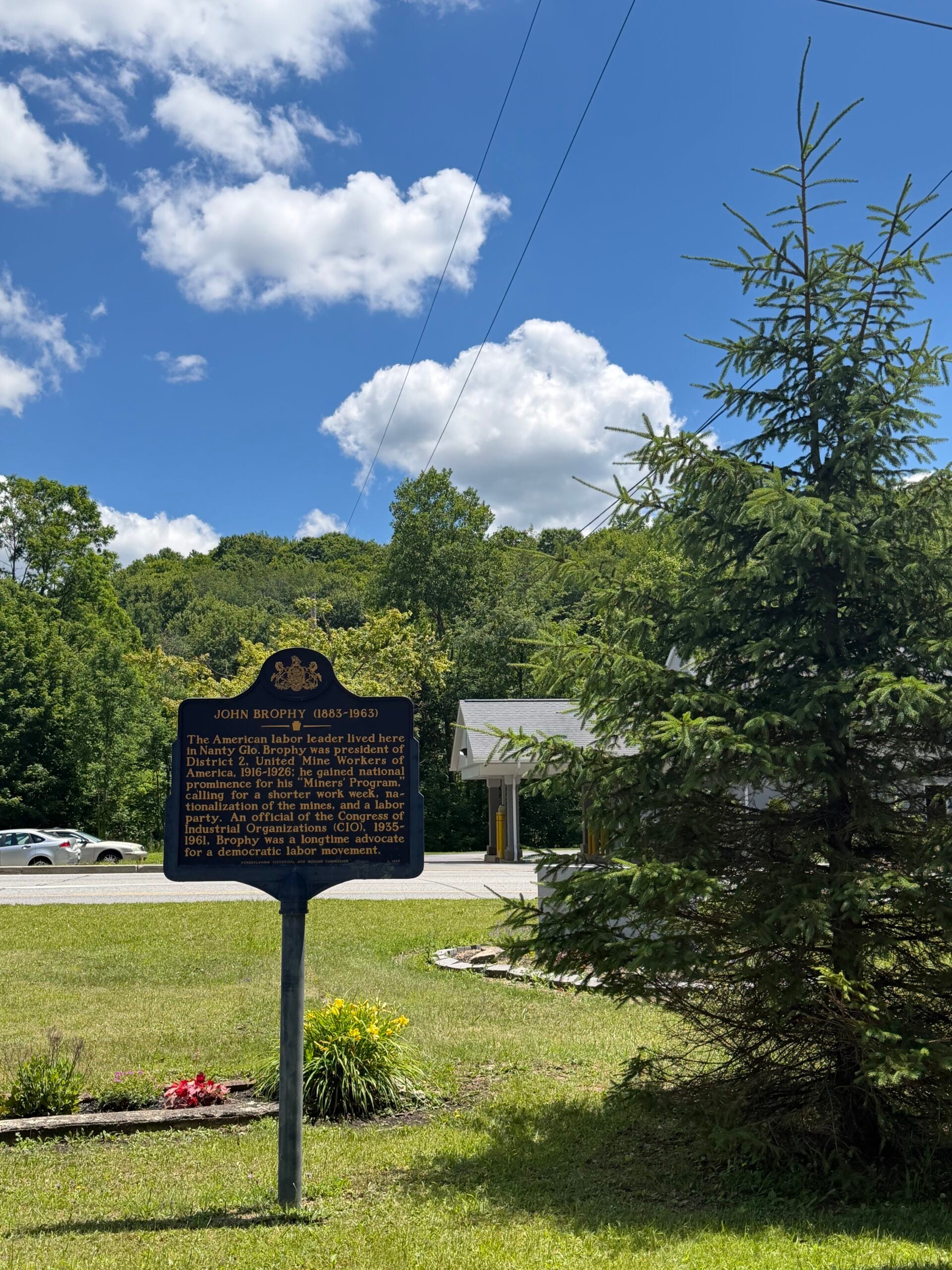
Stop #26 – John Brophy (1883-1963)

The American labor leader lived here in Nanty Glo. Brophy was president of District 2, United Mine Workers of America, 1916-1926; he gained national prominence for his “Miner’s Program,” calling for a shorter work week, nationalization of the mines, and a labor party. An official of the Congress of Industrial Organizations (CIO), 1935-1961, Brophy was a longtime advocate for a democratic labor movement.


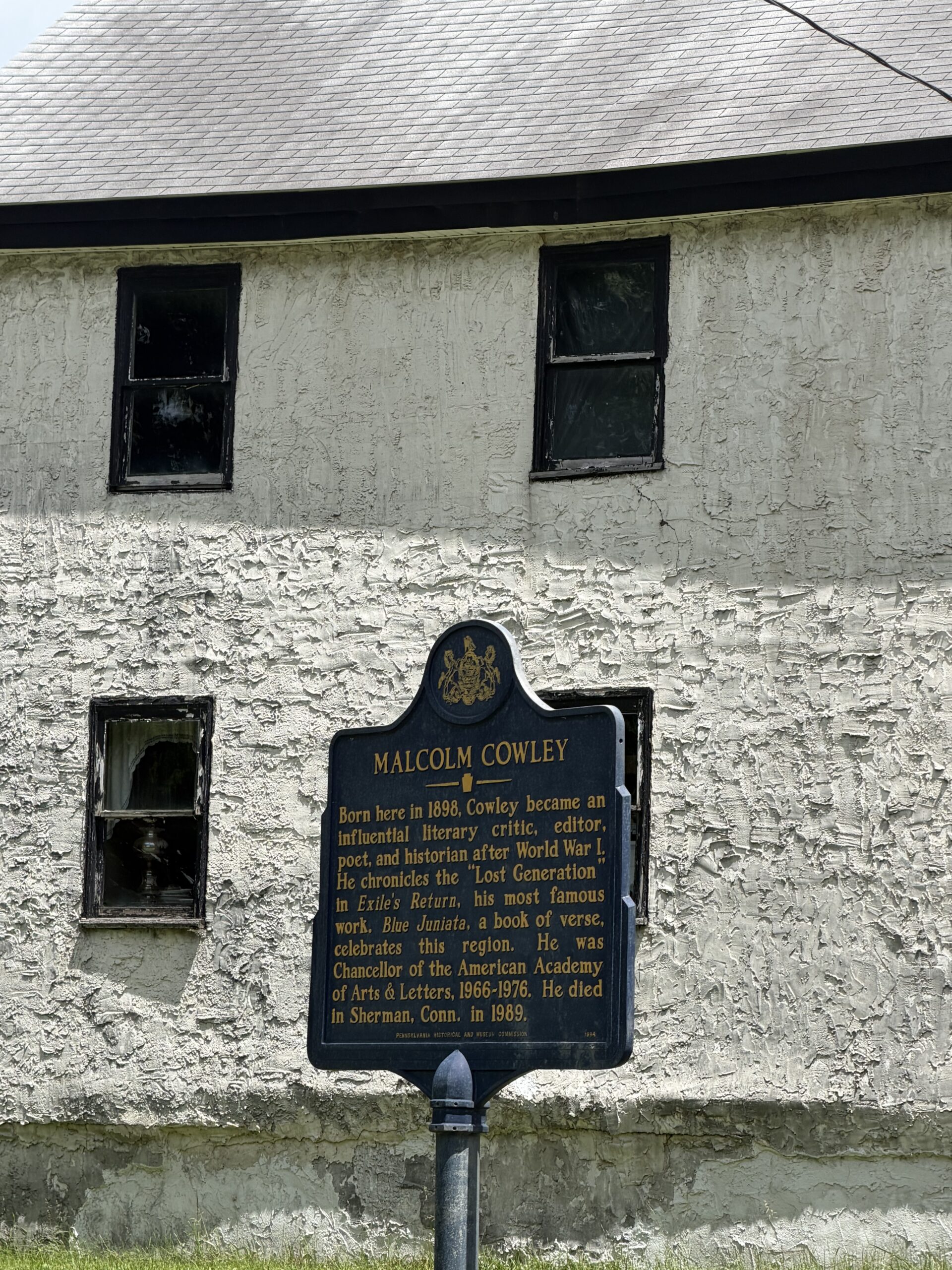
Stop #27 – Malcolm Cowley

Born here in 1898, Cowley became an influential literary critic, editor, poet, and historian after World War I. He chronicles the “Lost Generation” in Exile’s Return, his most famous work. Blue Juniata, a book of verse, celebrates this region. He was Chancellor of the American Academy of Arts & Letters, 1966-1976. He died in Sherman, Conn. in 1989.

Follow Us on Instagram