
News & Updates
News & Updates
Rivers & Timbers of Spring
By Rowan Crisp, LHR Staff
Each spring, as snow melts and rains begin to swell Pennsylvania’s waterways, our rivers come alive. Today, they carry anglers, paddlers, and are teeming with wildlife…but not so long ago, they carried something else entirely.
Timber.
The Lumber Heritage Region is one of Pennsylvania’s 12 Heritage Areas, each with its own story to tell. To our west, the Rivers of Steel Heritage Area is a nod to the waterways that powered Pittsburgh’s steel industry and drove the development of communities and cultures unique to that region.

Here in the LHR, rivers played a similar role in communities. Paired with the region’s vast forests, rivers are often referred to as the lifeblood of a booming lumber industry. It’s a theme the LHR refers to as “Rivers & Timbers.”
Long before roads and railroads reached deep into the mountains, rivers served as the highways of the lumber industry, especially during the spring thaw.
Once trees were felled and hauled from the forest, logs were stacked in great piles along riverbanks and frozen streams, waiting for the spring thaw when ice and snow melt, paired with rains, swelled the waterways.
Spring was log driving season, peaking March-May.
In smaller tributaries, crews built temporary splash dams to hold back both water and timber. When conditions were just right, the dams were released in a sudden rush, sending a powerful surge of water and logs downstream toward larger rivers.

Because logs float, nature itself did much of the transportation. Timber could travel miles downstream with minimal intervention, guided by crews who followed the drives or assembled logs into massive rafts to ride the current. After reaching sawmills, processed lumber often returned to the water once again on barges bound for markets even further downstream.
Communities grew along these waterways, fueled by the constant movement of timber and the jobs it created. Though the rivers were excellent transportation corridors, they didn’t stop on command. During peak season, logs moved day and night. In places like Williamsport, along the West Branch Susquehanna River, workers were needed around the clock to catch and manage the endless flow. Fires burned along the riverbanks through the night, illuminating the dark water as logs drifted past.
As the industry expanded, so did the need for control.
The solution came in the form of the Susquehanna Boom, an engineering feat that transformed the river into a system of sorting and storage. Stretching over six miles, the boom was constructed from timber cribs; massive wooden structures filled with stone and anchored to the riverbed. These cribs were linked together by chains and logs. The boom held back vast quantities of timber on one side of the river while allowing the other side to remain open for navigation.
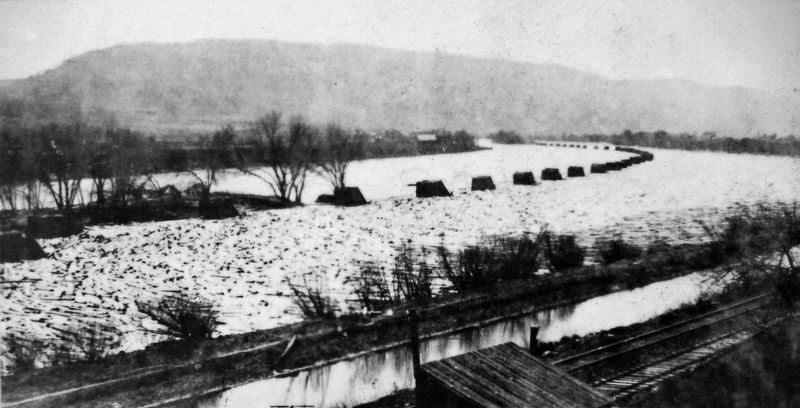
Other booms existed, but the Susquehanna Boom was the largest and could contain hundreds of millions of board feet of timber at a time.
Here, workers known as “boom rats” performed the critical task of sorting logs. Each log bore a unique stamp hammered into its end, identifying the owner. In fact, it’s said that during the peak years of the boom there were around 700 brands registered in Williamsport.
Surrounded by forests along the West Branch Susquehanna, fed by countless tributaries, and connected to broader markets, the city of Williamsport and “lumber barons” flourished. For decades, Williamsport was known as the Lumber Capital of the World, a title earned through the powerful combination of rivers, timber, and human ingenuity and labor.
Today, those same rivers still flow through the region, quieter but no less important. As you pass by them this spring, swollen with rain and lined with new growth, it’s worth imagining the rush of another era, when the water carried not just the season forward, but an entire industry.
Additional Reading:
The Pennsylvania State University
PDF Lumbering in Penn’s Woods by LE Theiss, 1952
https://share.google/t7CSRynP1GR4x22S3
© 2026 Lumber Heritage Region LLC | Website Designed & Hosted by Pixel & Hammer