As Thanksgiving and the holiday season quickly approach, let’s take a moment to reflect on the many things we have to be thankful for here in the Lumber Heritage Region of Pennsylvania.
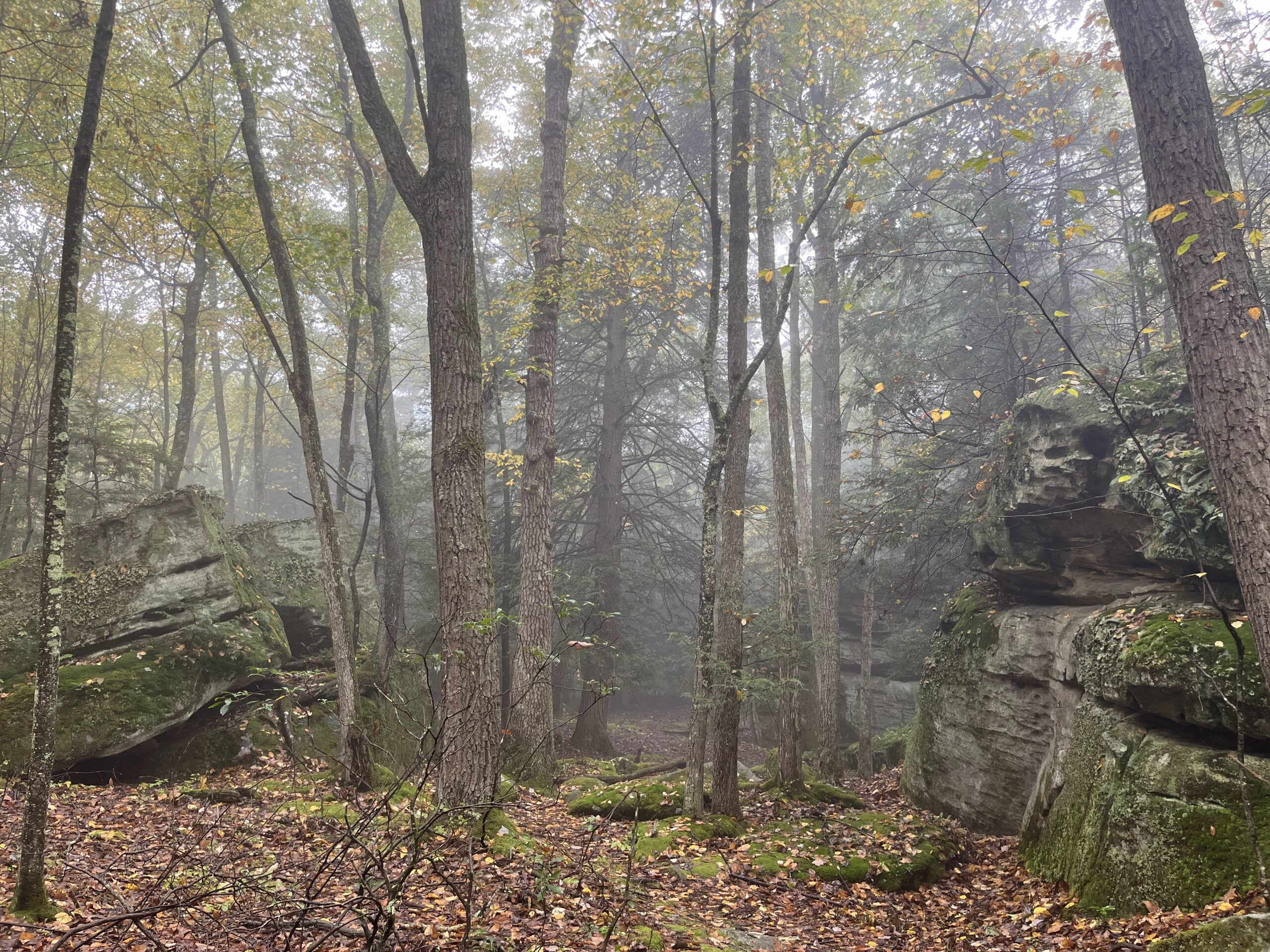
Near the top of that list, I’m sure many of us would place forests. These wild, living landscapes provide so much. They create natural resources, outdoor recreation, clean air and clean water, medicine, food, and more.
In Braiding Sweetgrass, Robin Wall Kimmerer writes about the questions she poses to her students. One of these questions is along the lines of, “Do you love the forest?” Her students almost always answer yes, offering long lists of what the forest provides. She then asks a second question, “Do you think the forest loves you?” This one is met with hesitation.
In another class, she asked her students to list negative interactions between humans and the environment. The examples came easily. But when she asked them to name positive interactions, many responded with “None.”
We hear a lot about the harm people can do to the natural world and it is important to acknowledge those realities. But humans and the environment are not separate. We are part of these ecosystems, and our relationship with the land can be reciprocal, restorative, and deeply positive.
When teaching people about human interactions with the environment, we cannot shy away from the negatives. But to do so without also teaching the opportunities we have to interact positively with our environment would be an incredible disservice.
After all, how can we better learn to be responsible stewards of our environment if all we are taught is what not to do? We cannot remove ourselves from the environment entirely nor should we try to. It is important to view how we can benefit these spaces so they might continue to thrive and provide for us as well.
Careers in Forestry, Conservation, and many other fields contribute to these interactions regularly. Not all interactions between humans and the environment are harmful, we just need to understand our roles and find balance.
So it is to our landscapes, our watersheds, our forests, and the people who work to make a positive impact within these communities that we give thanks. For without them, we surely would have much less to be thankful for.
As we move through this season of gratitude, may we continue not only to appreciate the gifts of the natural world, but to honor them with our actions. The forest cares for us. Let us continue to learn how to use its gifts responsibly, and care for it in return.
By Rowan Crisp — LHR Education & Outreach Administrator