Visit / PA Historical Marker Trail

Tioga County

Stop #1 – Pennsylvania

Founded 1681 by William Penn as a Quaker Commonwealth. Birthplace of THE DECLARATION OF INDEPENDENCE and THE CONSTITUTION OF THE UNITED STATES.

Discovering Lumber Hertitage Through History and Education

Stop #2 – Rural Electrification

In 1936 seventy-five percent of Pennsylvania farms had no electric service. During the next five years, with federal support, 14 consumer-owned cooperatives were formed in the State. Tri-County Rural Electric Cooperative, serving much of north-central Pennsylvania from Mansfield, was incorporated October 24, 1936.

Discovering Lumber Hertitage Through History and Education

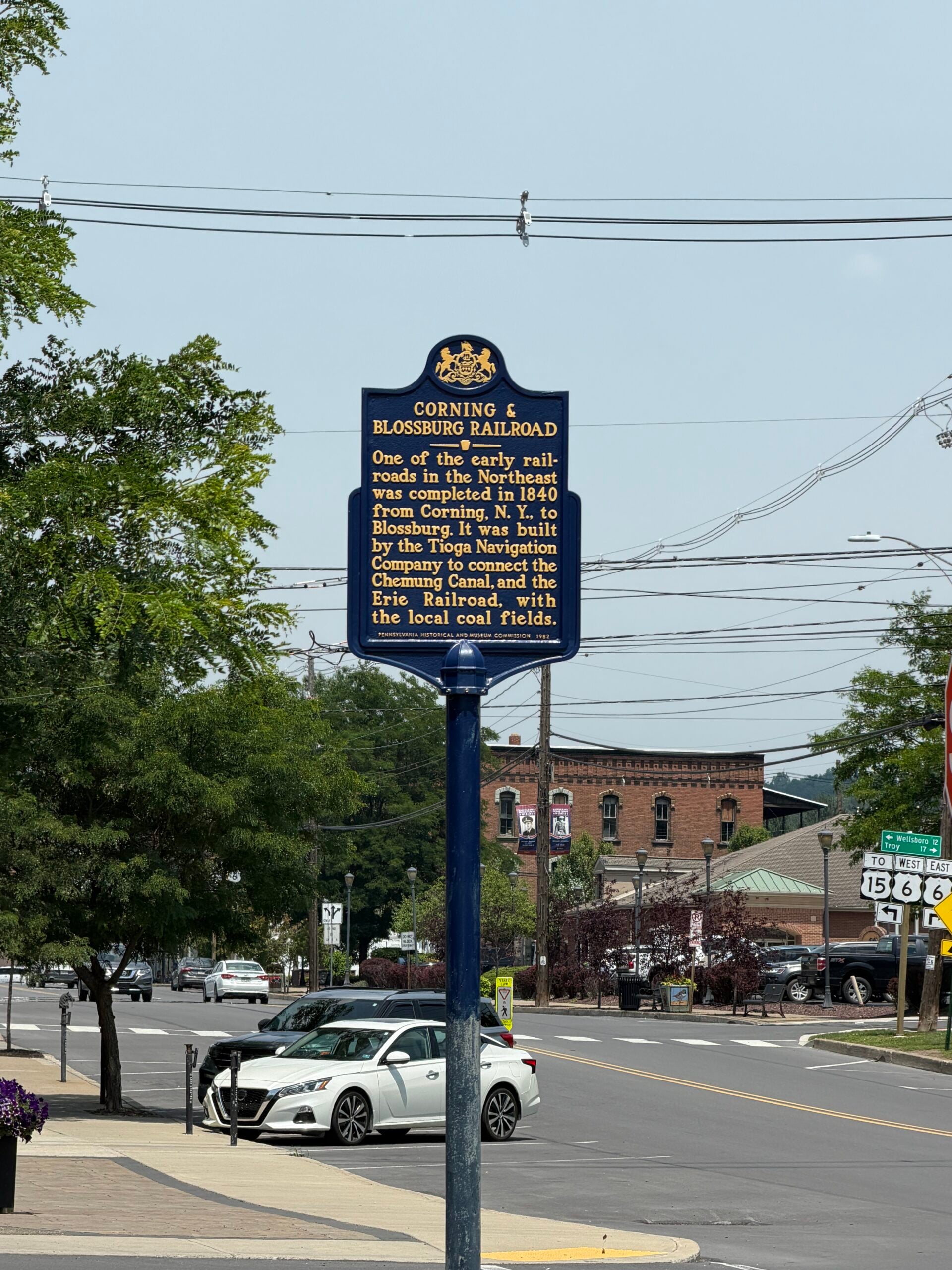
Stop #3 – Corning and Blossburg Railroad

One of the early railroads in the Northeast was completed in 1840 from Corning, N.Y., to Blossburg. It was built by the Tioga Navigation Company to connect the Chemung Canal, and the Erie Railroad, with the local coal fields.

Discovering Lumber Hertitage Through History and Education

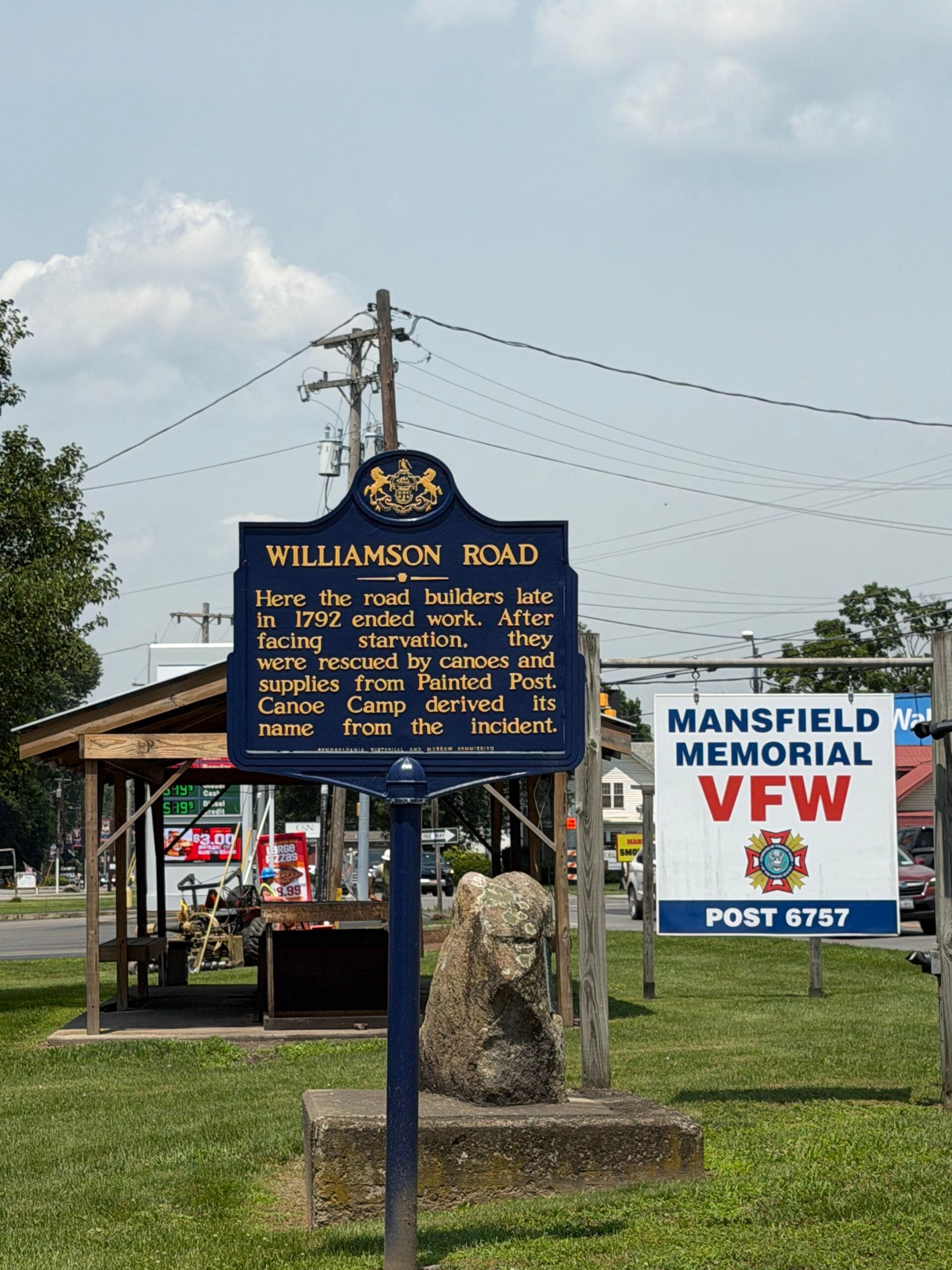
Stop #4 – Williamson Road

Here the road builders late in 1792 ended work. After facing starvation, they were rescued by canoes and supplies from Painted Post. Canoe Camp derived its name from the incident.


Discovering Lumber Hertitage Through History and Education

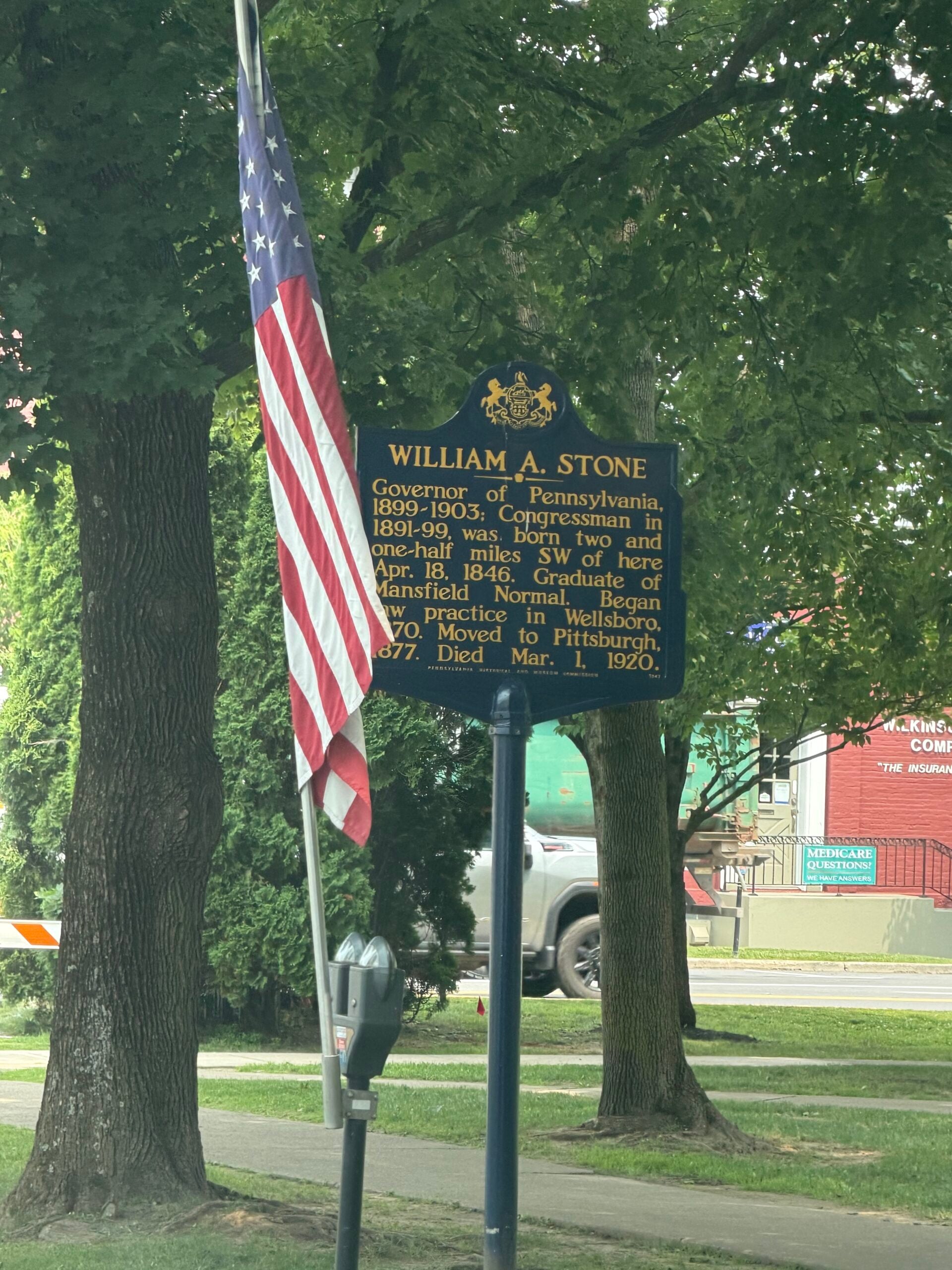
Stop #5 – William A. Stone

Governor of Pennsylvania, 1899-1903; Congressman in 1891-99, was born two and one-half miles SW of here Apr. 18, 1846. Graduate of Mansfield Normal. Began law practice in Wellsboro. 1870. Moved to Pittsburgh, 1877. Died Mar. 1, 1920.

Discovering Lumber Hertitage Through History and Education

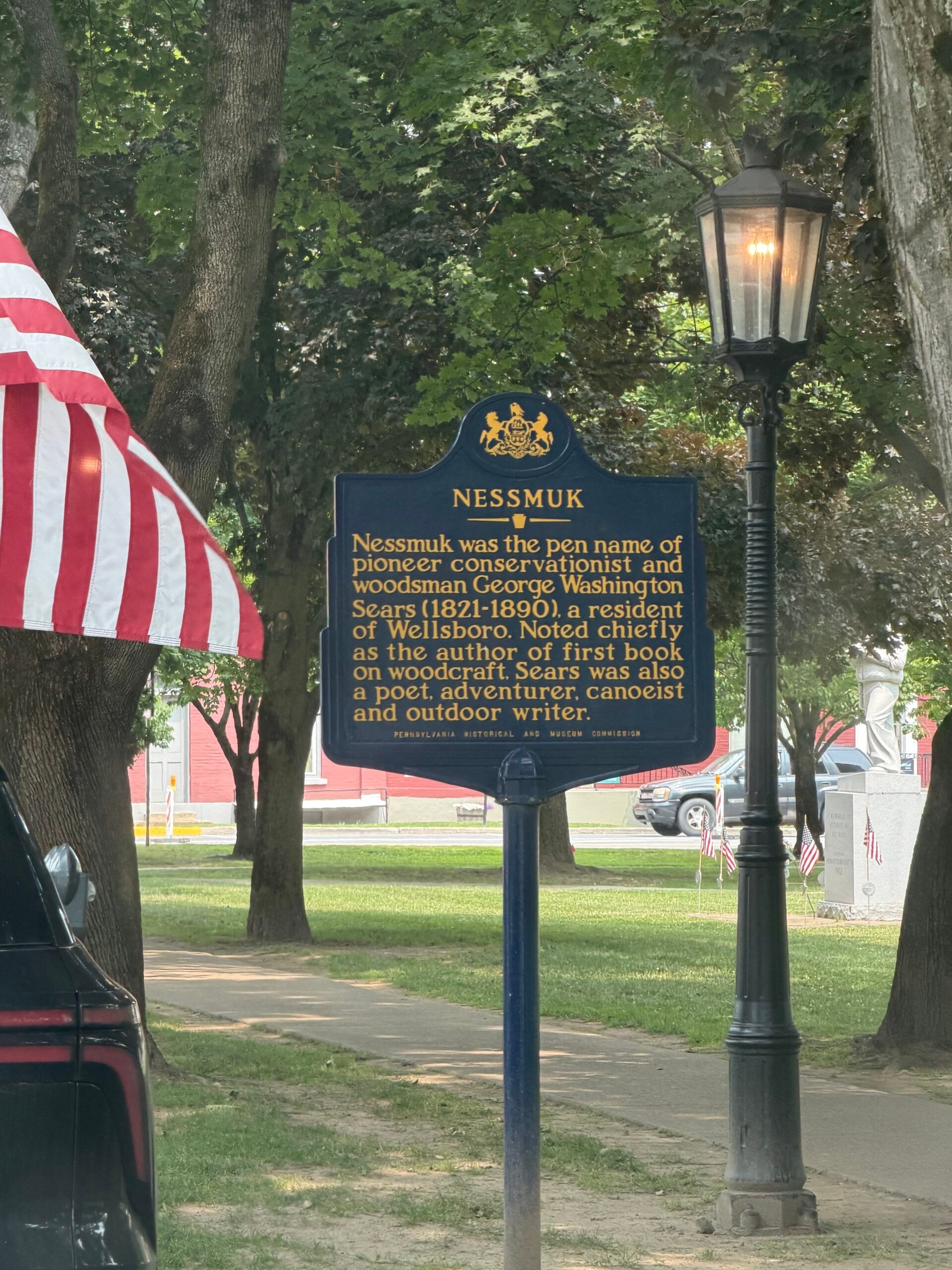
Stop #6 – Nessmuk

Nessmuk was the pen name of pioneer conservationist and woodsman George Washington Sears (1821-1890), a resident of Wellsboro. Noted chiefly as the author of first book on woodcraft, Sears was also a poet, adventurer, canoeist and outdoor writer.


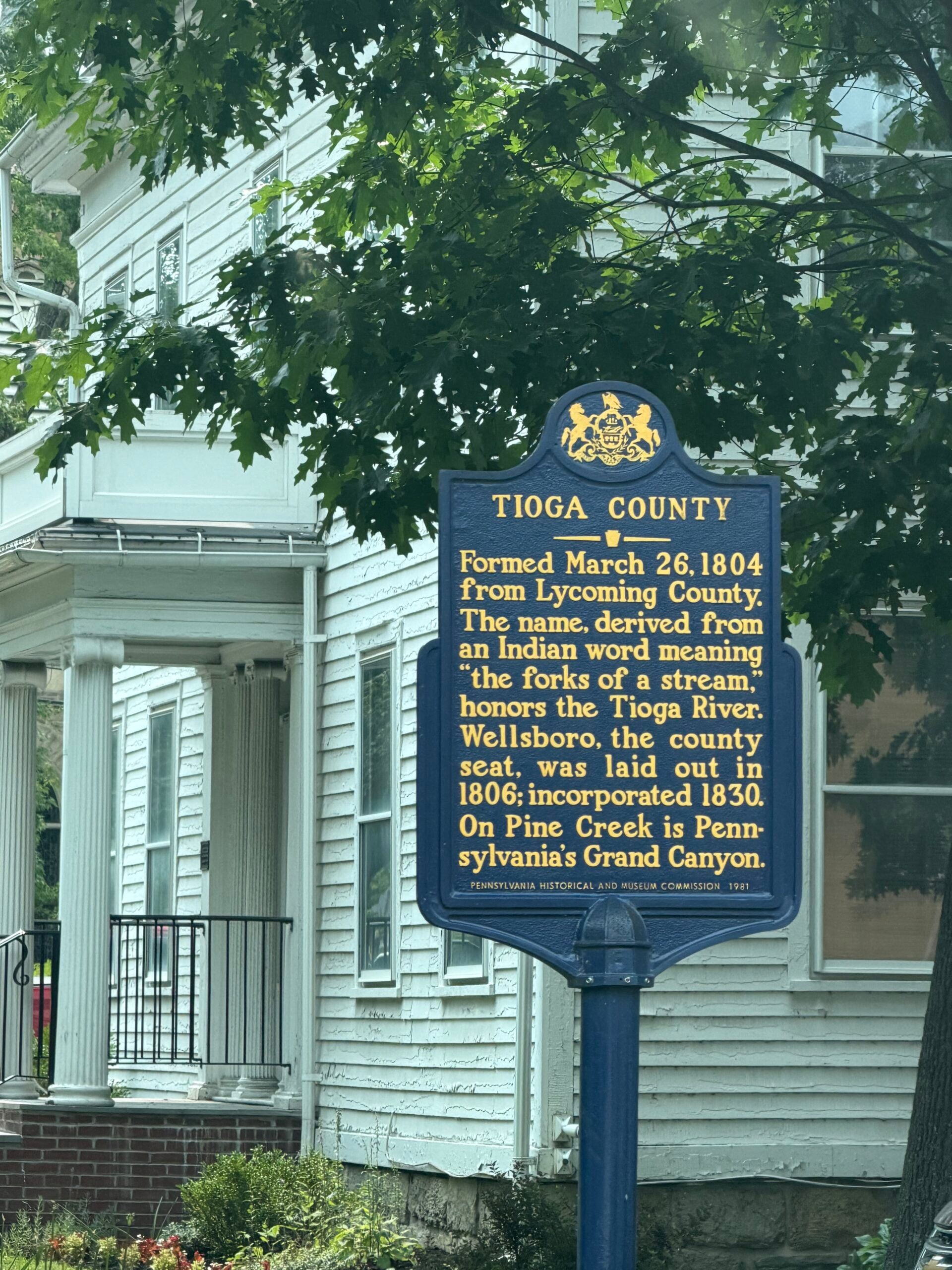
Stop #7 – Tioga County

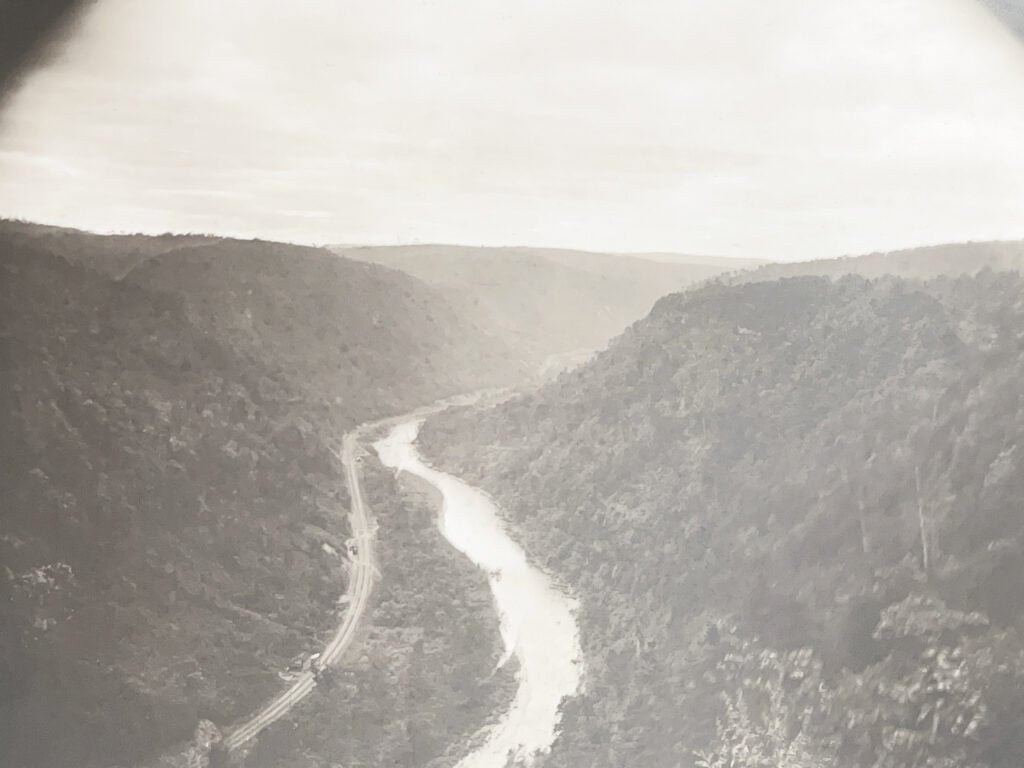
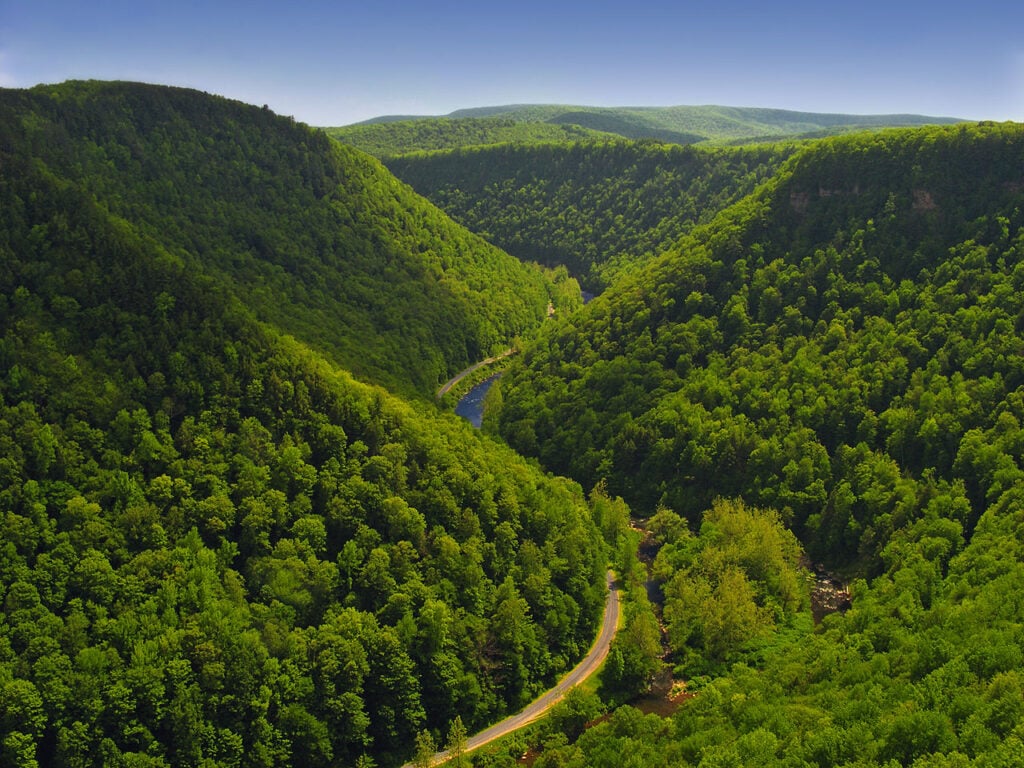
Formed March 26, 1804 from Lycoming County. The name, derived from an Indian word meaning “the forks of a stream,” honors the Tioga River. Wellsboro, the county seat, was laid out in 1806; incorporated 1830. On Pine Creek is Pennsylvania’s Grand Canyon.


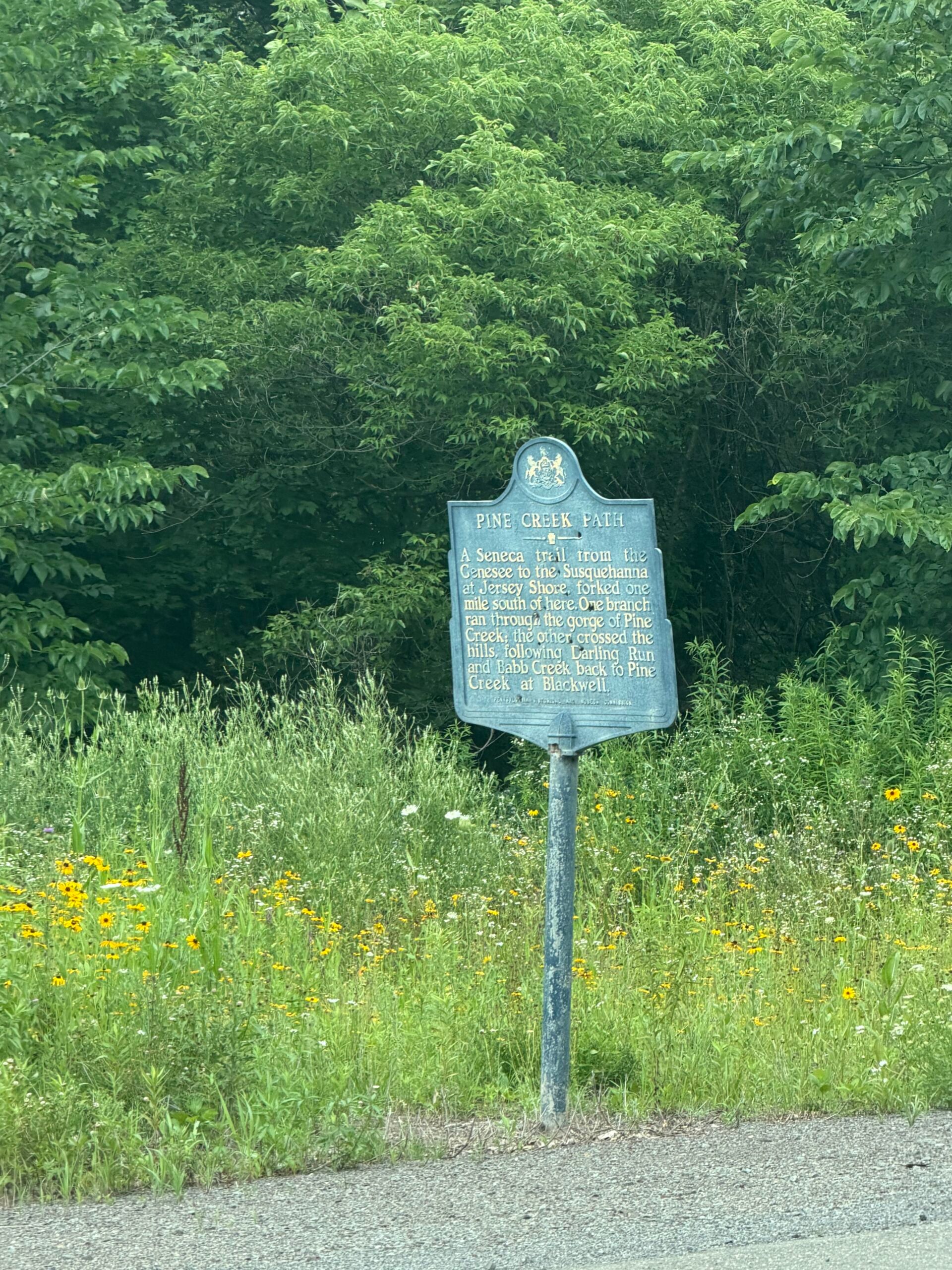
Stop #8 – Pine Creek Path

A Seneca trail from the Genesee to the Susquehanna at Jersey Shore, forked one mile south of here. One branch ran through the gorge of Pine Creek; the other crossed the hills, following Darling Run and Babb Creek back to Pine Creek at Blackwell.


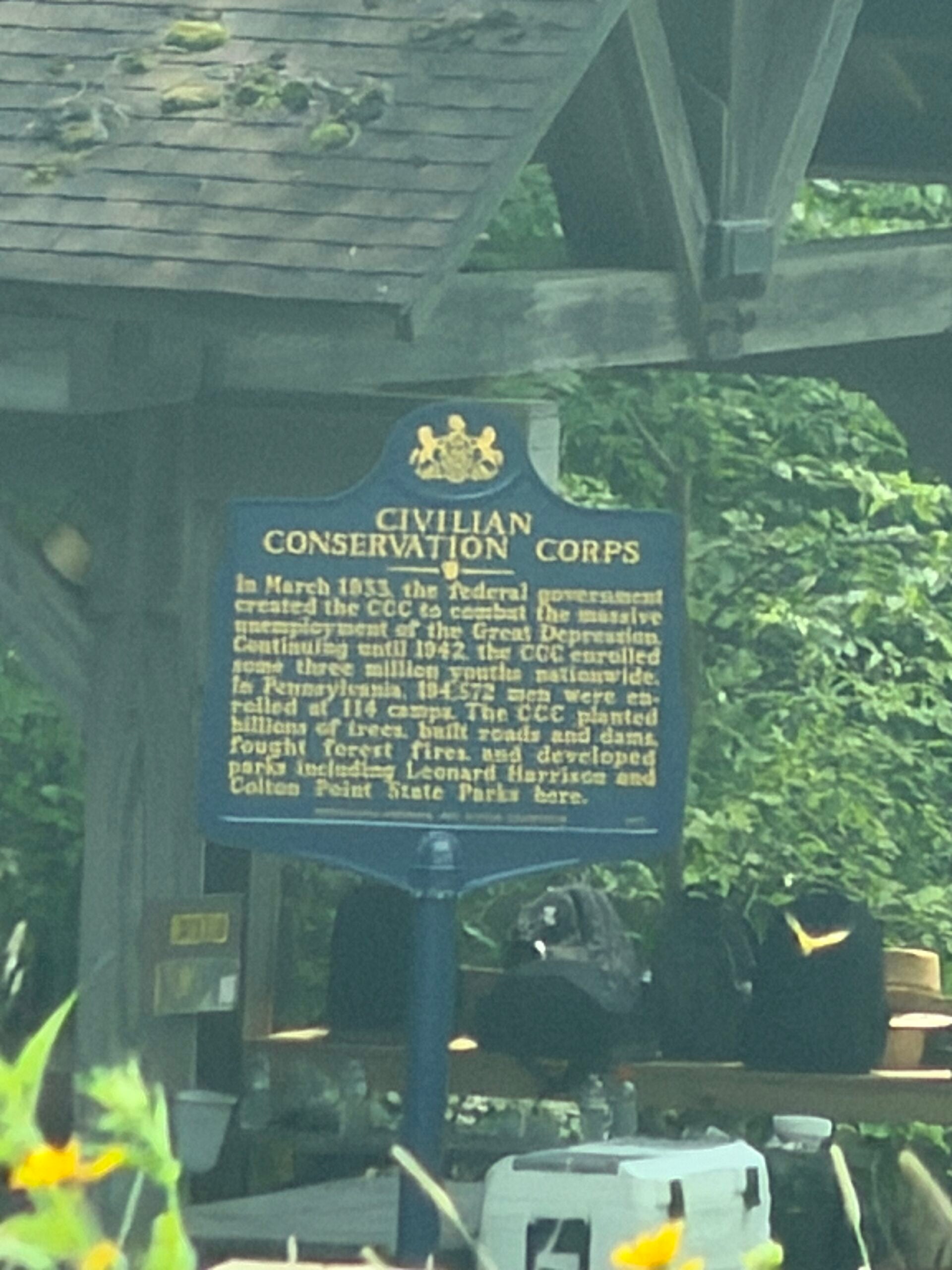
Stop #9 – Civilian Conservation Corps

In March 1933, the federal government created the CCC to combat the massive unemployment of the Great Depression. Continuing until 1942, the CCC enrolled some three million youths nationwide. In Pennsylvania, 194,572 men were enrolled at 114 camps. The CCC planted billions of trees, built roads and dams, fought forest fires, and developed parks including Leonard Harrison and Colton Point State Parks here.

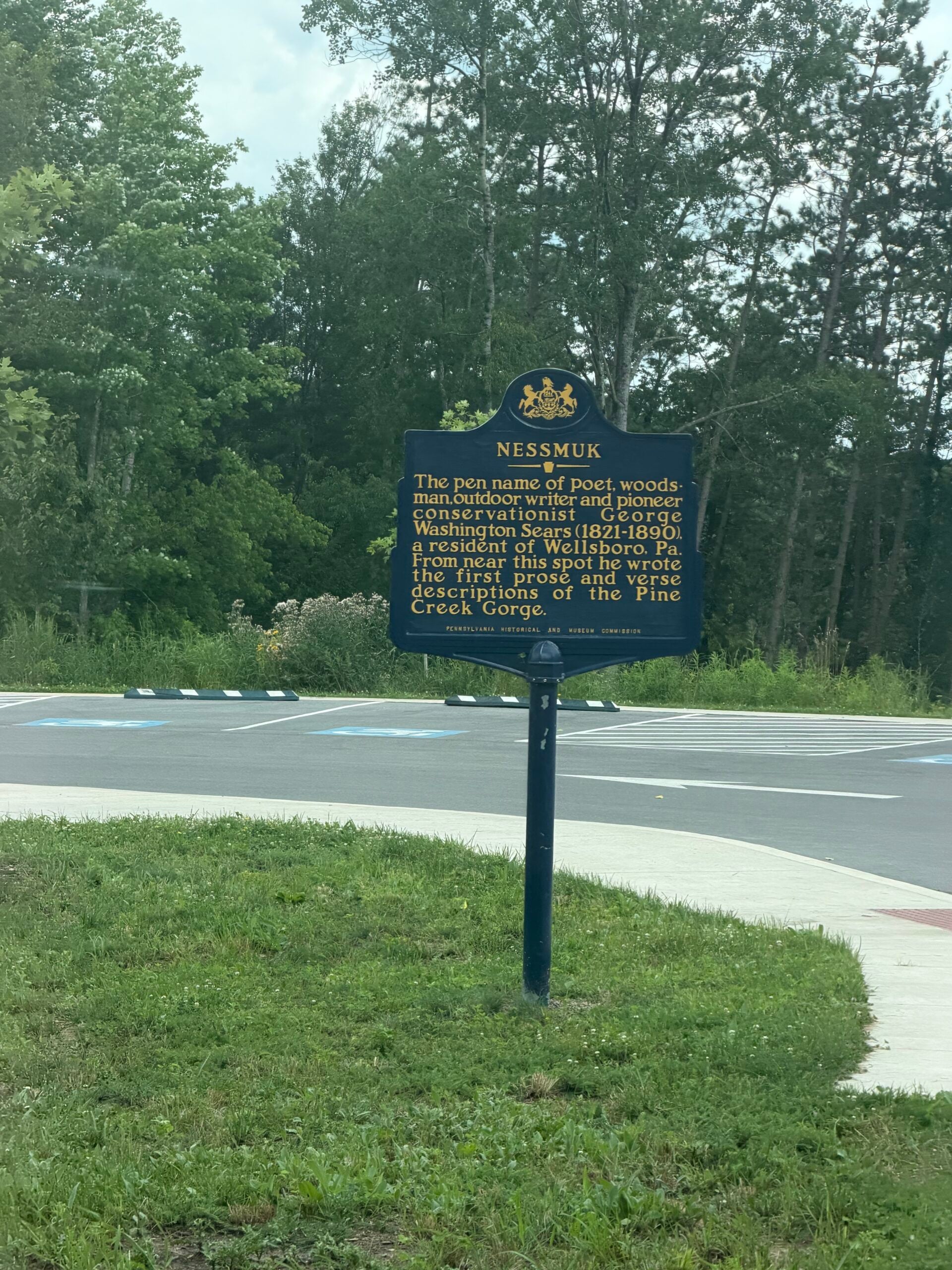
Stop #10 – Nessmuk

The pen name of poet, woodsman, outdoor writer and pioneer conservationist George Washington Sears (1821-1890), a resident of Wellsboro, Pa. From near this spot he wrote the first prose and verse descriptions of the Pine Creek Gorge.

Stop #11 – Blossburg Coal

From 1840-90, “Bloss” coal from the mines of the nearby region was widely known and used as smithing and steam coal. Tioga in those years was a leading county in bituminous coal production in the U.S.

Discovering Lumber Hertitage Through History and Education

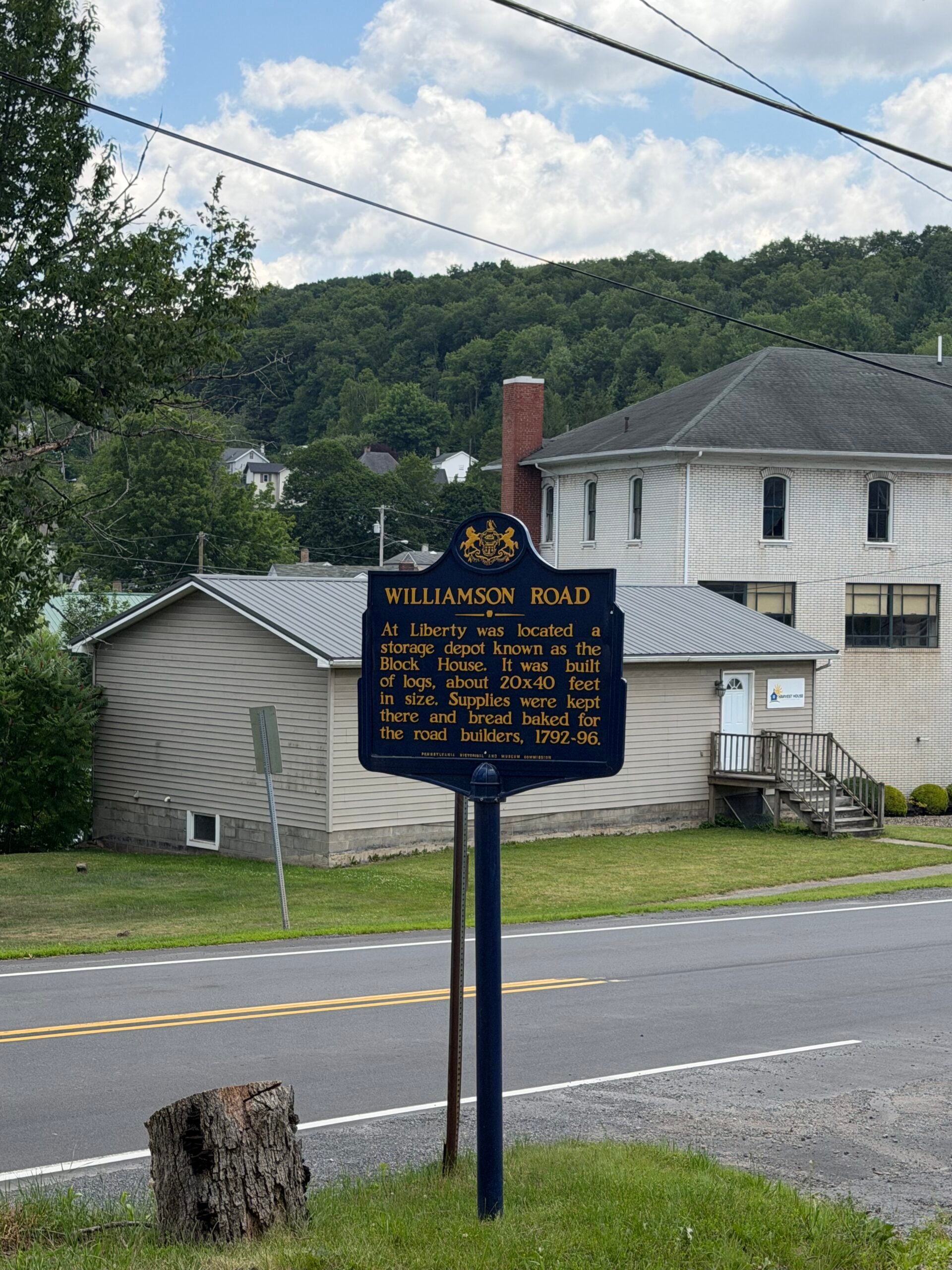
Stop #12 – Williamson Road

At Liberty was located a storage depot known as the Block House. It was built of logs, about 20×40 feet in size. Supplies were kept there and bread baked for the road builders, 1792-96.

Discovering Lumber Hertitage Through History and Education

Stop #13 – Sheshequin Path

Used by Conrad Weiser and Shickellamy on trips through this valley to the Six Nations capital at Onondaga. Just east from here they saw in 1737 the dividing stream which fed both Towanda and Lycoming Creeks.

Discovering Lumber Hertitage Through History and Education

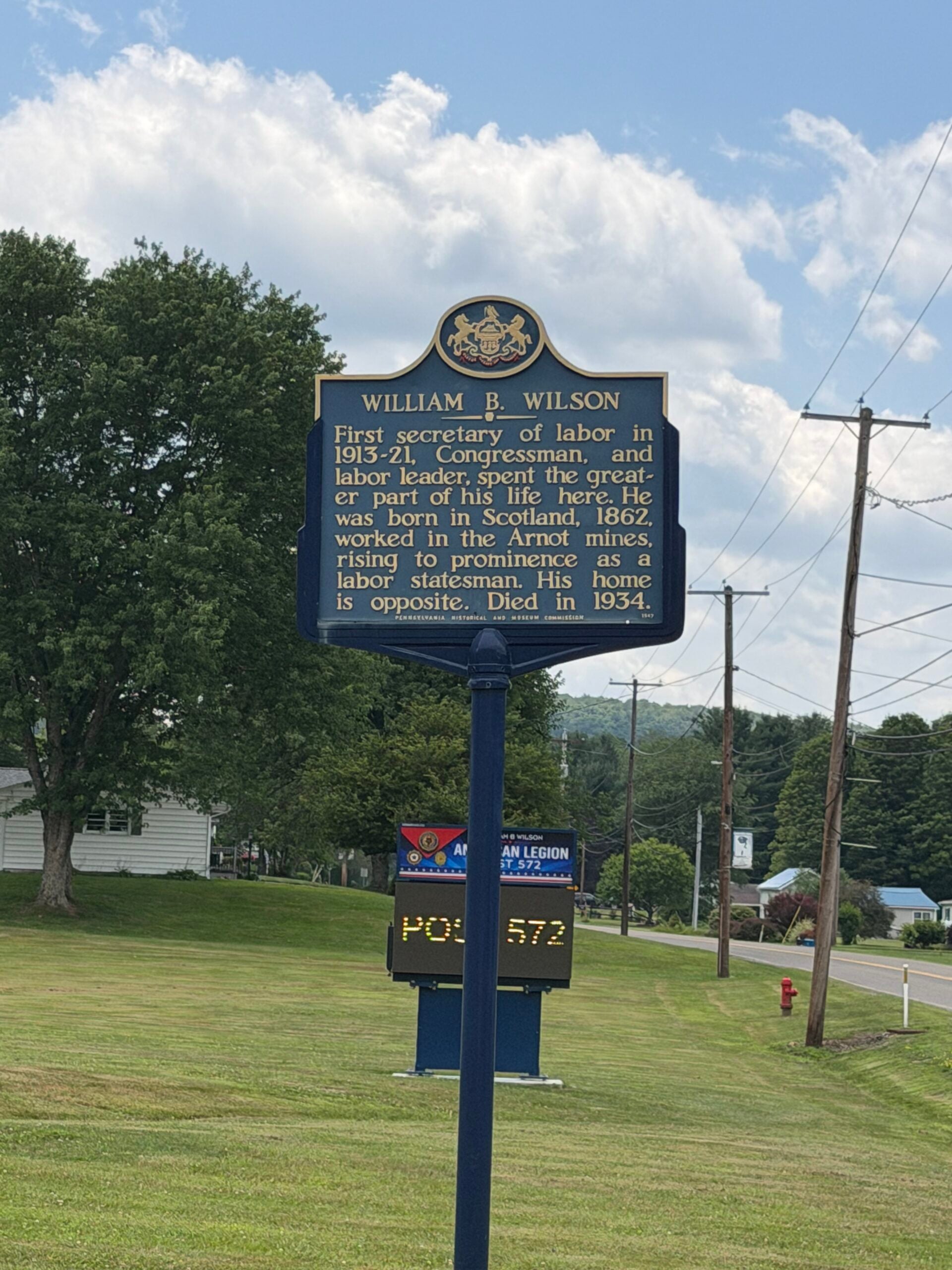
Stop #14 – William B. Wilson

First secretary of labor in 1913-21, Congressman, and labor leader, spent the greater part of his life here. He was born in Scotland, 1862, worked in the Arnot mines, rising to prominence as a labor statesman. His home is opposite. Died in 1934.

Discovering Lumber Hertitage Through History and Education

Stop #15 – Coal Discovery

While acting as scouts for the Williamson Road party in 1792, Robert Benjamin Patterson discovered coal at present-day Blossburg. The first drift to mine the coal was opened on Bear Creek by David Clemons about 1815.

Discovering Lumber Hertitage Through History and Education

Follow Us on Instagram